

Kathmandu, November 18
For decades, traditional political parties have dominated Nepal’s political landscape and wielded influence over state affairs. That political order has now been disrupted by the rise of a new political force. On Sunday, India will welcome Prime Minister Balendra Shah, who came to power representing the Rastriya Swatantra Party (RSP) following the elections in February.
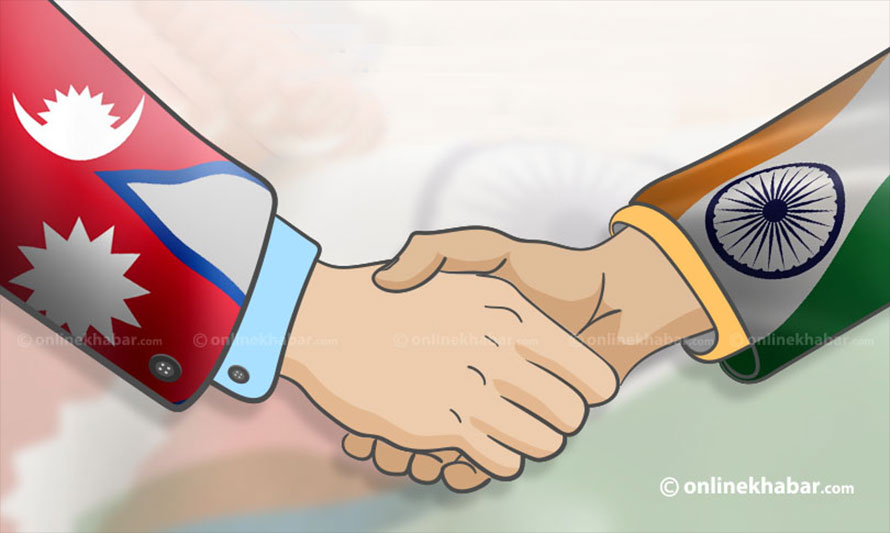
How India’s establishment, which has traditionally maintained close ties with Nepal’s older political parties, receives the leader of this new political force has become a subject of considerable interest on both sides of the border.
Shah is set to visit India nearly eight months after becoming prime minister. Before that, he had travelled to the United States to attend the United Nations General Assembly.
Although he initially maintained that he would not meet people who did not meet diplomatic protocol and would not travel abroad for a year, his position has since changed. He is now preparing for his first bilateral visit to India.
Soon after the RSP came to power, its chairperson Rabi Lamichhane had already received a high-profile welcome in Delhi from India’s ruling Bharatiya Janata Party (BJP).
India had attached considerable importance to the leader of the ruling party. Now, attention has shifted to the kind of reception Shah will receive. Will India merely welcome him, or will it also help move forward long-pending bilateral issues? And how firmly will the prime minister present Nepal’s concerns?
Political and diplomatic circles are watching closely.
“It is natural for India to be curious about what kind of government this is and how it intends to move forward. This visit is therefore an opportunity for them as well as for us,” says Deep Kumar Upadhyaya, former Nepali ambassador to India.
According to Upadhyaya, a crisis of trust has long affected Nepal-India relations. The visit offers Shah an important opportunity to address that mistrust.
“We need to increase the level of trust and make it clear that we are not opposed to India. We have never been India’s opponents. Our countries share a common cultural, civilisational and historical legacy,” he says.
The RSP won 182 of the 275 seats in the House of Representatives in the election held against the backdrop of the Gen Z movement. The result not only reflected a major shift in Nepal’s political power structure but also demonstrated the scale of the mandate received by the country’s new leadership.
Upadhyaya believes India should recognise the significance of that mandate, while Nepal should maintain a firm position in its dealings with its neighbour.
Officials from both countries are currently finalising the agenda for the visit. Among the issues under preliminary discussion are Nepal’s demand for additional air routes and Indian assistance and loans for post-flood reconstruction.
The significance of the visit, however, will extend beyond a meeting between the two prime ministers or the signing of a few agreements. Its political implications are much broader. A new generation of leadership has emerged in Nepal, but the geopolitical, economic and security interests shaping its relationship with India remain largely unchanged.
The visit will therefore test whether the new political mandate at home can translate into greater confidence and negotiating strength in Nepal’s foreign relations.
“Given the mandate the RSP received, the government has not been able to generate the expected momentum during its nearly eight months in office,” says former lawmaker Dr Deepak Prakash Bhatta, who also studies diplomatic and security affairs.
“For the prime minister, this is an opportunity to demonstrate his diplomatic skills and strength,” he adds.
According to Bhatta, Shah’s diplomatic ability will be reflected in how firmly he raises issues that have remained unresolved or made little progress between the two countries.
In the past, a prime minister’s closeness to India, style of managing relations and position on bilateral issues often influenced his domestic political image. At times, relations with India were also closely linked to power equations and political alliances within Nepal.
The present political situation is different. The new prime minister enjoys a strong parliamentary majority and does not face the constant pressure of managing coalition partners to keep his government in office. This could create room for policy decisions, political stability and long-term planning.
It also has implications for Nepal’s engagement with India. In the past, some prime ministers had to consider domestic political calculations and the pressure of retaining power while raising sensitive bilateral issues.
The current government’s strong parliamentary position could make it easier for Shah to take clear positions on border issues, trade, transit, water resources and national sovereignty.
” The prime minister must be clear about our national interests before going to India,” says former foreign minister Dr Prakash Chandra Lohani. “The agenda must be properly prepared, and whatever needs to be said should be communicated clearly.”
India considers Nepal an important neighbour from geographical, economic, cultural and security perspectives. The two countries share an open border stretching more than 1,800 kilometres.
Trade, transit, energy, employment, religious and cultural ties, and movement between people make Nepal-India relations distinct from India’s relationships with many other neighbours. Nepal’s strategic location and its shared border with China further add to its importance for India.
For this reason, India seeks to maintain continuity in its long-term interests even when governments change in Nepal.
“We should not assume that India’s interests change simply because political forces or individuals change in Nepal,” Lohani says. “The prime minister must understand this while presenting Nepal’s position. We, too, must put our national interests first.”
He argues that Nepal should place economic issues at the centre of its engagement with India and seek tangible benefits from the relationship.
The trade relationship between the two countries remains heavily imbalanced. India is Nepal’s largest trading partner, and a significant share of Nepal’s petroleum imports, industrial raw materials and consumer goods comes from the Indian market or depends on Indian transit infrastructure.
On the other hand, limited market access for Nepali products in India, weak export competitiveness and the widening trade deficit have remained longstanding concerns.
Following India’s 2015 blockade, debate intensified in Nepal over reducing dependence on India and developing alternative transit routes. Nepal subsequently signed transit and transportation agreements with China, but geographical challenges, high costs and infrastructure limitations have prevented China from becoming a viable alternative to Indian routes.
Strengthening economic ties with India could therefore bring considerable benefits to Nepal. At the same time, Nepal needs policies that increase domestic production, diversify exports, develop alternative transit infrastructure and expand its capacity in energy and infrastructure.
Lohani says an agreement allowing Nepal to export surplus electricity to the Indian market without unnecessary restrictions would be a major achievement of the visit.
“The prime minister should try to secure an agreement under which India provides access for Nepal to export the electricity it produces,” he says. “If India genuinely wants to support Nepal, it should cooperate on this issue.”
Balancing relations with India and China
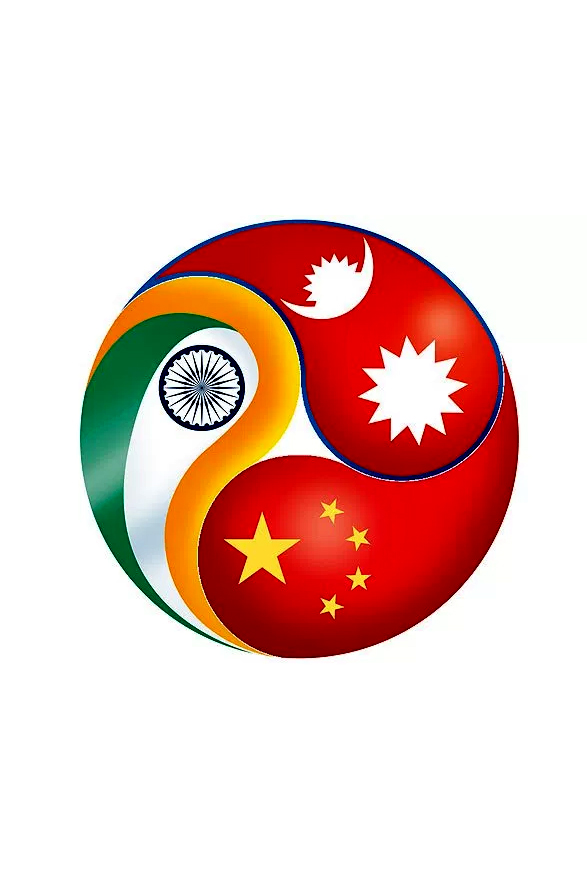
China remains an important dimension of Nepal-India relations. As Nepal seeks to expand cooperation with China in infrastructure, transit, energy and trade, India often views such engagement through the lens of its own security and strategic interests.
For Nepal, however, both India and China are important neighbours. The new prime minister will have to ensure that improving relations with India does not come at the cost of ties with China, and that expanding cooperation with China does not undermine relations with India.
Strategic autonomy is therefore important for Nepal. This does not mean maintaining an artificial equal distance from the two neighbours. Rather, it means retaining the ability to make independent decisions on individual issues in accordance with Nepal’s national interests.
Dr Mrigendra Bahadur Karki, executive director of the Centre for Nepal and Asian Studies (CNAS), says agreements between the two countries should be reached on an equal footing.
” Nepali citizens should feel that agreements have been reached on an equal footing,” he says.
According to Karki, it is important for both Nepal and India to ensure that decisions are sovereign and that there are no hidden interests behind them. Such assurance and guarantees would be beneficial to both countries.