
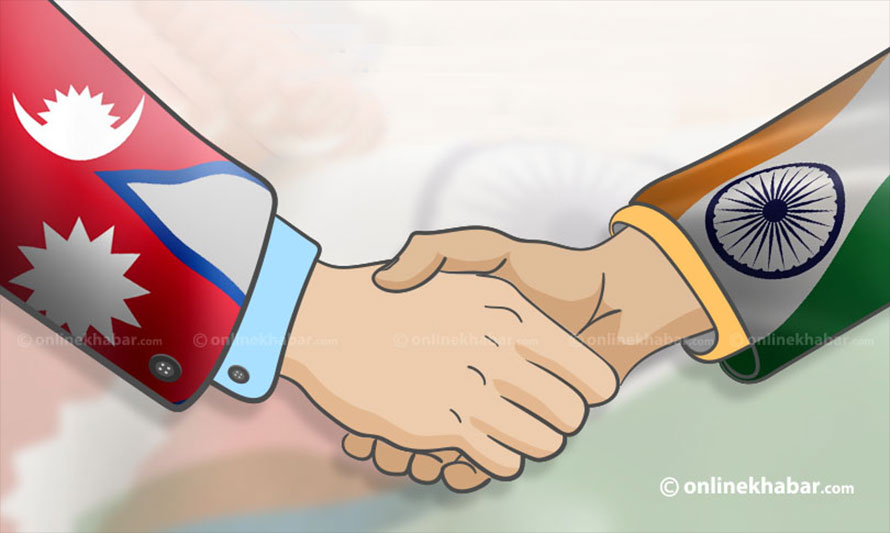
Nepal-India relations extend far beyond the traditional boundaries of diplomacy and inter-state engagement. They encompass security, trade, transit, connectivity, infrastructure development, and social and cultural exchanges. More recently, disaster response has also emerged as an important area of cooperation.
What makes this relationship unique is its deep civilizational and cultural foundation, strengthened by longstanding people-to-people connections. These ties have developed over centuries, largely independent of official arrangements or government patronage. They connect people across different levels of society, including political leaders, academics, business communities, armed forces and ordinary citizens. In many cases, these connections extend to family relationships through marriage.
Despite the closeness of these ties, it is equally important to recognise Nepal’s independent identity. India remains sensitive to Nepal’s sovereignty, and the relationship must continue to be grounded in the principles of equality and mutual respect.
However, like any longstanding bilateral relationship, Nepal-India ties have experienced their share of differences and fluctuations. They have never followed a completely linear trajectory. In the contemporary period, these relations have been shaped by perceptions of national interests, security concerns, changing regional dynamics and developments in the broader geopolitical environment.
Today, the international environment is passing through a period of considerable uncertainty and turbulence. The emerging global order remains difficult to define, and these changes are having a direct bearing on both India and Nepal.
The regional security environment is also transforming. Relations among South Asian countries, particularly the evolving dynamics involving China, have become important factors in shaping the strategic environment in which India and Nepal operate. At the same time, rapid technological developments are changing the nature of security threats and the ways in which countries exercise power.
One of the most significant developments is the increasing weaponisation of economic and strategic resources. Trade, tariffs, energy, rare earths, critical minerals, information, data and even geography are increasingly being used as instruments of pressure. The use of force is also becoming more prevalent, while technological advances are creating new methods of coercion.
These threats are not always visible. Traditionally, national security was understood primarily through territorial integrity and sovereignty. Today, however, threats increasingly emerge from cyber, information and cognitive domains. Such challenges are difficult to identify and counter through conventional security approaches.
This changing environment requires India and Nepal to reassess how they understand and respond to security challenges. The implications are not limited to national defence. They also affect economic relationships, regional cooperation and the broader foundations of bilateral engagement.
The pace of change is perhaps the greatest challenge. Throughout history, geopolitical, technological and economic transformations have taken place, but their pace was generally slow enough for individuals, institutions and governments to absorb and adapt to them.
That is no longer the case. Change is now occurring faster than our ability to respond. Institutions and governments have traditionally been structured to deal with gradual developments. They are now confronted with sudden and far-reaching shifts that demand quicker thinking, greater adaptability and a more comprehensive understanding of emerging challenges.
This is why the current period requires a sense of urgency, maturity and sensitivity in managing international relationships. Both India and Nepal must recognise that the changing global environment has implications for their bilateral partnership and requires them to look beyond established approaches.
There is also a need to think about the nature of the international order that may emerge in the future. The existing order, largely organised around the nation-state, is facing considerable pressure. A broader civilizational perspective may offer new ways of understanding international relations and contributing to peace and stability. This is an area where Indian and Nepali think tanks and academic institutions could explore ideas and work together.
Beyond government-to-government engagement
The future of Nepal-India relations should not depend solely on interactions between the two governments. While official diplomatic engagement remains essential, there is considerable scope to strengthen connections between civil society organisations, think tanks and academic institutions.
Think tanks have an important role in this process. Their responsibility is to examine emerging developments, generate fresh ideas and develop policy options that can contribute to decision-making. Such work becomes more meaningful when institutions from both countries meet, exchange perspectives and engage in sustained dialogue.
These platforms can also create opportunities to discuss sensitive issues that governments may find difficult to address directly through official channels. By sharing perceptions and examining areas of disagreement, think tanks can help develop a better understanding of each other’s concerns and provide constructive inputs to policymakers.
This kind of engagement can give bilateral relations new momentum, not only in terms of the direction they take but also the pace at which cooperation develops.
The growing interaction between Indian and Nepali think tanks is therefore timely and important. It offers an opportunity to explore new areas of cooperation, strengthen mutual understanding and contribute fresh perspectives to the relationship.
As the geopolitical environment continues to evolve, India and Nepal will need to adapt their partnership to changing realities. Their longstanding civilizational connections provide a strong foundation, but the future of the relationship will also depend on their ability to respond collectively to emerging challenges.
A stronger partnership will require sustained dialogue, mutual respect and engagement that extends beyond governments to the wider societies of both countries.
This article is an edited version of an address delivered by General Anil Chauhan, former Chief of Defence Staff of India and Director of the Vivekananda International Foundation, at a dialogue on contemporary Nepal-India relations organised by the Centre for Social Innovation and Foreign Policy (CESIF) in Kathmandu.