


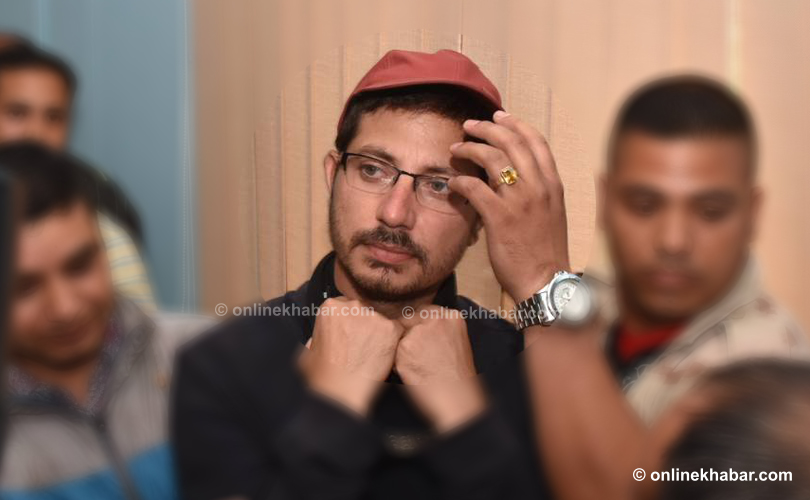
Kathmandu, November 16
The Office of the Attorney General has appealed to the Supreme Court against the decisions of the district and high courts acquitting several defendants of organised crime charges in the 33-kg gold smuggling and Sanam Shakya murder case.
The office has challenged the rulings of the Morang District Court and the High Court in Biratnagar, arguing that the courts wrongly acquitted Chudamani Upreti, also known as Gore, along with Tekraj Malla Thakuri, Lakpa Sherpa, Mohan Kafle, Narendra Karki and Bhojraj Bhandari, among others, of organised crime and related charges.
In 2017, around 33.5 kg of gold smuggled into Nepal by Upreti’s group went missing.
During efforts to locate the missing gold, Sanam Shakya was tortured and killed by members of the group.
Based on documents recovered during the investigation and statements recorded by police, investigators alleged that around 3,800 kg of gold had been smuggled into Nepal. Police had sought damages of Rs 17 billion from the accused.
The prosecution accused the group of establishing and operating a criminal organisation involved in gold smuggling and illegal gold trading. It also charged members with abducting and holding Shakya hostage before murdering him.
While upholding the Morang District Court’s verdict, the High Court in Biratnagar found Upreti and some other defendants guilty in connection with Shakya’s murder.
However, the courts acquitted them of charges related to gold smuggling, its trade and management, and the operation of an organised criminal group.
Both courts cited the failure to recover either the alleged 3,800 kg of gold or even the 33.5 kg shipment as grounds for acquitting the defendants of the smuggling charges.
The Office of the Attorney General has challenged these findings, particularly the acquittals on organised crime, gold smuggling and illegal trading charges.
Upreti was convicted only of murder, abduction and hostage-taking. The remaining charges against him were not established.
Thakuri and Sherpa were convicted only in the murder case. Mohan Kafle, Narendra Karki, also known as Krishna, and Bhojraj Bhandari were also found guilty of murder but received prison sentences of 10 years each.
Rajan Kumar was sentenced to three years in prison, while the sentence of Madhav, also known as Madan Prasad Ghimire, was increased from six months to three years.
Prosecution says courts overlooked evidence of gold smuggling
The Attorney General’s Office argues that Shakya was abducted because of the missing gold and died after members of the group subjected him to electric shocks while trying to locate it.
The office maintains that the lower courts erred by failing to assess independent evidence simply because the gold itself was not physically recovered.
It has cited Upreti’s statements, diaries documenting gold transportation and bank accounts recording payments received for transporting the gold as evidence that the courts failed to properly evaluate.
In its appeal to the Supreme Court, the office argues that the High Court’s decision to accept the circumstances surrounding Shakya’s murder while rejecting the allegations of illegal gold smuggling is seriously flawed from the standpoint of evidence assessment.
Government attorneys say the courts failed to examine the evidence collectively, including records of gold transportation and trading, statements by the accused, registers, diaries and other circumstantial evidence.
They also argue that Upreti’s group had established an organised network for smuggling gold, assigned responsibilities to its members and divided tasks among them.
The prosecution further contends that the lower courts violated the principle of criminal justice under which all members of a group can be held accountable for offences committed collectively.
It says the High Court made an error by not imposing comparable sentences on all defendants after Shakya was killed in an assault involving members of the group.
Several physical items allegedly used in the crimes were also recovered during the investigation into the gold smuggling and Shakya’s abduction and murder.
The Attorney General’s Office has questioned why vehicles and other items, including a JAC pickup, a Scorpio, a Prado and a scooter, were not confiscated after the courts failed to establish the customs evasion and organised crime charges.
“The fact that some individuals were convicted in the murder of Sanam Shakya does not automatically extinguish the charges of illegal trading of gold worth billions of rupees and organised crime that allegedly formed the background to the incident,” the office stated in its appeal.
It argued that the evidence presented, the role of each defendant and the relevant legal provisions should be examined independently and collectively before reaching a judicial conclusion.