Surkhet, November 16
A 10-bed basic hospital has come into operation in Rius Bagar, Ward 6 of Mugum Karmarong Rural Municipality in Mugu, a remote area not connected to the national road network. However, despite spending millions of rupees on the hospital building, residents are unable to access its services conveniently due to the absence of a motorable road.
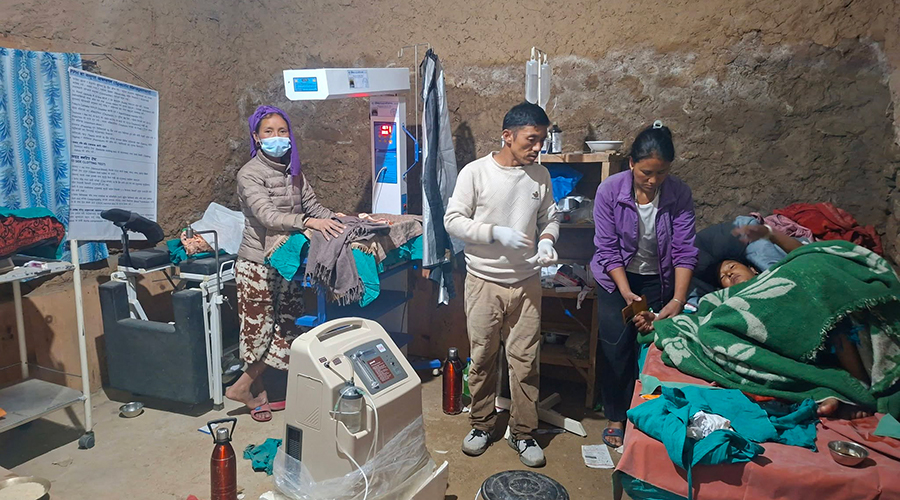
People in the rural municipality have to walk for several hours or even up to two days to travel between villages, making healthcare difficult to access despite the hospital’s operation.
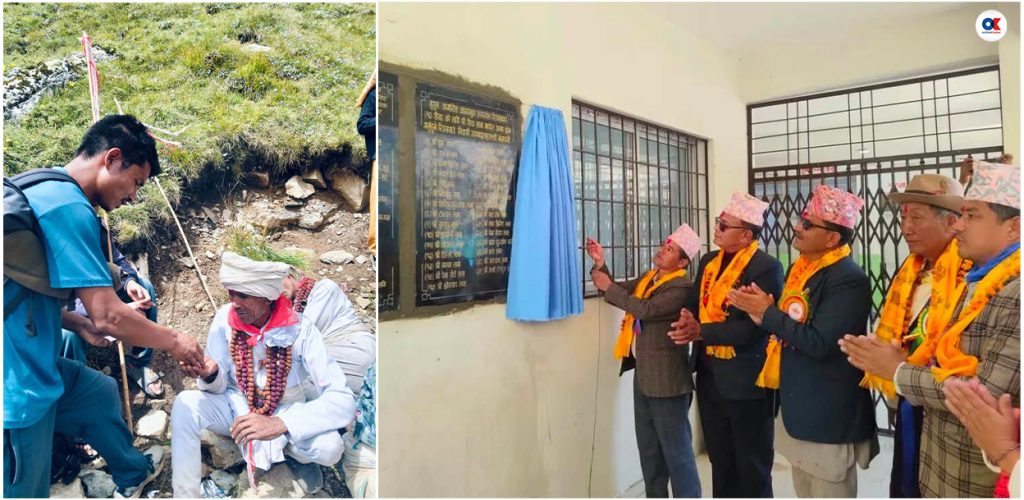
Built under the federal government’s ‘One Local Level, One Basic Hospital’ initiative, the Mugum Karmarong Basic Hospital was inaugurated by Karnali Province Chief Minister Mangal Bahadur Shahi.
The hospital cost Rs 102.49 million to construct and currently has eight health workers, including one doctor. However, ensuring permanent positions and adequate skilled personnel remains a challenge.
Hospital built, but no road access
Mugum Karmarong is among the most remote local levels in Karnali Province. None of its nine wards is connected by a motorable road.
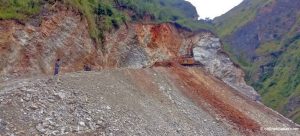
The Gammgadhi-Nakchhenagla road project, intended to connect the rural municipality’s administrative centre, has made little progress. Of the proposed 93-kilometre road, only around 18.5 kilometres of track have been opened despite more than a decade of construction efforts.
Due to the lack of roads, essential goods, medicines, medical equipment and construction materials must be transported by people and mules. Patients also have to walk for hours or days to reach the hospital. Some settlements are one to two days’ walk from Rius, making timely treatment difficult even for minor health problems, said Baliraj Budha, chief of the municipality’s health section.
The road survey began in fiscal year 2006/07, while construction started in 2015/16. Budgetary discontinuity, difficult rocky terrain and a lack of government priority have further delayed the project.
Government pledges support, but implementation remains pending
Inaugurating the hospital, Chief Minister Shahi said the provincial government would fully support the federal policy of strengthening healthcare services at the local level.
He pledged that the province would make every effort to equip the hospital with adequate human resources and medical equipment.
Shahi said providing quality healthcare was the responsibility of all three tiers of government, while the local government would bear the primary responsibility for ensuring service quality. Although the federal government constructed the building, its operation and management would require coordination between provincial and local governments, he added.
Traditional healers still preferred over hospitals
Alongside infrastructure shortages, social and cultural beliefs also affect access to healthcare in Mugum Karmarong.
Although health workers and health facilities are available in villages, some residents prefer traditional healing practices and wait for shamans or lamas instead of seeking medical treatment. Many visit health facilities only after their conditions worsen.
According to Budha, a lack of health awareness, social and religious beliefs, and reluctance to openly discuss health problems with medical personnel prevent some residents from receiving timely treatment.
Budha has been conducting village-level campaigns to raise health awareness, provide basic check-ups and educate people about the proper use of medicines. These campaigns include general health examinations, medicine distribution, blood pressure checks, dental services, screening for non-communicable diseases and consultations. Health workers also examine medicines that residents are currently taking.
He said some people conceal their health problems, feel embarrassed to discuss them with health workers or purchase medicines without medical advice. Others fail to complete prescribed courses or stop taking medicines midway after assuming they have recovered. Health workers have also found large quantities of unused medicines stored in homes.
During village visits, Budha has identified cases of incorrect medication and the use of expired drugs. In one village, a woman who required tuberculosis medication was found taking a different medicine. She was subsequently brought into the treatment process through medical examination and counselling. In another village, patients with epilepsy were found taking expired medicines.
The Saturday campaigns also help residents identify and separate unused and expired medicines, understand correct dosages and methods of consumption, and follow medical advice.
Budha said that despite the availability of health facilities, geographical barriers and traditional beliefs continued to prevent many residents from receiving timely treatment. He stressed that infrastructure and health workers alone were insufficient to make healthcare effective without improving public awareness.
14 health facilities, but staffing and accessibility remain challenges
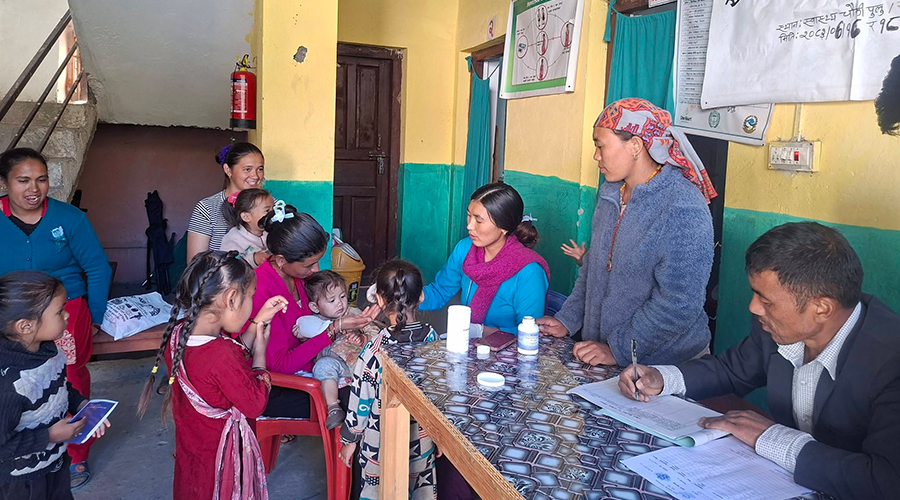
Mugum Karmarong Rural Municipality has 14 health facilities, including one basic hospital. Although health workers are deployed across villages, shortages of permanent positions, skilled personnel and physical access continue to hamper healthcare delivery.
Emergency patients, pregnant women, children and people with chronic illnesses face particular risks because they cannot always reach health facilities in time. The absence of roads also makes transporting medical equipment and medicines difficult and expensive.
As residents have to walk long distances even for basic treatment, many end up enduring illnesses or relying on traditional healing practices.