

Kathmandu, November 7
The road through an old mango and litchi orchard in Biratnagar Metropolitan City-2, Somabare Haat, was once considered unsafe to walk along after dusk.
Located in Biratnagar’s main market area, the four-bigha-and-five-kattha orchard had long attracted attention. But after the land was granted an exemption from the government’s landholding ceiling, its trees were suddenly felled, the area was hastily plotted and the plots sold.
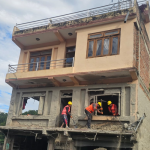
Around 12 katthas ( around 1 acre) of the land now house Morang Cooperative Hospital. More than two dozen private houses have also been built there. Many people have invested their lifelong savings, including money earned through foreign employment, to buy plots and build homes. Business groups have also purchased land in the area.
But with the property now at the centre of one of the country’s biggest alleged policy-corruption scandals, those who bought the land are facing uncertainty.
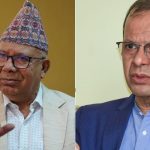
The Commission for the Investigation of Abuse of Authority (CIAA) has filed corruption cases against 97 people, including former prime minister Madhav Kumar Nepal and former minister Dr Minendra Prasad Rijal, at the Special Court. It has also sought the confiscation of the entire disputed land and its return to government ownership. The demand has left landowners anxious about the future of their property.
Why are citizens being made victims after trusting the state?
Landowners who paid the government-prescribed taxes at the Land Revenue Office and completed the legal procedures to obtain ownership certificates are now angry following the CIAA’s decision to file cases.
“We did not acquire the land through any illegal route. We bought it by paying the required revenue to the government’s official Land Revenue Office,” says Biratnagar-based industrialist Pawan Kumar Sarada, who purchased land in the area. “If it was government land that could not be sold, why did the state collect revenue and register the transaction? Why should ordinary citizens become victims of misconduct by the state machinery?”
His frustration is directed at the credibility of the Land Revenue Office.
“If citizens cannot trust the Land Revenue Office, whom are they supposed to trust? We legally bought land that was put up for sale, and now we are facing a case,” he says.
Bikash Adhikari, one of the operators of Morang Cooperative Hospital, which occupies around 12 katthas of the disputed land, says they too have been caught in the consequences of the state’s contradictory actions.
“We are not land developers. We bought the property because it was a suitable location for a hospital, which is itself intended to serve the public,” Adhikari says. “We did not simply buy the land from an individual. In a sense, we bought it from the state as well, because we paid capital gains tax and registration fees. Can the state itself authenticate the transaction and issue a land ownership certificate, only to turn around years later and say, ‘This is not yours; it belongs to me’?”
He says those responsible for decisions that caused losses to the state should face action, but argues that it is unjust to make the final purchasers bear the consequences.
“Many of our friends built homes with money earned through years of hard work abroad. The situation of those families is now distressing,” he says. “We can only hope that the court will deliver justice.”
How was valuable market land exchanged for a riverbank?
The roots of the dispute go back nearly five decades.
On June 2, 1975, the then government published a notice in the Nepal Gazette granting a landholding ceiling exemption to Rizal Canning Company, which intended to operate a fruit-processing industry. At the time, Nagendra Prasad Rizal was prime minister, and the land belonged to his family. The company was permitted to hold a total of 59 bighas, nine katthas and 12 dhurs (nearly 100 acres) of land in Morang and Sunsari districts.
On April 5, 1992, the government decided to confiscate 55 bighas, two katthas and seven dhurs (92.07 acres) of the company’s land. The company challenged the decision at the Supreme Court, which overturned it on June 9, 1997. However, restrictions on the sale of the land remained in place.
The next phase of manoeuvring over the valuable property in Biratnagar’s main market area began in 2006.
At the time, then Land Reform Officer Umanath Pandey lifted the restrictions on two plots in Biratnagar — Plot No. 48, measuring three bighas, three katthas and one dhur, and Plot No. 71, measuring one bigha, two katthas and eight dhurs. Together, the plots covered four bighas, five katthas and nine dhurs.
According to a businessman who has been associated with the case from its early stages, a team including Shailendra Basnet was involved in getting the restrictions lifted, with support from business groups.
A plan was then developed to exchange the valuable land in Biratnagar’s main market area for what was presented as riverbank land. Shailendra Basnet of Biratnagar was allegedly the key architect of the plan. He identified a stretch of riverbank in the then Banigama area, now part of Gramthan Rural Municipality, as replacement land.
Basnet had previously been involved in politics in Banigama. Various government agencies were allegedly brought on board to prepare documents claiming that the land there was unsuitable for fruit cultivation.
With the alleged involvement of middlemen, the Land Revenue Office and the then village development committee, a proposal for the land exchange passed through the Ministry of Land Reform before reaching the Cabinet on November 1, 2009.
On Mangsir 16, the Cabinet referred the file to its Social Committee, which was then led by minister Dr Minendra Rijal. Under Rijal’s initiative, the committee granted in-principle approval for the land exchange on December 31, 2009.
According to businesspeople, Basnet’s group played a role in getting the proposal before then prime minister Madhav Kumar Nepal and creating an environment for Rijal to support it.
Soon after receiving approval, the company purchased the riverbank land in Banigama for just Rs 1.285 million on February 3, 2010. It then sold the valuable Biratnagar land for Rs 83.862 million.
The orchard was quickly cleared, roads were constructed and the land was divided into plots and sold to industrialists and ordinary buyers. The sale arrangements were handled by a group led by Biratnagar land trader Tulsi Pokhrel.
According to the CIAA, exchanging valuable land in Biratnagar’s main market area for low-value riverbank land benefited a private company and caused direct property losses of Rs 734,956,000 to the state.
The anti-graft body has filed corruption cases against 97 people, including former prime minister Madhav Kumar Nepal, former minister Minendra Rijal, middleman Shailendra Basnet, industrialist Tulsiram Agrawal and former government employees. It has sought recovery of the claimed loss and fines from those involved in making the policy decision and selling the land.
However, the CIAA has also sought the confiscation of the disputed property from more than 23 people and entities who subsequently purchased it, including homeowners, industrialists and hospital operators.
Former prime minister Nepal has denied any wrongdoing in the land exchange involving the Biratnagar fruit farm. In a statement recorded by the CIAA on August 18, 2026, he said he had forwarded the proposal after it had gone through the relevant ministries in accordance with established procedures.
“The Cabinet did not make the decision directly. It referred the matter to the Social Committee, allowing it to discuss the proposal thoroughly, examine all aspects and decide if it considered the exchange appropriate,” Nepal said in his statement. “The Cabinet collectively believed that everything was lawful and in accordance with established procedures, and that the decision would not cause losses to the country.”
Nepali Congress leader and former minister Dr Minendra Rijal, meanwhile, said the chief secretary should be responsible for proposals submitted to the Cabinet.
“The responsibility for determining whether a proposal is lawful rests with the Cabinet Secretariat,” Rijal told the CIAA during its investigation. “A proposal that is not lawful should not be presented at a Cabinet meeting.”
Local residents say it is unfair that ordinary citizens who paid taxes and bought the land years ago should now bear the consequences of alleged wrongdoing involving the country’s top political leadership and the Land Revenue Office.
Bikash Adhikari, one of the operators of Morang Cooperative Hospital, says landowners are uncertain about what to do next. He says they remain anxious but are hoping the court will deliver justice.