

A decade ago, few Nepalis knew where Madi was located. For me, too, it was a remote, little-known valley whose name I had only occasionally heard. Hemmed in by Chitwan National Park and the Chure hills, the region remained isolated for years, with limited access and inadequate infrastructure.
Over the past decade, however, Madi has begun to transform its identity. No longer just a remote valley, it has emerged as a region with considerable agricultural potential, rich cultural and religious heritage, and growing economic opportunities. Home to historic and religious sites such as Balmiki Ashram, Someshwar Gadhi and Pandavanagar, Madi is also among Nepal’s fertile agricultural regions.
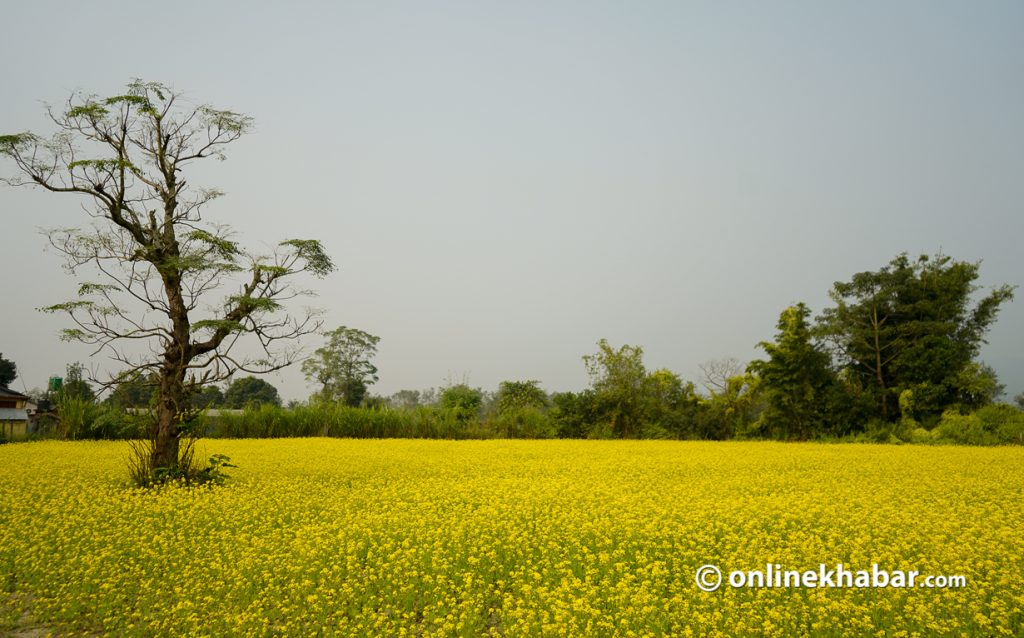
Commercial fish farming has expanded across areas such as Kalyanpur, with Madi-6 designated as a ‘Fish Zone’. Its soil and climate are well suited to paddy, maize, mustard, vegetables, livestock farming and aquaculture.
Efforts by local and national representatives, including Member of Parliament and Law Minister Sobhita Gautam, to address the environmental and legal obstacles affecting the Kasara–Bankatta road section through Chitwan National Park have also raised hopes for further development. Once the road is paved and upgraded, local agricultural products will have more reliable access to major markets across the country.
Despite this potential, two major challenges continue to threaten local livelihoods. The first is flooding and riverbank erosion caused by the Riu River, which flows through the valley. The second is persistent human-wildlife conflict arising from Madi’s proximity to Chitwan National Park and its buffer zone.
China’s history offers a compelling parallel. The Hwang Ho, or Yellow River, was once known as the ‘Sorrow of China’. Seasonal floods repeatedly destroyed villages, damaged fertile farmland and displaced communities. For generations, the river was seen as a natural curse. However, China gradually changed this narrative through large-scale water management, including engineered embankments, dams and irrigation systems. What was once a source of destruction became an important resource for agriculture and economic development.
The challenges posed by the Riu River resemble those historically associated with the Yellow River. This raises a fundamental question for the people of Madi: Is the Riu River a curse, or is it an untapped resource that could drive prosperity?
The present reality: A dual challenge

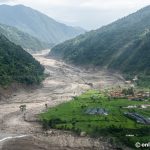
Madi Valley faces two interconnected environmental challenges. The first is flooding and erosion caused by the Riu River. Situated between the Chure and Someshwar mountain ranges, the river serves as the valley’s primary drainage system. Without durable, engineered embankments, monsoon torrents rushing down from the hills cause severe bank erosion and flooding. Hundreds of bighas of agricultural land are reportedly affected, with once-productive fields buried under sand and gradually overtaken by wild vegetation.
The second challenge is human-wildlife conflict. Settlements along the national park’s buffer zone face frequent incursions by elephants, rhinos, spotted deer and wild boars. These animals destroy crops, sometimes just before harvest, while also threatening human safety and livestock. Repeated losses have discouraged farmers, forcing some to abandon their fields or give up farming altogether.
Together, these problems undermine agricultural productivity, threaten livelihoods and discourage investment in the valley’s economic potential.
A shift in perspective: Poor management, not a natural curse
A closer look suggests that the problem lies not simply in the river or Madi’s geography, but in inadequate water resource management, insufficient wildlife protection measures and delays in policy implementation.
Rivers are not inherently a curse or a blessing. Their impact depends largely on how they are managed. Madi’s experience illustrates this contradiction. While agricultural fields face water shortages during the dry winter months, monsoon torrents bring destructive floods that wash away crops and damage fish ponds.
With scientific river management, reliable irrigation systems and effective measures to reduce human-wildlife conflict, Madi could turn these challenges into opportunities for sustainable development.
A blueprint for prosperity: Employment and transformation
The government has identified domestic employment generation as a priority. Addressing Madi’s infrastructure and agricultural challenges could help turn the valley into a major centre for local enterprise and sustainable employment. This requires a coordinated approach that looks beyond temporary relief measures and focuses on long-term solutions.
First, fragmented and short-term earthworks along the Riu River need to be replaced with a comprehensive plan for permanent, scientifically engineered embankments and dykes on both banks. Such infrastructure would protect riverside settlements, reduce erosion and help recover agricultural land damaged by flooding. It should be based on proper river studies and designed to account for changes in water flow and sedimentation.
Second, settlements bordering the national park and its buffer zone need more effective protection from wildlife. Reinforced mesh-wire barriers, concrete walls and properly maintained solar fencing could help reduce the destruction of crops and threats to human safety. These measures should be designed in consultation with conservation authorities to minimise harm to wildlife and preserve ecological movement corridors. Greater security would give farmers more confidence to invest in commercial agriculture.
Third, agricultural development should be linked directly to youth employment and entrepreneurship. The growth of fish farming in Kalyanpur’s ‘Fish Zone’ demonstrates the potential of local agricultural enterprises. With better protection of farmland and improved road connectivity, young people could build businesses in aquaculture, livestock farming, horticulture and cash-crop production. Such opportunities could provide alternatives to foreign employment and encourage young people to invest in their own communities.
Water management must also address the contrast between destructive monsoon floods and winter water shortages. Catchment reservoirs and check dams along feeder streams could help store excess monsoon runoff, reduce the force of flash floods and provide water for irrigation during drier months. This would support year-round cultivation of vegetables and other winter crops while ensuring a more reliable water supply for fish ponds.
Finally, tourism should complement rather than displace agriculture as the foundation of Madi’s development. Once river management improves and human-wildlife conflict is reduced, the valley could gradually develop agri-tourism and eco-tourism through farm stays, riverfront activities and nature-based experiences. Such initiatives could diversify local incomes while building on Madi’s agricultural and cultural heritage.
The Riu River need not remain a source of destruction for Madi. Properly managed, it could become an important resource for agriculture, livelihoods and economic growth. The experience of China’s Yellow River offers a lesson in the importance of long-term planning, scientific water management and sound engineering. The objective should not be to fight nature, but to understand and manage it responsibly.
Efforts by representatives such as MP and Minister Sobhita Gautam to address the obstacles surrounding the Kasara–Bankatta road are a positive step. However, lasting transformation will require a broader government-led plan that combines river management, agricultural development, irrigation and effective protection for communities living alongside the national park.
With these measures in place, land now buried under sand and overgrown with vegetation could once again become productive farmland. Madi has the potential to emerge as a major agricultural and employment hub in Nepal. The Riu River, rather than being remembered as a curse, could become a blessing for the valley’s people, livelihoods and future prosperity.