
Kathmandu, November 5
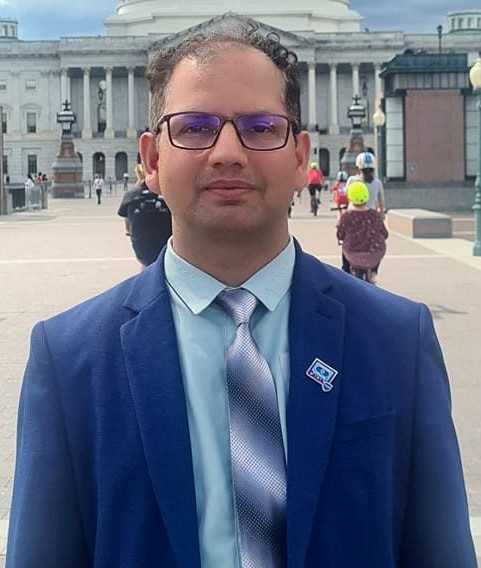
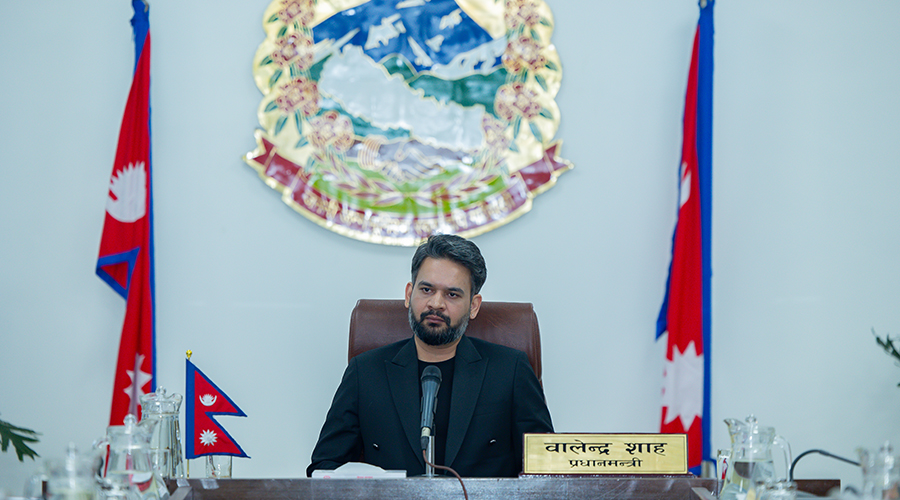
Indian Foreign Secretary Vikram Misri spent Wednesday in a series of high-level meetings in Kathmandu, holding discussions with Finance Minister Swarnim Wagle, Foreign Minister Shishir Khanal and other senior officials. The main purpose of the meetings was to assess progress in preparations for Prime Minister Balendra Shah’s upcoming visit to New Delhi and ensure it produces concrete results.
However, according to high-level diplomatic sources, the Indian side has not been particularly encouraged by the state of preparations following Misri’s visit.
Based on the discussions held by Misri and the progress made so far, the agenda for Shah’s planned visit to India in the first week of Mangsir appears extensive, but preparations remain weak.
Various ministries and the Ministry of Foreign Affairs have been discussing proposals ranging from seeking $2 billion in loans and grants from India to securing air routes for Bhairahawa airport.
But with less than three weeks remaining before the planned visit, Nepal has yet to make sufficiently mature preparations on the agenda it intends to present to India, officials from several ministries told Onlinekhabar.
Nepal has said it wants the prime minister’s visit to go beyond the traditional exchange of promises and announcements that are rarely implemented. In an interview with Onlinekhabar some time ago, Foreign Minister Shishir Khanal said the visit would aim to secure several major, tangible outcomes.
Government officials, however, are concerned that Nepal’s own preparations have not reached the level required to achieve such results.
Nepal considers seeking $2 billion in loans and grants
The Finance and Foreign Affairs ministries have begun preliminary discussions on requesting $2 billion in financial assistance from India through concessional loans, or lines of credit, and grants.
“Previously, Nepal had four lines of credit from India, with total commitments of around $1.65 billion. There was also $750 million for post-earthquake reconstruction. However, not all the lines of credit were used because Nepal could not provide projects, and it was not possible to ensure that 75 per cent of the materials used in reconstruction came from India. The commitments eventually expired,” a source at the Finance Ministry said.
“Of that amount, around $800 million to $850 million may have remained unused. Our proposal is to add some funding to the unused amount and increase the line of credit to $1 billion,” the source said.
However, the projects on which the money would be spent have not yet been identified.
“Projects financed through India’s lines of credit have to use at least 75 per cent of materials sourced from India. This has made it difficult to implement some projects. Nepal has sought flexibility on this requirement, but India has not been willing to change its rules specifically for us,” the source said.
The two ministries have also discussed requesting an additional $1 billion in grants, but the projects and funding arrangements for such a proposal have yet to be decided.
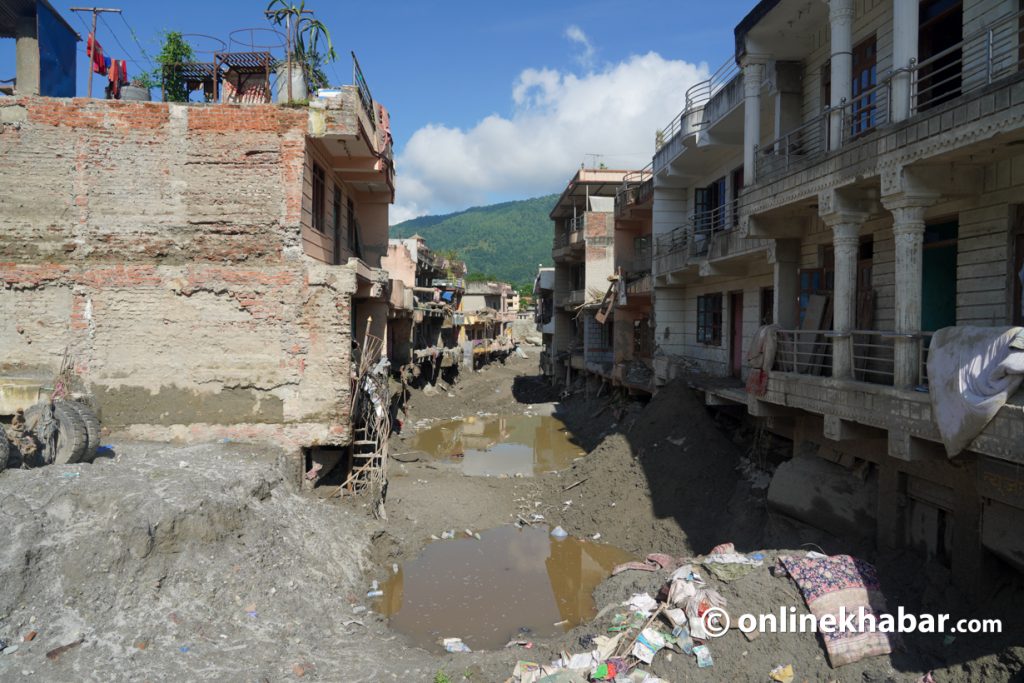
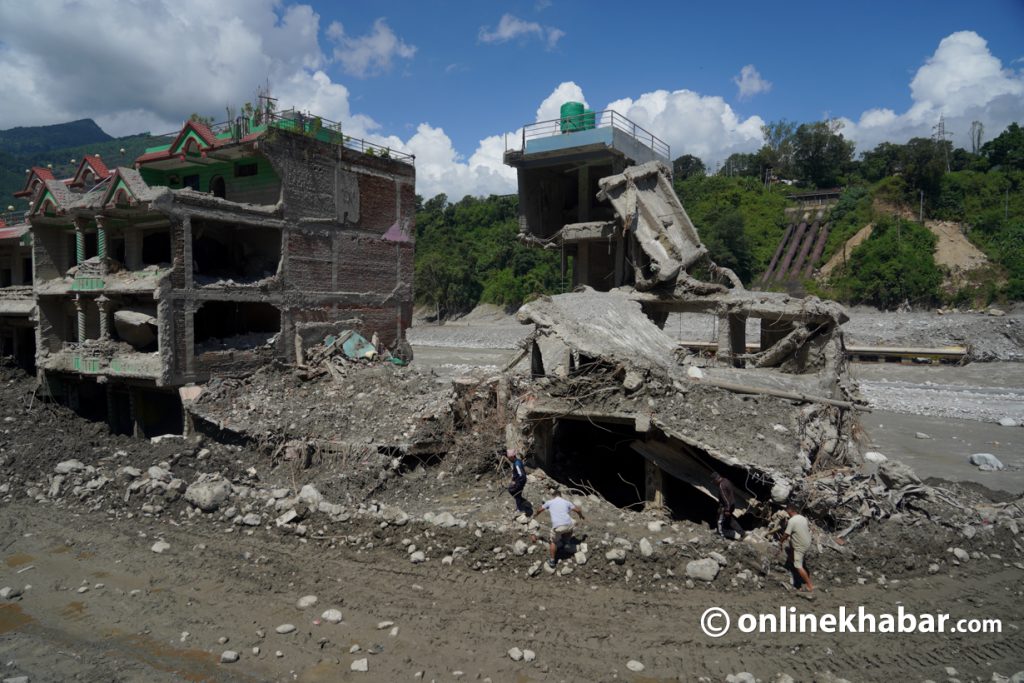
According to the source, Nepal is considering requesting $500 million in grants for reconstruction following the floods in Rasuwa and another $500 million for a separate project.
“India provides grants through two mechanisms. One is turnkey assistance, in which India itself implements the project. The other is through High Impact Community Development Projects (HICDPs), which are smaller projects costing up to Rs 200 million. We are considering a much larger grant, but it is still unclear which projects we should propose,” the source said.
During his earlier visit to India, Foreign Minister Khanal had requested $1 billion in financial assistance. However, sources say Nepal is now seeking additional support because the devastating floods that struck the country afterwards created a need for substantial reconstruction funding.
Expressway, railway and other infrastructure proposals
Nepal is also preparing to ask India to support the construction of a six-lane expressway between Butwal and Pokhara, as well as a highway connecting Pokhara with Muktinath.
A six-lane expressway from Sunauli to Butwal has already been completed. Nepal is proposing to extend it to Pokhara through an expressway that would include tunnels.
The proposed extension would be around 75 kilometres long. Studies suggest that, once completed, it could reduce travel time between Sunauli and Pokhara to around one and a half hours.
The project is intended to make travel easier for Indian tourists visiting Pokhara and Muktinath. According to a government source, Nepal hopes to secure up to $500 million in grant assistance from India for the expressway.
However, officials remain undecided about whether to seek Indian assistance because the detailed project report (DPR) is already being prepared with a grant from the Asian Infrastructure Investment Bank (AIIB).
Nepal also wants to move forward with the Raxaul-Kathmandu railway project. So far, only the final location survey (FLS) has been completed. Although India had previously agreed to prepare the project’s DPR, the work has not progressed.
The government is preparing to ask India to provide grant assistance for the project, including the preparation of its DPR. But officials at the Ministry of Physical Infrastructure say substantial groundwork remains to be done.
During the visit, the two prime ministers are also expected to jointly inaugurate the railway connection between Ayodhya and Janakpur.
The railway link between Ayodhya, regarded as the birthplace of Lord Ram, and Janakpur, regarded as the birthplace of Sita, is expected to promote tourism in Janakpur.
Air routes and management of Bhairahawa and Pokhara airports

Nepal also expects to reach an understanding with India on the operation of Pokhara and Bhairahawa international airports.
The lack of air routes allowing aircraft to enter through the Bhairahawa region has been a major obstacle to the airport’s commercial operation. Securing such a route from India is therefore expected to be one of the key issues raised during Shah’s visit.
According to reliable government sources, India has indicated that it would be positive about granting the air route if Nepal agrees to hand over the management of Bhairahawa and Pokhara airports to an Indian company.
Sources claim that Nepal is open to giving an Indian company responsibility for managing Bhairahawa airport. However, since the management contract would first require a competitive tender, a concrete decision may not be reached during the visit.
There is also uncertainty within the government over whether to hand over the management of Pokhara airport to an Indian company, as the airport was built with a Chinese loan.
Government sources say India has also indicated that, if Indian companies are given responsibility for managing the two airports, it would commit to operating flights to them from various Indian cities.
However, sources at the Ministry of Tourism and the Civil Aviation Authority of Nepal told Onlinekhabar that no discussions or preparations were under way within their institutions to hand over airport management to private companies.
“So far, the understanding has been that the government itself will operate these airports,” a source said.
Tourism Ministry spokesperson Jayanarayan Acharya said the ministry had only just begun preparing its agenda for the prime minister’s India visit.
“We received a letter from the Ministry of Foreign Affairs yesterday asking us to prepare the agenda for the visit. We will now begin the work,” he said.
India seeks broad political consensus on Pancheshwar project
A high-level government source told Onlinekhabar that Nepal wants to reach an agreement on the detailed project report of the Pancheshwar project and move the long-delayed development forward during the prime minister’s visit.
However, according to the source, India believes that progress on the project requires broad political consensus within Nepal.
“There is a deep political divide in Nepal over this project. India’s position is that, if an agreement is to be reached, the government must first secure a minimum level of consensus among all political parties,” the source said.
The project is part of the Mahakali Treaty signed between Nepal and India in 1996. Despite the passage of nearly 30 years, the two countries have yet to finalise the DPR of the 6,480-megawatt Pancheshwar Multipurpose Project.
The main disagreements concern water allocation, project costs and India’s claims over water from the Lower Sharda Barrage.
Nepal argues that the allocation of water from the Lower Sharda Barrage is unequal. India, meanwhile, says it has historically been using 5 billion cubic metres (BCM) of water from a point 150 kilometres downstream of the barrage and that any new allocation must not reduce its existing share.
Nepal argues that the water is used only after the Karnali River joins the river system and therefore cannot be counted as part of India’s claim to the waters of the Mahakali.
Nepal maintains that the Mahakali is a shared river and its water should be divided equally. It has also argued that India should pay for any water it uses beyond its half share.
The two sides also disagree over how to divide the project’s costs. Under the Mahakali Treaty, each country is supposed to bear costs in proportion to the benefits it receives from the project, including electricity, irrigation and flood control.
Since India is expected to receive substantial irrigation benefits covering 240,000 hectares, as well as significant flood-control benefits, Nepal has proposed that it bear 30 per cent of the project cost and India 70 per cent. India, however, maintains that Nepal should contribute 35 per cent.
Other unresolved issues include the distribution of benefits from flood control and irrigation, as well as the price of electricity generated by the project.
A high-level government source said Finance Minister Swarnim Wagle favours showing some flexibility to bring the project to a conclusion. Officials at the Ministry of Energy, however, are opposed to making concessions on water allocation.
“The groundwork that should have been done on this issue has not been completed. Therefore, the possibility of a concrete outcome is low,” the source said.
During the visit, Nepal is also preparing to raise the issue of India purchasing electricity generated by projects involving Chinese investment, as well as its claim to receive 10 cubic feet per second of water in the Chandani-Dodhara area, which it says it has not received.
“Discussions are also under way on the Upper Karnali and Arun-4 projects,” the source said.