

Kathmandu, November 3
A mid-air collision between two helicopters in Solukhumbu on Tuesday has once again raised serious questions about aviation safety and regulatory oversight in Nepal’s Khumbu region, where a large share of the country’s private helicopter business is concentrated.
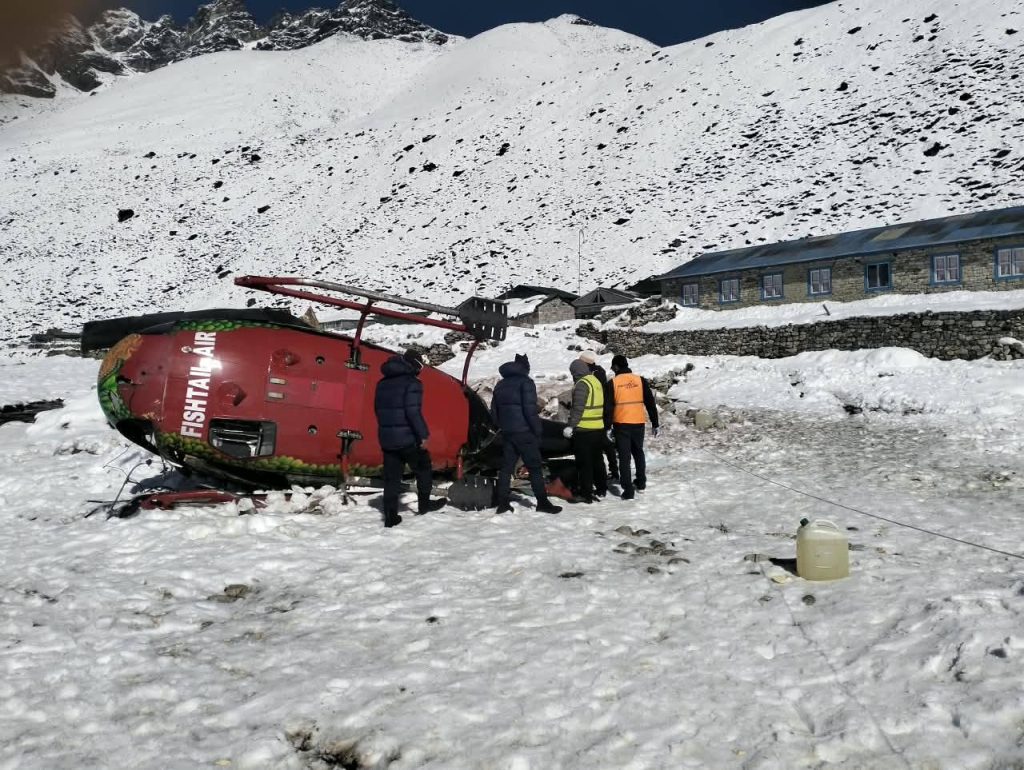
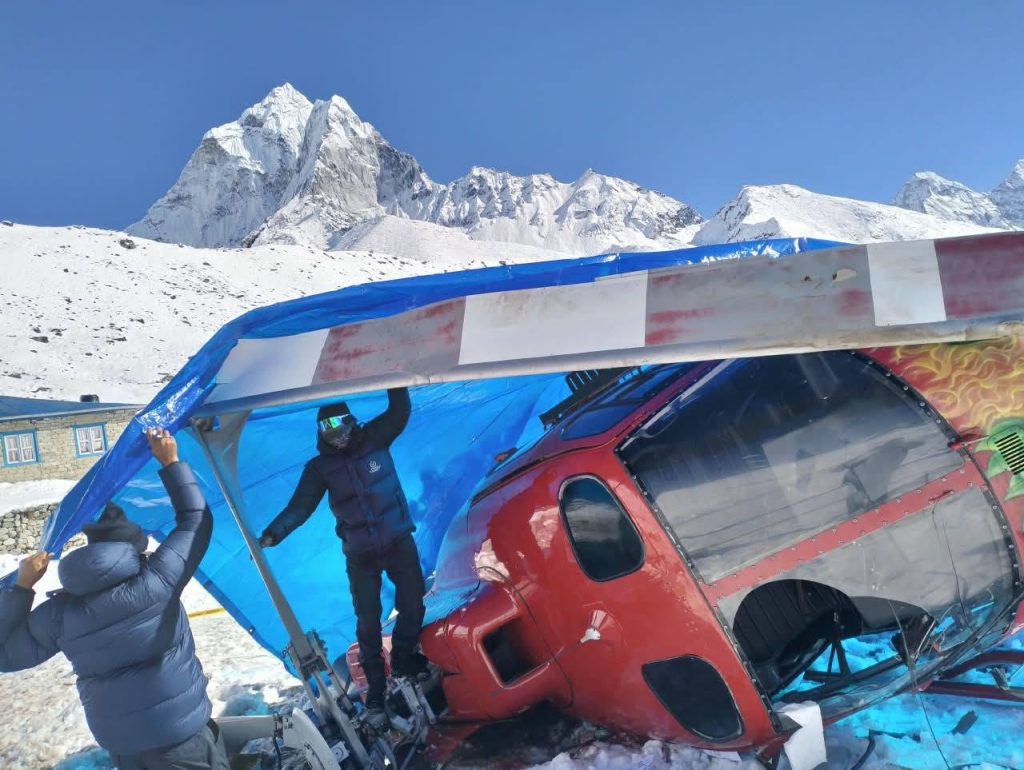
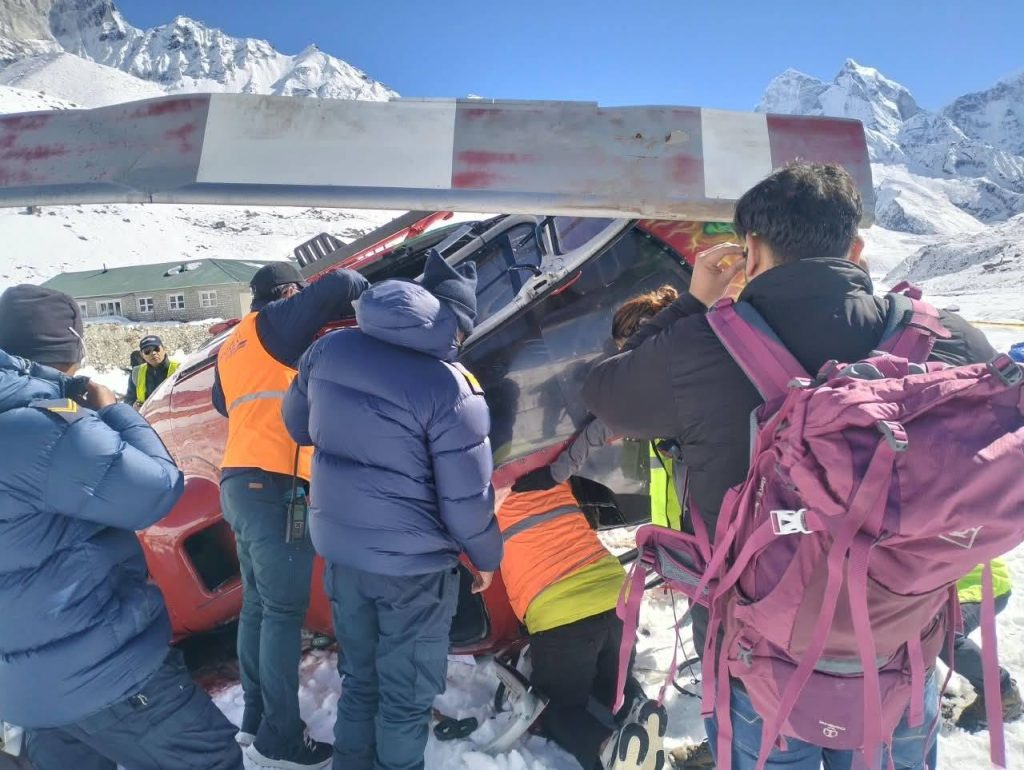
The collision occurred near a designated helipad in Pheriche, Solukhumbu, when two helicopters operated by Air Dynasty and Fishtail Air collided while approaching to land.
According to the Civil Aviation Authority of Nepal (CAAN), a 47-year-old Indian passenger, Basant Kumar Balaramudu, who was aboard the Fishtail Air helicopter, died in the accident. Another passenger, New Zealand national Shaileshkishan Patel, and the pilots of both helicopters sustained injuries. They are receiving treatment in Kathmandu.
CAAN spokesperson Bikram Raj Gautam said an investigation into the accident had begun. The authority said it would take necessary action and introduce corrective measures based on the findings and conclusions of the investigation. However, footage of Tuesday’s collision circulating on social media has raised concerns among aviation observers about possible pilot negligence and the absence of effective air traffic monitoring in the area.
Unlike airports with established air traffic control facilities, helicopter operations in areas above Lukla largely take place beyond the direct communication coverage of CAAN’s air traffic controllers based at Lukla airport.
As a result, pilots are required to coordinate directly with one another to manage communication and ensure safe take-offs and landings. This places considerable responsibility on the pilot-in-command (PIC) to maintain situational awareness and coordinate movements.
A senior CAAN technical official said the designated helipad at Pheriche could accommodate six or seven helicopters at a time. However, initial observations of the incident suggest that both pilots may have approached the same landing point, resulting in the collision.
The official described the incident as a serious lapse in pilot responsibility, although the exact cause will be established through the investigation.
According to the official, weather conditions at the time were clear, with no adverse wind conditions or snow-related obstacles affecting the helipad.
The collision under such apparently favourable conditions has raised further questions about compliance with basic flight coordination and landing procedures.
Where 70 per cent of helicopter business is concentrated, the state is absent
The accident has also highlighted a broader regulatory problem in the Khumbu region, particularly during the peak trekking season, when hundreds of tourists visit the Everest Base Camp trail and helicopter operators experience a surge in business.
Dozens of helicopter flights take place daily in areas beyond Lukla. Yet, CAAN personnel are not directly present at these remote helipads to monitor operations.
There is also limited technical assessment of helipad conditions, potential obstructions and operational risks. CAAN does not regularly publish data or reports based on such assessments, leaving much of the responsibility for safe operations to helicopter companies and pilots themselves.
The imbalance is particularly striking given the region’s commercial importance. Around 70 per cent of Nepal’s private helicopter business is concentrated in the Khumbu region. Another 10 per cent comes from Simikot-Hilsa operations, with the remaining business generated from other mountain destinations and activities.
Despite being the centre of the helicopter industry’s business, the Khumbu region lacks an adequate regulatory presence. Aviation observers say this has allowed operational practices to continue without sufficient monitoring and enforcement.
Repeated accidents, unimplemented recommendations
Tuesday’s collision is not the first incident to expose weaknesses in helicopter operations in the region.
On October 29, 2025, an Altitude Air helicopter crashed at Lobuche in Solukhumbu. Following the accident, a government-appointed investigation commission identified shortcomings in CAAN’s oversight of helicopter operations in the Khumbu region.
The commission found that CAAN personnel stationed at Lukla airport had failed to ensure effective monitoring and risk assessment of flights operating in the region.
Its report recommended deploying ground staff at Khumbu helipads and requiring helicopter operators to maintain personnel at their sub-bases during busy periods.
It also recommended that pilots obtain detailed information about landing-site conditions and weather before operating flights.
Other recommendations included preparing pre-flight risk assessments for flights to remote areas and rescue operations, installing clear and standardised markers at high-altitude helipads, and developing specific guidelines for helicopter operations in snowy and mountainous terrain.
However, most of these recommendations remain unimplemented. Even measures that have been introduced have largely remained formalities, allowing similar safety concerns to persist.
The repeated incidents raise questions about why recommendations made following previous accidents have not translated into meaningful changes in operational oversight.
What does the ministry say?
Following Tuesday’s accident, the Ministry of Culture, Tourism and Civil Aviation issued a statement expressing condolences over the death and concern about the incident.
Ministry spokesperson Jayanarayan Acharya said the government had been making continuous policy, institutional, structural and infrastructure-related efforts to promote Nepal’s tourism internationally and ensure safe, reliable and trustworthy air services.
He also said the effective implementation, monitoring and regulation of aviation safety standards had been given high priority to make Nepal’s airspace safer.
However, the latest accident has once again put the spotlight on the gap between the government’s stated commitment to aviation safety and the reality of helicopter operations in one of the country’s busiest mountain tourism regions.