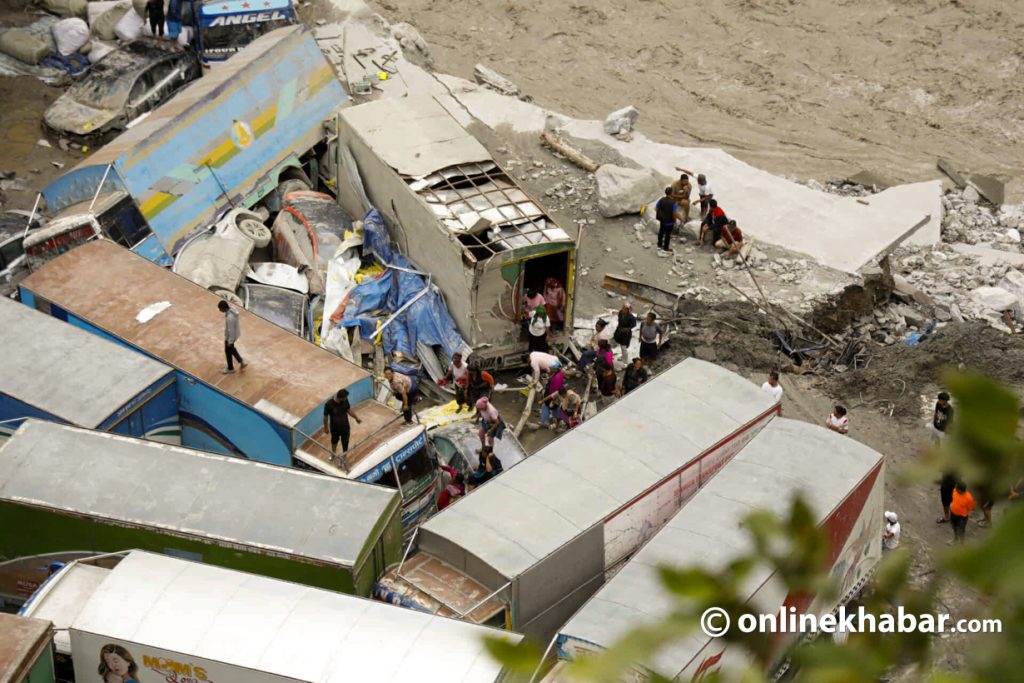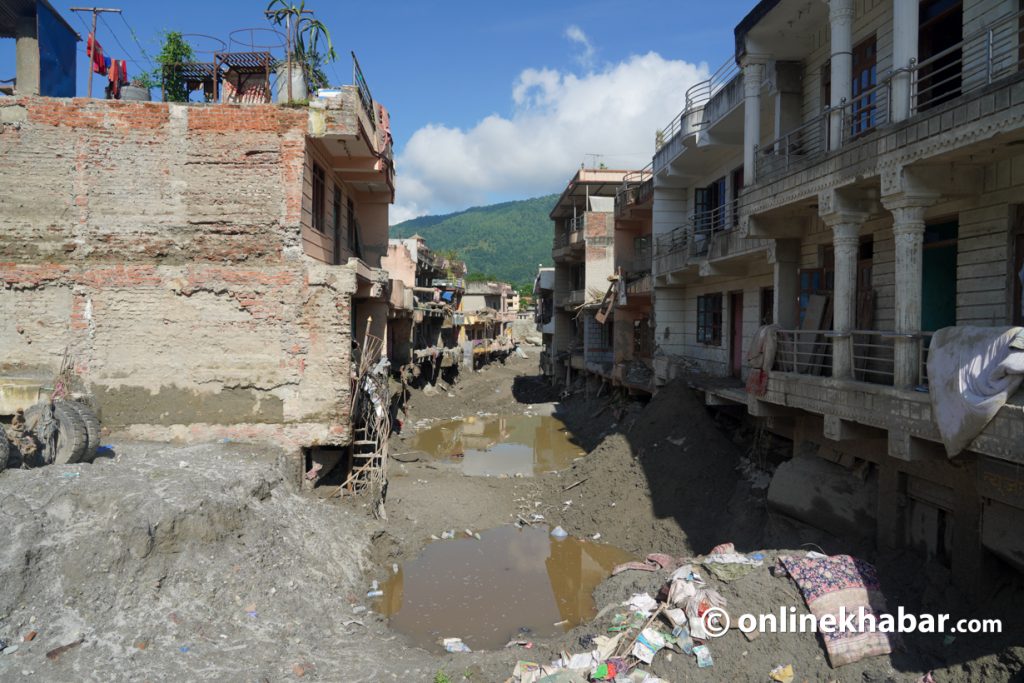


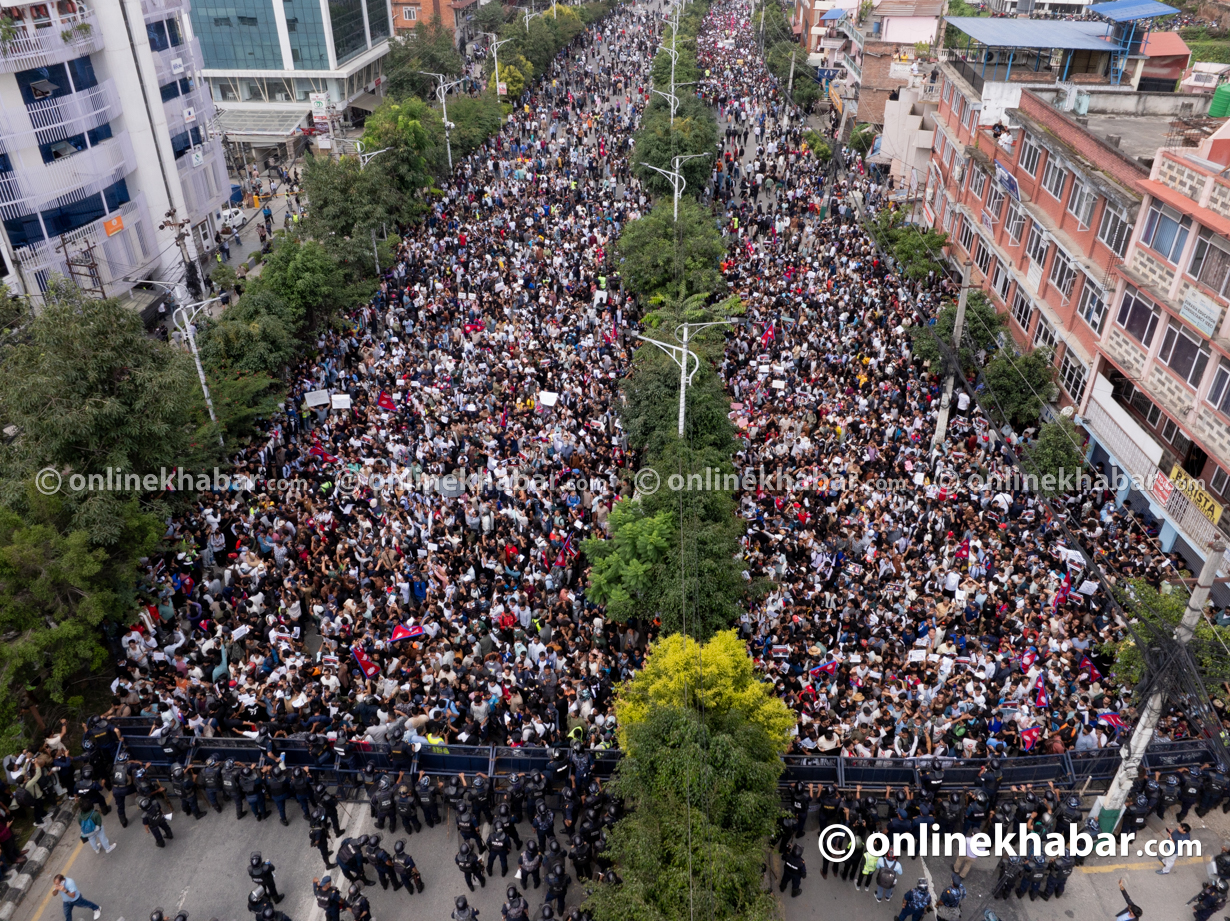
On 8 September 2025, a government that had just blocked 26 social media platforms discovered that the young had already said what they needed to say. For weeks, the “nepo kids” trend had set the holiday photos and luxury cars of politicians’ children beside peers facing youth unemployment of about 21 per cent. By the end of the uprising, 77 people were dead and losses topped Rs 84 billion, Parliament had been set on fire, and the prime minister had resigned. In March 2026, voters handed a three-year-old party 182 of the 275 seats.
Those young Nepalis did not lack rights. Their constitution lists 31 fundamental rights, including employment, health care, food and housing. What they lacked was the life those rights promise. A right on paper does not cure a fever or pay the rent. That gap, between the state’s paper and the citizen’s plate, is not a Himalayan peculiarity. It runs from Kathmandu to Paris and Washington. The modern bargain was simple: surrender part of your earnings and receive security, services and a fair chance in return. Today the state takes more than it returns, borrows the difference and spends a growing share on itself. Bigger budgets and longer charters will not repair that bargain. A smaller state and a stronger way of life can, and Nepal already owns one.
Taxation as anti-human behaviour
Work is how a finite life turns time into value. Robert Nozick likened taxing the earnings of labour to forced labour. Past a certain rate, and certainly when nothing comes back, taxation stops being a contribution and becomes anti-human.
Nepalis face around 50 taxes across three tiers of government and a 13 per cent VAT, yet in recent years federal revenue has fallen from 21.5 to 19.3 per cent of GDP. The 2026/27 budget cut the top income tax rate from 39 to 29 per cent. The deeper problem is what the money buys. Of every rupee in the 2026/27 federal budget, about 60 paisa goes on recurrent spending, from salaries to transfers, and only 20 is meant to build anything.
| FY 2026/27 federal budget | Rs (in billion) | Share |
| Recurrent spending | 1,270.6 | 59.8% |
| Capital spending | 431.1 | 20.3% |
| Financial management | 422.7 | 19.9% |
| Total | 2,124.3 | 100% |
Even that goes largely unspent. In 2025/26, the government used 46.8 per cent of its original capital budget. So citizens pay twice, once in tax and again at the counter. More than 1.8 million students attend private schools, and households meet about 59 per cent of health spending out of pocket. Many who cannot pay twice leave. Nepal issued 792,187 foreign labour approvals in 2025/26, remittances equalled about 36 per cent of GDP, and 1,217 Nepali workers died abroad in ten months of 2024/25. The right to employment is written in Kathmandu; the job is found in Doha. Nepal’s largest social safety net is the Gulf, and its premiums are paid in young lives.
The rich world’s autumn of anger
It is tempting to blame Nepal’s failure on poverty. The rich world shows otherwise. Britain’s Office for Budget Responsibility expects the tax take to reach 38 per cent of GDP by 2030-31, a post-war high. French public spending was 57.2 per cent of GDP in 2025, against a euro-area average of 49.8 per cent. Andreas Bergh and Magnus Henrekson found that 10 extra points of government size are associated with annual growth 0.5 to 1 point lower, while conceding that high-trust societies may escape the penalty. Sweden, the usual counter-example, saw spending peak near 71 per cent of GDP in 1993 and recovered largely by cutting it and binding itself to a surplus rule. The Nordic model admired today is the reformed one.
The bill has reached the streets. In September, France announced a €54 billion savings drive aimed largely at social and local spending. In October, riots damaged more than 3,000 shops in one weekend and six cities imposed partial curfews. Italian police clashed with protesters angry at poor services and living costs, and German unions marched about 175,000 people against pension and health cuts. Most marchers want more from the state, not less. That is the indictment: a state that already spends 57 per cent of national income still leaves its citizens marching for basic services. The shortfall lies in what the money does.
America, the low-tax alternative, fares no better. It spends 17.2 per cent of GDP on health, yet its life expectancy of 79 years trails Japan, Spain and Switzerland. Households saved 4.1 per cent of disposable income in August 2026. The average American earns at rich-world rates and saves at poor-world ones.
Trust in government has fallen across the rich world. Across 30 OECD democracies surveyed in late 2023, 44 per cent of people report low or no trust in their national government, against 39 per cent who trust it. Only 17 per cent of Americans trust Washington to do what is right most of the time, against 77 per cent in 1964, and thousands joined “No Kings” marches this month. These societies drafted many modern charters of rights. The charter was kept; the promise of a good life was not.
Europe’s big state and America’s big market have arrived at the same place by different roads: people who earn more than any generation in history, yet many are more indebted, more anxious and more alone. The missing ingredient is not a policy. It is a philosophy of what a good life is for.
Income is not a life
No household lives on income. It lives on what remains after taxes and essentials, and that remainder is freedom.
Housing is where the gap shows first. A Nepal Rastra Bank report cited in 2022 found Kathmandu Valley property prices rising 27.7 per cent a year while salaries rose 7.45 per cent. In America, a typical home costs nearly five times the median household income, and the median first-time buyer is now 40 years old. In England, the median home costs 7.6 times median full-time earnings, and 10.6 times in London. EU house prices rose 57.9 per cent between 2010 and early 2025, and even frugal Switzerland has a vacancy rate of 0.93 per cent. Big states and low taxes alike have failed here.
Where savings end, debt begins. Credit is sold in the West as a convenience; for millions it is the price of getting through the month. In a June 2026 U.S. News survey, 56 per cent of Americans with card debt blamed basic necessities. The Federal Reserve finds that 37 per cent of adults could not cover a $400 emergency with cash or its equivalent. Revolving card debt costs an average of 22.4 per cent a year, and 10.6 per cent of student loans are seriously overdue. In 2024, 9.2 per cent of EU residents were behind on housing, utility or loan payments, and 30 per cent could not face an unexpected expense.
The instalment does not stay on the statement. A University of Southampton meta-analysis of nearly 34,000 people found those in debt more than three times as likely to have a mental health problem, though the link can run both ways. Half of workers in the US and Canada felt a lot of stress the previous day, Gallup finds. In France, more than 9 million people were prescribed benzodiazepines, drugs for anxiety and insomnia, in 2024; in America, 8.4 per cent of adults took medication to sleep every day or most days in 2020. An economy that celebrates income while its people lose sleep has forgotten what an economy is for.
Why the state will not fix itself
If governments can see this, why do they not act? Public choice economists such as James Buchanan answered long ago: those who run the state follow their own incentives. Two habits show how.
The first is the freebie, the most efficient instrument in politics: its benefits are credited now, its costs charged to people too young to vote. America’s federal debt held by the public reached about 100 per cent of GDP in fiscal 2026, and interest alone, about $1.1 trillion, exceeded defence spending; a 2025 tax-and-spending law adds an estimated $4.2 trillion more. Unfunded tax cuts are no cure: Sri Lanka’s 2019 cuts, compounded by the pandemic, helped push it into default. Nepal is earlier on the same road. The IMF still rates its risk of debt distress as low, but public debt rose 11.25 per cent in 2025/26 to 45 per cent of GDP, and Nepal Rastra Bank warns that borrowing increasingly funds recurrent spending. This year, Rs 417 billion goes on principal and interest, almost as much as the Rs 431 billion capital budget.
The second is inheritance dressed as inclusion. Inclusion policy counts heads but rarely asks whose daughters, wives and nephews fill the seats. About 30 per cent of Japan’s Diet members were hereditary politicians in 2023. In India, 21 per cent of legislators come from political families, including 47 per cent of women legislators against 18 per cent of men. Nepal’s constitution requires at least a third of federal lawmakers to be women, and those seats have opened real doors; the risk, as India’s figures show, is that they become inherited. Meanwhile, in 2025, the cabinet moved to legislate lifetime perks for former office-holders, a bill paid by young men on building sites in Doha. Even the budget that followed March’s vote raised civil-service starting pay by 10 per cent, while capital budgets went unspent. Voters changed the masters; they have yet to change the system.
The bee and the leech
None of this would have surprised the subcontinent’s oldest political thinkers. The Laws of Manu set the king’s share of crops at an eighth, a sixth or a twelfth, and told him to tax little by little, as the leech, the calf and the bee take their food. A sixth is under 17 per cent; Britain is heading for 38. The units differ, harvest against GDP, but the gap is telling. In the Shanti Parva, Bhishma tells Yudhishthira to gather revenue as the bee gathers honey and as a herdsman draws milk, never starving the calf. The Vishnu Purana tells of Prithu, the first king, who in a famine chased the earth to kill her for withholding her grain; when she pleaded, he spared her and became her protector, and she yielded her harvest as a cow gives milk.
The test of such a ruler survives in a prayer still recited in Nepali homes: sarve bhavantu sukhinah, sarve santu niramayah, may all be happy, may all be free from illness. Legitimacy rested on rajdharma, right conduct. These texts also defend hereditary kingship and caste, and those parts belong to the past. What survives is a ceiling on what the state may take, and a test of whether it has earned it.
A way of life, not a welfare scheme
A ceiling on the state works only if something else carries the weight. In Sanatan culture, that something is a way of life, and each of its parts answers a failure the West now pays to treat. A society that lives by dharma needs fewer rulebooks; one that does not cannot be saved by them.
Against debt and consumption, it offers restraint. The opening verse of the Isha Upanishad tells us to enjoy the world without grasping and to covet no one’s wealth, a rebuke as fitting for a finance ministry as for a man. Sanatan thought counts artha, prosperity, among the four aims of life, but pursued within dharma, never as the measure of a life.
Against loneliness, it offers the family. The Taittiriya Upanishad commands: matru devo bhava, pitru devo bhava, atithi devo bhava, treat your mother, your father and your guest as divine. The joint family that grew from it, for all its strains, not least on women, did for centuries what welfare budgets now struggle to buy: care for the old, many hands for the young, a cushion for the jobless and company for the lonely, financed by duty rather than taxation. Harvard’s 87-year Study of Adult Development concludes that good relationships, not money or fame, keep people happier and healthier.
For stress, sleeping pills and obesity, the tradition prescribes a discipline of body and mind. Seasonal dal, bhat and tarkari, regular fasting and the teaching that food is sacred stand in contrast to an American diet that has left 40 per cent of adults obese. Yoga and meditation have evidence behind them: a review of 47 trials in JAMA Internal Medicine found that meditation brought modest but real relief from anxiety and depression. Ayurveda prescribes dinacharya and ritucharya, daily and seasonal routines of sleep, food and movement, so that health is kept before it has to be bought. Where the West reaches for a pill to sleep, Ayurveda begins with the hour of sleeping and waking. With 170 of its 194 member states reporting use of traditional medicine, the WHO opened a global centre for it in 2022, partly to build the evidence its remedies still need.
Vasudhaiva kutumbakam, the world is one family, makes no distinction of caste, creed or nation. It is a better compass than either the welfare state or the market, because it measures success by contentment, family and the welfare of all, and keeps the state small by expecting so much of the person.
Rewriting the contract
Nepal does not need to import a model from Paris or Washington. It needs to remember its own, and write it into law. A capitalist economy can fund a lean state that guards liberty, property and contracts; it cannot fund socialism on the taxpayer’s credit card forever. That means a constitutional debt brake, a legal ceiling on recurrent spending, sunset clauses on every subsidy, an end to lifetime perks, audited asset declarations for officials and their families, a public count of reserved seats held by leaders’ relatives, and land released for housing. A lean state can still be a caring one: it should guarantee basic schooling, primary health care and a floor for those with no family, paid for with money now lost to perks and interest. Above all, it means a ceiling on what the state may take, in the spirit of the old one-sixth: enough to govern, never enough to own the governed.
Gen Z proved it can topple a government. The harder task is building a state, and a society, that measure themselves as the old prayer does: by whether all are well.