

Kathmandu, November 3
Dinesh Rajauria, director general of the Department of Water Resources and Irrigation, was in Siraha inspecting irrigation projects when a personal secretary at the Prime Minister’s Office called and asked him to report to Singha Durbar immediately.
Rajauria said he would come after completing his inspections. But at around 2.45 pm, Siraha police detained him and took him to the Golbazar Police Office. According to sources, police told him the Prime Minister’s Office had instructed them to bring him in. He was later taken towards Kathmandu and held for several hours at the Area Police Office in Mangaltaar, Kavre.
On the same afternoon, police detained Krishna Prasad Rijal, chief of the Sunkoshi Marin Diversion Project, in Sindhuli. Both officials, who hold joint-secretary-level positions under the Ministry of Energy, Water Resources and Irrigation, were taken to the police premises in Thankot on Thursday evening.
A police source said they were taken to the Prime Minister’s Office at around 9 am on Friday.
At the PMO, Rajauria and Rijal were questioned separately throughout the day. Sources said Prime Minister’s development adviser Sanjiv Pandey and under-secretary Bishal Adhikari pressured them to cancel the contracts for civil, hydromechanical and associated works under the Sunkoshi Marin project.
The officials initially refused. Four or five other members of the tender evaluation committee were also summoned and kept in separate rooms. Their mobile phones were confiscated, sources said.
They were allegedly told they would not be released until the tender was cancelled. The officials eventually agreed to scrap the process and were released at around 10.30 pm on Friday. Sources said members of the Prime Minister’s secretariat kept their phones and threatened to hand them over to the Central Investigation Bureau.
A source familiar with the incident told Onlinekhabar that the officials were held in separate rooms at the PMO, questioned and threatened, and forced to sign a decision favouring those in power.
The tender cancellation followed weeks of pressure on the Ministry of Energy and the Department of Irrigation to revise the evaluation or scrap the process. Public procurement experts say the cancellation itself may have violated the law.
How the dispute began
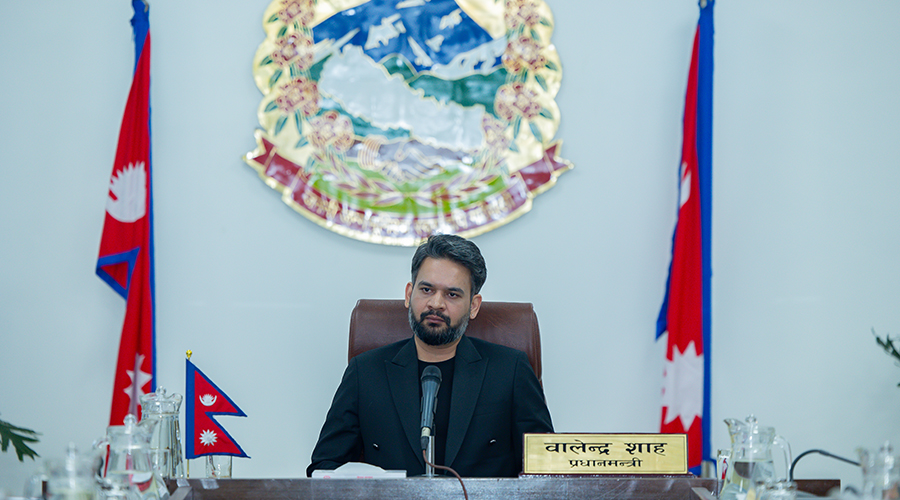
The Sunkoshi Marin Diversion Project is a national pride project designed to provide year-round irrigation to around 122,000 hectares of farmland across Dhanusha, Mahottari, Sarlahi, Rautahat and Bara. It will channel water from the Sunkoshi River through a tunnel into the Marin River, with a 28-megawatt power plant also planned at Kusumtar.
The tunnel was completed in April 2024. However, the civil and hydromechanical works awarded to Patel-Raman JV for Rs 14.0759 billion stalled, with the contractor completing only seven per cent of the work in 30 months. The government terminated the contract on November 12, 2025.
With overall project progress at around 35 per cent, the government invited a fresh tender on June 8, 2026. Technical proposals were opened on August 26 and evaluated by an eight-member committee at the project office. The project chief approved the assessment, which was then reviewed by a three-member team at the Department of Irrigation before being approved by the director general.
Three companies qualified technically: China Water and Energy Corporation (CWE), Aneng-RCC JV and Sinohydro Corporation. Their financial proposals were scheduled to be opened on November 2.
As the results were being prepared for publication, officials in the Prime Minister’s secretariat began contacting Energy Minister Biraj Bhakta Shrestha, Rajauria and other officials, asking them to revise the evaluation, according to more than three sources who spoke to Onlinekhabar.
Prime Minister’s chief personal secretary Subas Sharma and under-secretary Bishal Adhikari were among those who contacted officials, sources said.
Their initial argument was that the government could suffer a loss of Rs 2 billion because three bidders had been disqualified. But officials questioned how such a loss could be calculated before the financial proposals had been opened.
The previous contract was worth around Rs 14.07 billion, while project officials estimate the remaining work could cost Rs 18-19 billion under a new contract.
The six bidders included three that failed the technical evaluation: SIL (India)-KC-Phewa JV, Songda-Kalika JV and the Chinese consortium PREGC-SWBCC JV.
Officials were reluctant to repeat an evaluation that had passed through the project committee, project chief and department-level review. Minister Shrestha also backed the process. The results were published in The Rising Nepal on October 13, with the financial proposals scheduled to open on November 2.
Sources said the Prime Minister’s secretariat continued pressing for cancellation, raising concerns about alleged manipulation in the tender and the evaluation rules used.
A Department of Irrigation source said officials had suspected that bidders might have accessed competitors’ financial proposals through hacking. The source referred to previous allegations involving Kalika Construction owner Bikram Pandey, whose company was among the bidders. No evidence of hacking in the Sunkoshi Marin tender was presented to the department, the source said.
The PMO also argued that the evaluation should have followed the latest amendments to the Public Procurement Regulations. The 16th amendment, published in the Nepal Gazette on August 27, 2026, requires projects worth more than Rs 1.5 billion to use a rated-criteria system, giving equal weight to technical and financial proposals.
However, the Sunkoshi Marin tender had been invited on June 8, before the amendments were published and before the technical proposals were opened. Officials argued that the process should follow the law in force when the tender was invited.
Sources said that after the department rejected the demand for a fresh evaluation, people close to the Prime Minister began alleging serious manipulation in the process. They claimed to have evidence but did not present it, according to the sources.
Earlier interest in the project
The Sunkoshi Marin contract has also drawn political interest before the latest dispute.
When then Energy Minister Kulman Ghising initiated the termination of the Patel-Raman contract last year, Sunil Lamsal, now the physical infrastructure and transport minister and then a member of Kathmandu Mayor Balen Shah’s team, recommended that the contract not be terminated. Lamsal acknowledged making the recommendation in an interview with Setopati.
A member of former interim Prime Minister Sushila Karki’s secretariat also said members of Balen’s team had contacted the secretariat, asking it to prevent the termination.
Despite those efforts, the contract was terminated in November 2025. Sources say Lamsal and influential figures in the Prime Minister’s secretariat continued to show interest in the project after the current government took office.
A proposal to transfer the Department of Irrigation from the Energy Ministry to the Ministry of Physical Infrastructure was also reportedly discussed at a Cabinet meeting. Sources claim the move was intended to bring the project under a ministry led by Lamsal and give influential figures greater control over the contract process.
Experts question legality of cancellation
In a notice published on Saturday, the Sunkoshi Marin Multipurpose Project announced that the tender had been cancelled under Section 3(2) of the Public Procurement Act, 2007.
However, public procurement experts say Section 3 defines the scope of the Act and does not provide grounds for cancelling a tender. Those grounds are set out in Section 26.
Former government secretary and procurement expert Suresh Pradhan said a procurement process can be cancelled under Section 26 only in specified circumstances, including when no bid is substantially responsive, the lowest bid is substantially above the cost estimate, the goods or services are no longer required, or collusion among bidders is established.
He said cancelling a tender on other grounds could expose the responsible officials to action. He also questioned the PMO’s role in intervening in a procurement process.
Advocate Semanta Dahal, who specialises in public procurement, said the cancellation notice failed to identify which procurement rule had been violated or which of the grounds under Section 26 applied.
Dahal also said a tender must be evaluated under the legal provisions in force when it was invited. Amendments introduced later cannot be applied retrospectively, he said.
Contractor stands to benefit
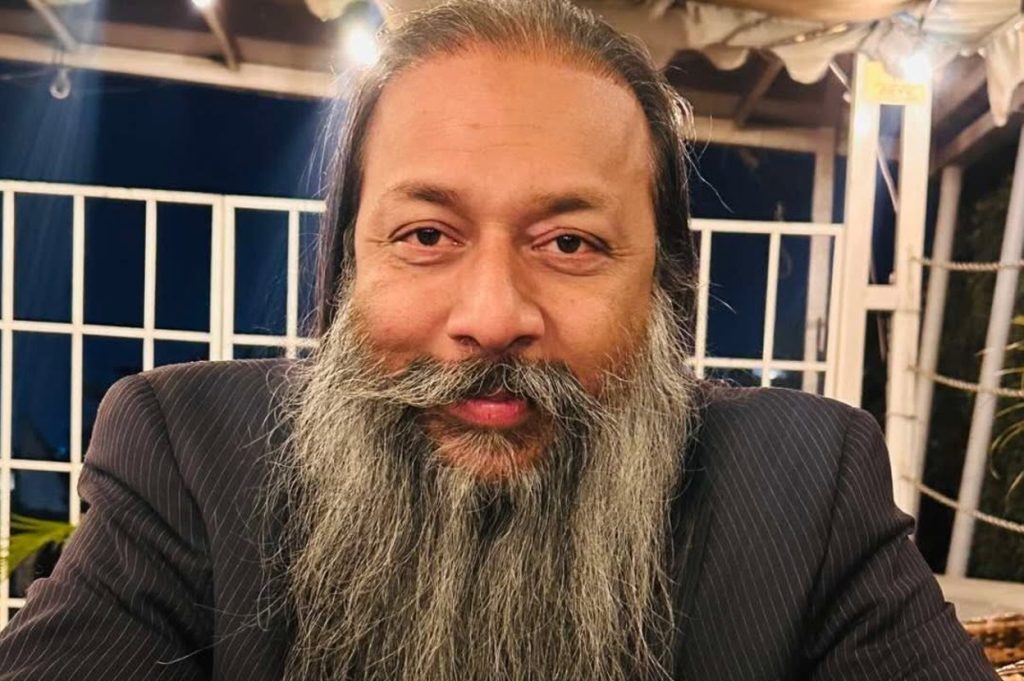
Raman Construction owner Raman Mahato welcomed the cancellation in a Facebook post on Saturday, writing, “Thank you, everyone.” People commenting on the post congratulated him over the decision.
The contractor could face substantial financial liability following the termination of its previous contract. The project had initiated the process of recovering Rs 3.6 billion in performance security and advance payments furnished by Patel-Raman JV. This included Rs 2.4 billion in performance security and Rs 1.2 billion in advance payments, of which Rs 1.2 billion has already been confiscated.
The contractor had completed around 10 per cent of the work and received Rs 2.14 billion in payments.
Under the Public Procurement Act, a contractor responsible for the termination of a contract must also bear additional costs incurred when the remaining work is awarded through a new tender. A source estimated that Raman could have faced an additional liability of Rs 7-8 billion under a new contract.
The source alleged that Mahato sought to have the tender cancelled by influencing people close to the Prime Minister.
Onlinekhabar sought responses from senior members of the Prime Minister’s secretariat. Press adviser Deepa Dahal said she had no information about the matter.
Another senior official, speaking off the record, said the PMO had received complaints about irregularities in the tender and instructed authorities to cancel it. He alleged that the technical evaluation had ignored the amended procurement rules and that changes made to the bidding documents through a sixth amendment on July 20, 2026, required explanation.
He questioned the removal of the word “intake” from the specific-experience criteria and changes to provisions on foreign currency conversion, price adjustments and contractor claims.
An official at the Department of Irrigation, speaking on condition of anonymity, said changes to the tender documents had been made in response to queries from companies interested in bidding.