Kathmandu, October 30
The Nepali Army has said that dual command is hindering disaster management.
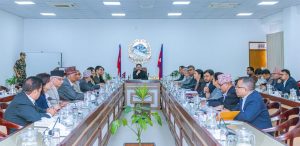
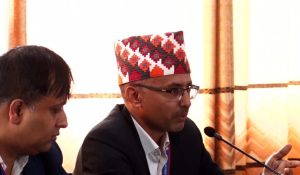
Briefing the Parliamentary Special Committee under the House of Representatives on Friday, Brigadier General Subash Jung Thapa of the Nepali Army said that overlapping jurisdiction among government agencies has made coordination in disaster management more challenging.
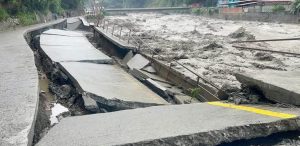
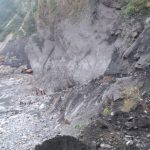
He stressed the need for a single chain of command. He explained how avalanche debris from Siringe Himal in northern Gorkha blocked the Syar Khola, a tributary of the Budhigandaki, for about two hours and caused a devastating flood.
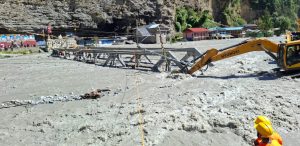
The river, blocked at 4:20 am, was released at 6:15 am. The flood then passed through Arughat, Besighat in Dhading and Muglin, and reached Chitwan in about eight hours. According to him, the flood damaged the 341 MW Budhigandaki hydropower project under construction and washed away six bridges, three motorable and three suspension.
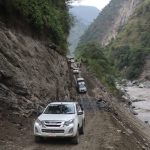
Six people remain out of contact, and 91.5 km of the road network was blocked. The Army said it deployed an aerial reconnaissance team at 6:36 am, as soon as it received information about the blockage. It reached Gorkha at 7:52 am and began search and rescue.
Brigadier General Thapa said that during the six-day operation, 1,025 people were rescued by air and land, and 13,930 kg of relief materials were transported. The Army also managed foreign tourists on the Manaslu trekking route and reopened traffic by rebuilding the Bailey bridge at Arughat, which is considered a lifeline.
Presenting its future course of action to the parliamentary committee, the Army suggested that post-disaster reconstruction and rehabilitation be led by the District Disaster Management Committee and supervised by the National Disaster Risk Reduction and Management Authority (NDRRMA).
It also emphasised the need to extend early warning systems down to the household level, saying at least 45 glacial lakes facing Nepal could burst at any time. Thapa said the district level should lead rehabilitation and reconstruction, with the NDRRMA monitoring.
He said search work should continue and responsibilities among stakeholders should be clearly divided while clearing debris. He also called for prioritising the restoration of roads, health services and the education system. Other recommendations were to manage bodies according to set protocols, to develop an effective early warning system to reduce glacial lake and avalanche risks, and to keep skilled search and rescue personnel with equipment on standby.
Thapa said a clear, fast and effective system of command and coordination should be developed by removing the overlap of authority seen in disaster management. Pointing to overlap among the Home Ministry, the NDRRMA and the emergency operation centres of provinces and local levels, the Army drew policymakers’ attention to the need for a clear integrated command system for effective rescue in times of crisis.