Kathmandu, October 29
Foreign Minister Shishir Khanal has said Nepal will give priority to the specific problems of the Himalayan region, climate-induced loss and damage, climate finance and climate justice at the UN Climate Change Conference (COP31).
Speaking at the National Climate Summit 2026 in Kathmandu on Thursday, he said the impact of climate change on the Himalayan ecosystem is a global challenge, not just a problem for Nepal.
He said the ecological stability of the Himalaya is linked to water, food security, energy and the economy. Protecting the mountains is therefore both a national interest and a shared international responsibility, he added.
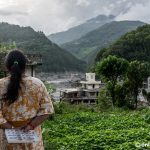
Minister Khanal noted that the devastating flood in the Bhotekoshi corridor on August 26 was followed by several major flood and landslide incidents in three river corridors within about six weeks. He said these disasters caused serious damage to lives, property, infrastructure, livelihoods and the economy.
According to him, preliminary estimates show that about US$4.7 billion will be needed just to rebuild and restore the damage from the August disasters. He said this is equal to about 10 percent of Nepal’s gross domestic product.
He said the disasters have put family lives, community reconstruction and years of development gains at risk.
Minister Khanal said Nepal will put forward four main priorities at COP31.
The first is that Himalayan issues should receive high priority in international climate negotiations. He said the Paris Agreement goal of limiting global warming to 1.5 degrees Celsius is especially important for mountain countries. Even a temporary rise above that limit, he warned, would speed up glacier melt and risk irreversible damage to sensitive ecosystems.
Building on the 2024 International Expert Dialogue on Mountains, People and Climate Change and the 2025 Sagarmatha Dialogue, Nepal will advocate at COP31 for regular high-level dialogue on the Himalaya. It will also call for a separate Himalayan action plan and for including mountain risks in the global climate framework. He said the issue will be carried forward at the next Sagarmatha Dialogue in 2027.
The second priority is to make the response to climate-induced loss and damage a key measure of international solidarity. He said economic losses from disasters should be considered along with displacement of communities, loss of cultural heritage and disruption to traditional livelihoods.
Minister Khanal claimed that a preliminary agreement has been reached to allocate US$21.6 billion to Nepal from the loss and damage fund, and that Nepal would be the first country to receive such an allocation. He added that the details and the official status of the allocation need further confirmation. He also said climate finance must ensure adequate resources, easy access and timely payment.
The third priority is to make climate finance accessible, fair and responsive to national needs. He said Nepal’s third Nationally Determined Contribution (NDC 3.0) estimates that about US$18 to 20 billion will be needed for adaptation between 2025 and 2035.
The fourth priority, he said, is to place climate justice at the centre of global efforts. He pointed out that Nepal contributes very little to global emissions but suffers heavily from climate change. By protecting its forests, glaciers and Himalayan ecosystems, he said, Nepal contributes to environmental stability worldwide.
He also said women, children, indigenous peoples, persons with disabilities and marginalised communities must have meaningful participation in climate decision-making.
Minister Khanal said climate change has become an important part of Nepal’s foreign policy. Nepal’s climate priorities will be advanced through bilateral diplomacy, regional partnerships and multilateral cooperation, he said. Nepali diplomatic missions will work to mobilise international partnerships, expand technological cooperation and carry Nepal’s voice on the climate crisis to the global stage, he added.
He said the Himalaya and the Pacific Ocean are connected through a single global climate system. The effects of glacier melt reach river systems, agriculture and coastal communities, he said, and this link underlines the importance of the “Sagarmatha to the Sea” concept.