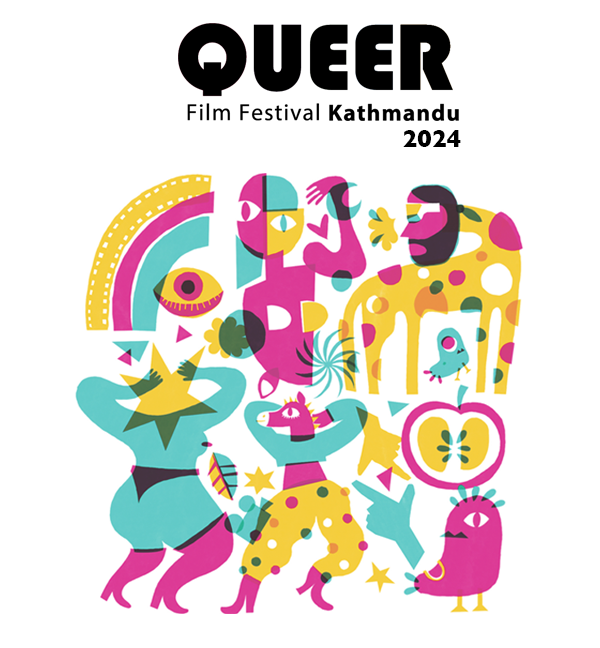
I was thinking about Suman Sen’s film Elephants in the Fog recently, specifically about how it captures the delicate, dangerous space trans women are forced to navigate simply to exist on their own terms. Watching it felt like opening a door to my own memory.
I remember the women around the Blue Diamond Society and their midnight parades. I was fourteen, wearing skimpy clothes, carried by that clubbing-girl confidence, and I was completely enraptured. Yet, according to everything I had been taught, that was not how a respectable woman was supposed to look.
Society actively shamed what I was seeing, leaving me deeply confused because all I saw were people following the exact trends that would have been celebrated if worn by white influencers online.
Still, they lived a life I wanted: that audacity, that confidence, wearing dresses without my mother policing them. Even as society called them provocative and dangerous, there they were, prevailing. They sat in a nearby canteen, gossiping, laughing, and flaunting a style I would never have learned from my mother’s sense of class. They taught me femininity, and then they taught me what femininity was not. They taught me survival.
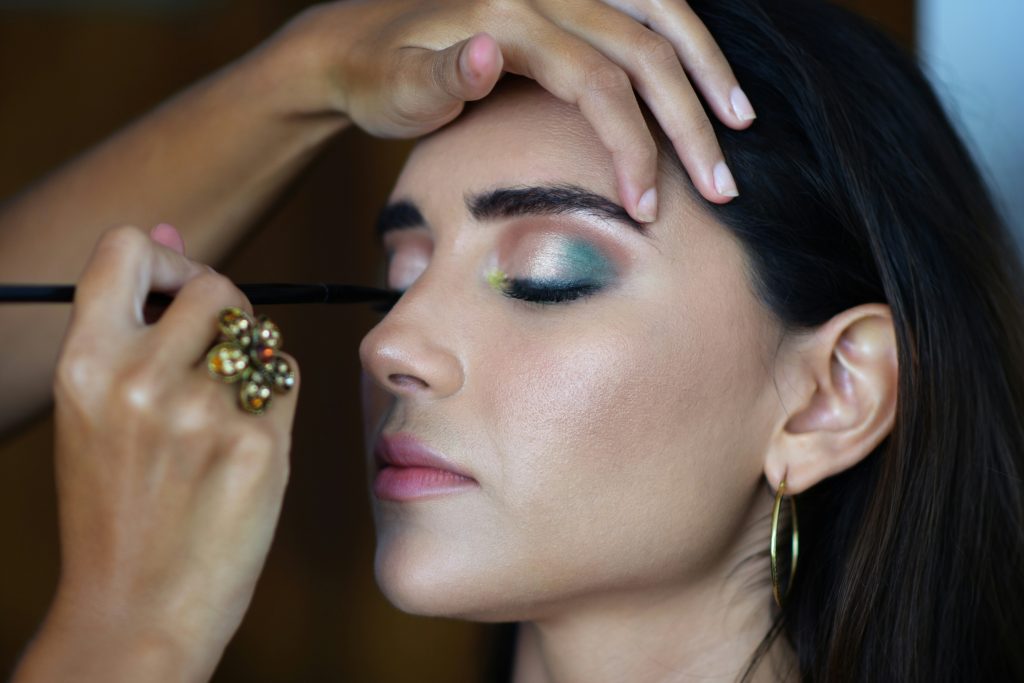
Their flawless makeup was what I admired most, yet that same art was used by others as a reason to condemn them. Growing up, my fourteen-year-old brain was constantly trying to solve the puzzle of what it meant to be a “correct” woman.
On one side, I had a massive fascination with Miss Nepal. I remember watching Nikita Chandak on screen and thinking, maybe that could be me. Miss Nepal sold the idea of the ultimate woman: intelligent, graceful and, above all, respectable. But her expression had to remain safe, sanitised so it would not agitate anyone.
On the other side, drag queens expressed femininity without restriction: loud, exaggerated and entirely on their own terms. I felt torn between the safety of the sanitised standard and the genuine freedom of the exaggerated one.
By 2016, the mainstream beauty world had exploded with pouty, over-lined lips, cut creases and heavy contouring, all celebrated as modern female empowerment. But these techniques had been built directly on the backs of drag queens and trans women. Mainstream culture took the very aesthetic it had once used to shame queer performers, rebranded it as a trend and stripped away credit from its creators.
Eventually came the Pride movement, and social acceptance expanded among my Gen Z peers. Being gay became tied to new social hierarchies and specific circles, like Thames College. Yet I did not rejoice simply because it had become fashionable. I thought of creators like Stan, who spoke about being treated like dirt in his home country despite his style. While mainstream gay culture became polished and digestible, I wondered whether the divas from Lazimpat were ever taken into consideration.
Before you are allowed to be a woman or a queer person in this society, you are expected to be palatable.
Mainstream culture embraces rich, polished figures who look “cleaner” while forgetting the raw predecessors who built the movement. Just as traditional femininity is policed, the LGBTQIA+ community is sanitised to be small, agreeable and easy to consume, reducing complex human beings to the “gay best friend” or a gender-fluid trend.
This sanitisation is not progress; it is control.
The same men who enforce rigid moral standards on women are often drawn to the very trans and queer identities they publicly shame, seeking out marginalised sex workers in the dark while demanding that their wives cover up at home. They accept queer people only when they have been sanitised for public consumption, revealing an inability to reconcile femininity when it operates outside their control.
When drag makeup or trans expression exaggerates femininity, it demands that you see art outside accepted rules. Beauty stops being merely soft or effortless. It becomes excessive, theatrical, angry, sexual, absurd and imperfect. That exaggeration proves femininity does not have to be quiet to be legitimate.
Yet when those same silhouettes appear on marginalised bodies, they are labelled cheap or vulgar. The same skirt is fashionable on one body and provocative on another. The same makeup is art on a stage and evidence of bad character on the street.
What changes? The clothes, or the person wearing them?

Transgender people are expected to be pitch-perfect symbols or figures of pity, but rarely complex human beings. Women face the exact same trap. They are placed on pedestals as symbols of beauty while being stripped of the right to be angry, flawed or absurd.
True empowerment is not a forced performance for the spectator. It is the simplicity of embodying your true mood without asking for permission.
My beautiful midnight ballerinas of Lazimpat Street still don their art. While mainstream society watches drag shows on television, sex workers on the street are rarely acknowledged in the light of day.
I remember one night, dressed more boldly than usual, when I gained the confidence to say a quick hello to them. Walking away, I realised how deeply women’s experiences mirror one another.
We divide women into those we admire and those we are afraid to become.
I used to resent those street divas. Now I realise that resentment was admiration. I wanted their colour, confidence and audacity to be seen without asking permission.
Femininity is not supposed to be one singular, polished aesthetic or the next social media trend. It is simply existing.
The greatest freedom would be to stop turning people into symbols long enough to let them simply be people.
Femininity was never supposed to be a prison made beautiful, and beauty was never supposed to be the price of being allowed to exist.