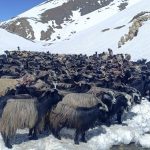
Nepal’s agricultural future may depend on something it already has in abundance — diversity.
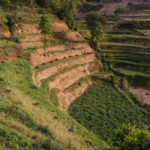
Across the country’s mountains, hills and plains, farmers have cultivated crops and raised livestock adapted to very different climates, soils and landscapes. Over generations, they have selected seeds, developed farming practices and preserved knowledge suited to the places where they live.
That diversity is more than an agricultural inheritance. It is a resource for dealing with some of the biggest challenges facing Nepal’s food system — climate change, declining soil health, changing diets, rising production costs and increasingly unpredictable weather.
If regenerative agriculture is to become more than a new label for sustainable farming, agrobiodiversity needs to be at its centre.
Diversity is a form of resilience
Agricultural diversity gives farmers choices.
A farming system that relies heavily on a single crop variety can be highly productive under the right conditions, but it can also be vulnerable when those conditions change. Drought, floods, new pests, diseases or shifts in temperature can quickly turn uniformity into a liability.
Genetic diversity provides a buffer.
Nepal’s agricultural genetic resources include crops, livestock, forages, agro-insects, microorganisms and aquatic species. They are spread across the country’s extraordinary ecological range, from around 60 metres above sea level to more than 5,000 metres in the Himalayas. According to the source material, these resources account for nearly 28 percent of Nepal’s total biological diversity.
But their value cannot be measured only in biological terms.
Local crops and livestock are tied to what communities eat, how food is prepared, local festivals and traditions, household incomes and the knowledge passed from one generation to the next. A local seed variety may carry traits that allow it to survive in poor soils, tolerate drought or mature within a short growing season.
Those traits may become increasingly valuable as Nepal’s climate changes.
The cost of becoming more uniform
Despite its agricultural diversity, Nepal’s research and development system remains heavily reliant on genetic material from outside the country. An estimated 95 percent of the germplasm used in agricultural research and development is sourced externally.
At the same time, the widespread promotion of uniform, high-performing varieties has contributed to the marginalisation of local landraces.
There is nothing inherently wrong with using improved varieties or introducing genetic material from elsewhere. Agricultural research depends on the exchange of genetic resources, and improved varieties can bring important gains in productivity and farmer incomes.
The concern arises when diversity is lost in the process.
A variety that performs exceptionally well under one set of conditions may be less useful when those conditions change. Once a local landrace disappears from farmers’ fields, the loss is not simply a loss of a seed. It can mean losing a collection of traits, farming knowledge and cultural practices that may be difficult or impossible to recover.
The increasing dependence on external inputs can add another layer of vulnerability. Intensive use of chemical fertilisers and pesticides can place pressure on soils and ecosystems, while replacing locally adapted practices with standardised technologies can weaken the systems that have traditionally maintained agricultural diversity.
The question, therefore, should not be whether Nepal should modernise its agriculture.
It should be what kind of modern agriculture Nepal wants.
Conservation cannot stop at a seed bank
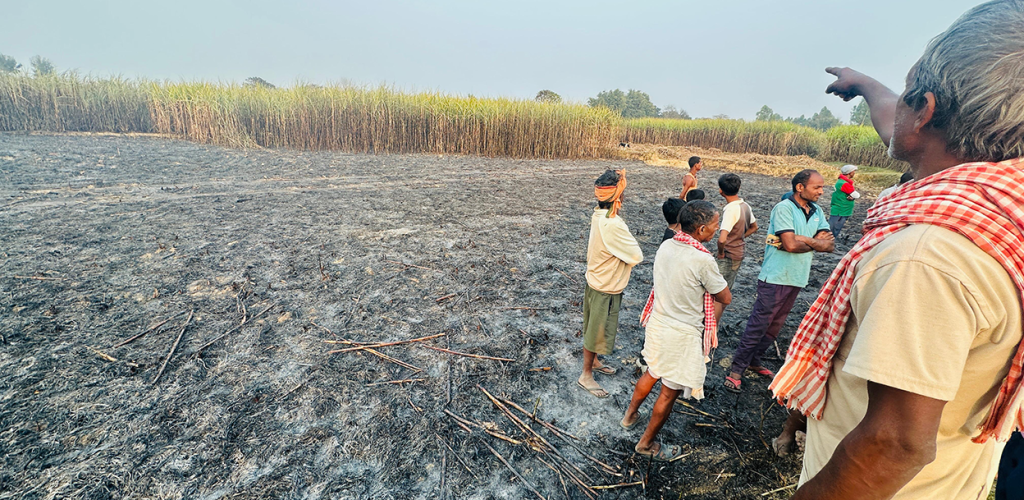
Protecting agricultural biodiversity does not mean simply collecting seeds and putting them into storage.
Seed banks are essential for safeguarding genetic resources, particularly when varieties are at risk of disappearing. But conservation is most meaningful when diversity continues to be grown, eaten, exchanged and improved.
This is the idea behind “conservation through use”.
Local varieties need to remain part of living agricultural systems. Farmers should be able to grow them in their fields, sell them in markets and pass them on to the next generation.
That requires a different relationship between farmers, researchers, government agencies, businesses and consumers.
It could mean supporting the continued cultivation of landraces, developing agroecological production systems, improving local varieties through participatory breeding and establishing community seed banks. School and community field gene banks, agro-gene sanctuaries, crop-specific conservation parks and seed exchanges could also help keep agricultural diversity visible and active.
In some cases, lost or neglected crop varieties could even be reintroduced into the communities where they once grew.
The principle is simple. Conservation should not freeze agricultural diversity in the past. It should allow it to evolve.
Farmers will conserve what they can make a living from
There is also an economic reality that conservation programmes sometimes overlook.
Farmers cannot be expected to maintain varieties that have little economic value simply because they are culturally or biologically important.
If a local crop takes more work to produce but earns less in the market than a commercially promoted alternative, farmers will naturally face pressure to switch.
That is why markets matter.
Native crops and products can create new income opportunities if they are supported by better processing, packaging, branding, quality standards and market development. Protecting geographical indications and other forms of intellectual property can also help communities retain value from products associated with particular places and traditions.
Local markets can play a role too. Raithane haat bazaars, homestays, farm stays and programmes that bring local foods into tourism and hospitality can connect agricultural diversity with consumers.
The aim should not simply be to turn every traditional crop into a premium product.
Commercialisation needs to be done carefully, with community rights protected and farmers and knowledge holders recognised for their contributions. Traditional knowledge and genetic resources should not become commodities that can be appropriated without consent or fair benefit-sharing.
What regenerative agriculture could mean for Nepal
Regenerative agriculture is often discussed in terms of soil health, biodiversity, natural processes and reducing dependence on harmful external inputs.
These ideas have obvious relevance to Nepal.
But there is a danger in treating regenerative agriculture as a single package that can be applied in the same way everywhere.
A farmer in Mustang does not face the same conditions as a farmer in the mid-hills or the Tarai. Growing seasons, water availability, soils, crops, livestock and climate risks vary enormously.
Nepal therefore needs a regenerative approach rooted in its own landscapes.
That means recognising farmers not simply as recipients of agricultural programmes, but as custodians and innovators. Their knowledge can complement scientific research in areas such as seed selection, soil management, pest control, food processing and climate adaptation.
The most effective solutions may emerge when these two forms of knowledge work together.
Lessons from Mustang and Manang
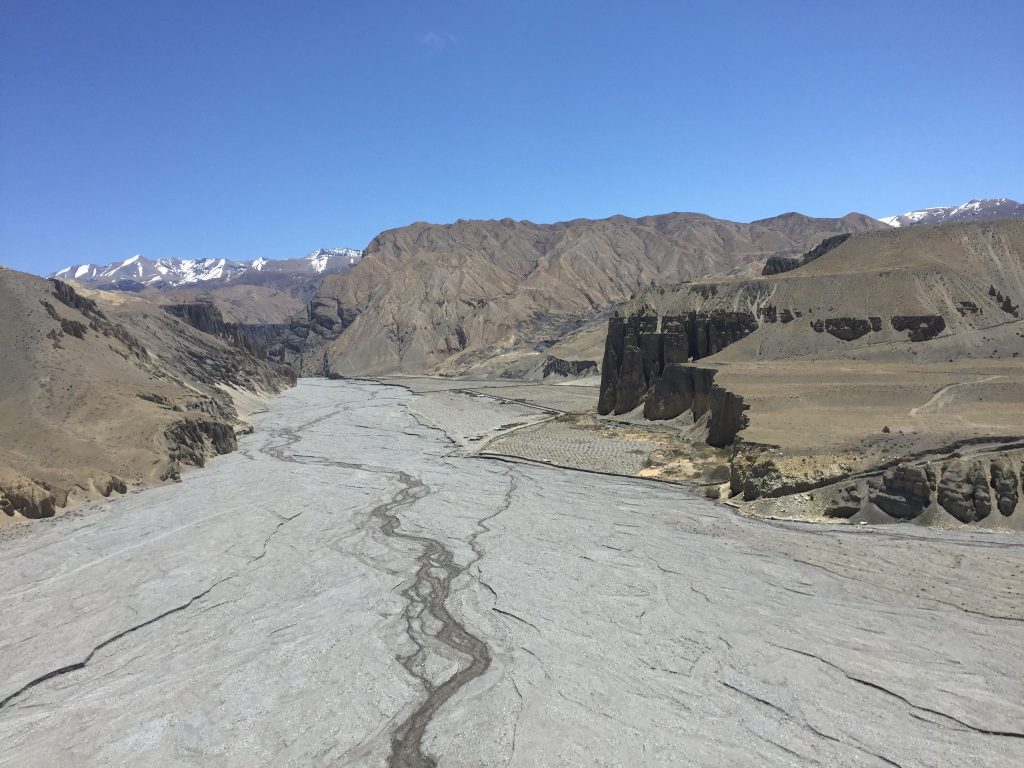
Some of the work taking place in Mustang and Manang offers an indication of what this could look like.
Community-led initiatives in these mountain districts have included collecting and repatriating diverse crop accessions and working with farmers to improve local landraces.
Such efforts matter beyond the communities where they take place.
Mountain crops have evolved under difficult conditions — short growing seasons, cold temperatures, limited water and high elevations. The traits that allow them to survive in these environments could become increasingly valuable as climate change alters growing conditions elsewhere.
Ideas such as a Himalayan Seed Vault, a Mountain Agro-Gene Sanctuary and community gene banks for safety duplication could strengthen long-term conservation.
But storage alone is not enough.
The most useful conservation systems will be those that maintain a living connection between genetic resources and the communities that have developed and used them.
From local diversity to wider markets
Nepal has the raw material for a distinctive agricultural identity.
Its native crops, livestock, foods, seeds and farming practices could find wider markets. But simply promoting them as “traditional” or “indigenous” will not be enough.
Farmers and local enterprises need access to research, processing facilities, quality improvement, certification, branding and reliable markets.
Scientific research can play an important role here. It can help improve varieties, understand nutritional properties, develop better processing methods and identify new markets.
But scientific improvement should complement local knowledge rather than replace it.
That requires a policy shift.
Nepal should strengthen farmers’ rights and community knowledge, support local seed enterprises and community seed banks, create incentives for cultivating landraces and invest more in research on native genetic resources. Public institutions could also use procurement policies to create demand for diverse, locally produced foods.
Conservation could be linked more deliberately with nutrition, tourism and rural enterprise.
And perhaps most importantly, farmers need fair prices and dependable markets if they are expected to maintain diversity that benefits society as a whole.
A strategic choice for Nepal
Agrobiodiversity should not be treated as a niche environmental issue.
It is connected to food security, climate resilience, rural livelihoods, nutrition and cultural continuity.
For too long, agricultural success has often been measured primarily through productivity — how much a particular variety can produce, how quickly it grows or how efficiently it responds to external inputs.
Those measures matter. But they do not tell the whole story.
A resilient agricultural system should also be judged by whether it maintains genetic diversity, protects soil health, produces nutritious food, supports farmers and retains the knowledge that allows communities to adapt to changing conditions.
Nepal has an opportunity to build an agricultural model around what it already possesses rather than continually looking elsewhere for the next solution.
That does not mean rejecting improved varieties, modern science or international research. It means bringing them into a system where local genetic resources, farmer knowledge and ecological conditions are treated as assets rather than obstacles to modernisation.
The future of Nepalese agriculture will not be secured by replacing diversity with uniformity.
It will depend on whether we can conserve that diversity, continue to improve it and create a future in which farmers have good reasons to keep growing it.
That is where regenerative agriculture should begin.