

Parbat, September 29
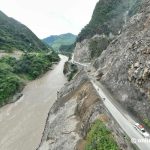
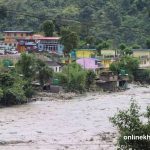
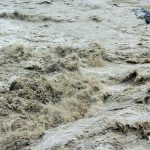
When the Kali Gandaki River surged after days of heavy rain on September 27, residents of Pharse in Jaljala Rural Municipality-8, Parbat, faced a disaster they had never imagined.
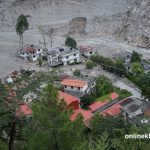
The river, which had long been part of everyday life in the settlement, suddenly began cutting into the old Pharse Bazaar.
Residents who had remained relatively untroubled even during previous floods watched helplessly as the river swallowed one house after another.
“People in Pharse have faced a disaster they never imagined in their lifetime. The Kali Gandaki, which had always made life easier, came as a destructive force this time,” local resident Ganesh Acharya said. “No one lost their life, but house after house was swept away. Residents could only watch helplessly.”
Hundreds of people were left without homes as the river continued to erode the settlement.
A market with more than a century of history
Pharse was once an important trading point in the Dhaulagiri region, long before roads connected the settlement to the rest of the country.
According to historian and researcher Chandraprakash Baniya, a Madan Puraskar winner who has studied the history of the former Parbat state and the Dhaulagiri region, Pharse was already a bustling market 70 years ago, despite having no road connection.
A suspension bridge built at least a century ago connected Pharse with Baglung. At the time, Beni was the main trading gateway in the region, and travellers using the Annapurna route would stay overnight in Pharse before continuing their journey.
Baniya recalls seeing houses surrounded by traditional grain storage structures in Pharse seven decades ago. Some were thatched, while the settlement served as a stop along an old pilgrimage route to Muktinath.
“Pharse Bazaar is one of the oldest markets in the Dhaulagiri region. It was a trading gateway,” Baniya said. “Goods were carried by mules from Pharse to Baglung and Myagdi. The historic trade route to Muktinath, and along the Kali Gandaki through Triveni and Batouli towards Mustang and the Tibetan border, passed through Pharse.”
According to Baniya, the old Parbat and Galkot districts were merged during the Rana period in 1952 to form Baglung district, with Baglung made its headquarters. At the time, areas west of the Modi River belonged to Parbat while areas to the east belonged to Syangja.
A bridge at Pharse became important for connecting the western part of Modi with Baglung.
“The area west of Modi needed a road to Baglung. There was a crossing at Beni, but not here. So a suspension bridge was first built at Pharse. It must be more than a century old,” Baniya said. “That historic bridge has also now been swept away by the flood.”
As Pharse became connected to Baglung and parts of Beni, the settlement grew into a trading centre.
Small shops and shelters stood along the riverbank, serving not only traders but also travellers looking for a place to stay. Similar settlements existed in Beni, where a suspension bridge was also built across the Kali Gandaki around 200 years ago, Baniya said.
Locals say the settlement of Pharse expanded through the efforts of former local officials Purnachandra Sharma and Colonel Chakrapani Sapkota. Engineer Ramchandra KC said an inscription records the construction of a Shiva temple in Pharse 105 years ago.
Residents still remember traders and travellers carrying goods by mule and horse and stopping overnight in the market.
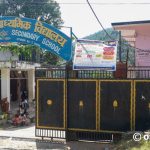
Pharse’s Shiva Secondary School, health post, community building and agricultural produce collection centre have also been damaged, according to KC.
Before the Maldhunga-Beni road opened in the early 1990s, travellers used Pharse as a major route. The settlement was historically connected to markets in Parbat, Baglung and Beni.
80 houses swept away, 24 at high risk
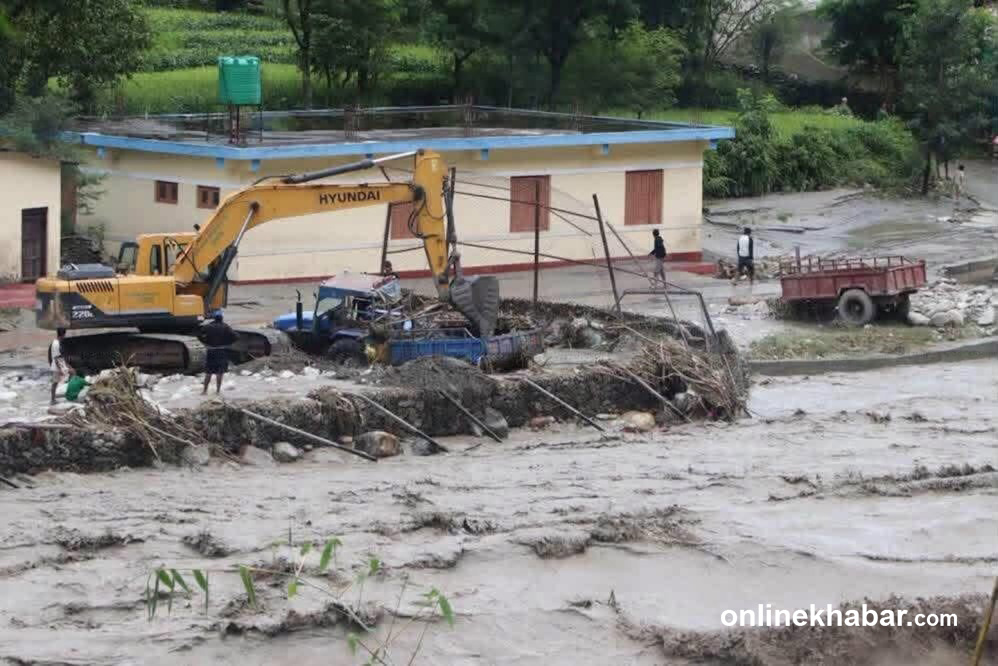
The September 27 flood has devastated the old Pharse Bazaar.
The Kali Gandaki has damaged or swept away around 80 houses, while another 24 houses are considered too dangerous to live in.
Jaljala Rural Municipality Vice Chairperson Deepak Acharya said residents were not only worried about the immediate danger but also about the future of the historic settlement.
“Until the other day, this was a peaceful settlement. Now it has become a riverbed, and the houses are damaged,” Acharya said. “No one lost their life, but generations of property have been swept away.”
Parbat Chief District Officer Ganga Bahadur Chhetri said the river had not merely damaged around 80 houses but had swept some of them away completely. Three more houses were washed away on Monday.
Residents remain anxious despite the river level falling.
“The risk remains even though the Kali Gandaki is not currently flooding. Damage is continuing even after the sun comes out. Continuous rainfall has caused springs to emerge, and the ground and roads from Pharse towards Beni have cracked,” Chhetri said. “People have now been moved to safer locations.”
The disaster has completely altered the daily lives of residents who had spent generations engaged in trade, business and agriculture.
Some now spend their days staring at the remains of their homes. Others look at the land where their houses once stood.
“People have been living in Pharse for at least 150 years, but they had never experienced such a disaster,” local engineer Ramchandra KC said. “Houses built by carving and shaping stone have now been reduced to ruins. The disaster has put the history of old Pharse Bazaar itself at risk.”
Pharse Bazaar, located in one of Jaljala Rural Municipality’s more densely populated wards, had continued to grow as people from surrounding hills migrated into the lower and upper parts of the settlement.
“Pharse Bazaar had been becoming increasingly vibrant. Now there is silence,” KC said.
Locals blame riverbed extraction
Residents also blame the extensive extraction of materials from the Kali Gandaki for worsening the damage.
They say crushers and both legal and illegal extraction activities have continued along the river from Kushma to Galeshwor, including during periods when extraction is prohibited.
They argue that Pharse residents have now suffered the consequences.
The suspension bridge linking Baglung and Parbat, believed to have been built more than 100 years ago, has also been swept away.
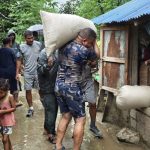
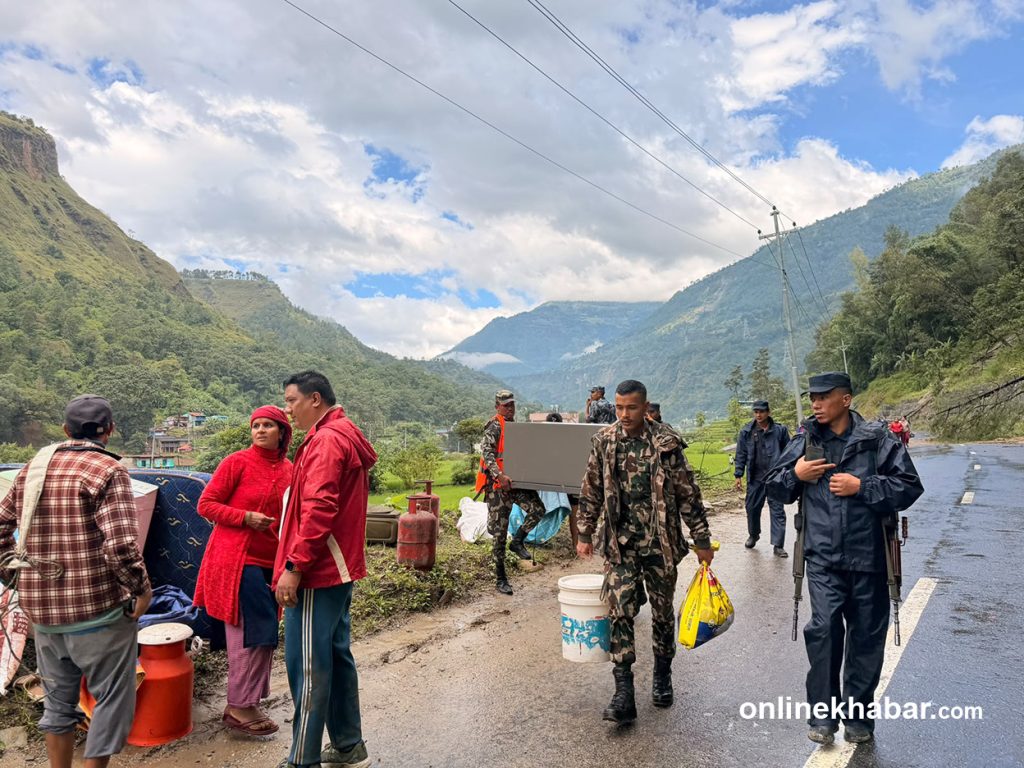
With 24 houses now considered unsafe and around 100 families affected, temporary accommodation has been prepared for 27 families through coordination among the federal, provincial and local governments.
According to CDO Chhetri, the Nepali Army, Armed Police Force, Nepal Police and local residents worked together to set up tents for the 27 families.
“An immediate arrangement had to be made for 27 families, and a temporary camp was prepared with the province also taking the lead,” Chhetri said. “The remaining families are staying with relatives or in vacant houses in the area.”
Gandaki Province Chief Minister Surendra Raj Pandey inspected Pharse Bazaar and directed authorities to ensure there was no shortage of relief, rescue and temporary accommodation for those affected.