At five years old, Tanka Sapkota began walking 45 minutes to school.
There were no cars waiting for him, no easy shortcuts. School was simply another part of a childhood spent working.
Before and after classes, he and his siblings worked in the fields. At 11 or 12, he was raising chickens. A little later, he began keeping goats. During Maghe Sankranti fairs, he sold lemons.
At 13, he helped dig an irrigation canal from Thuldhunga to Pokhari, about a kilometre away, to bring water to his village.
It was a childhood shaped by necessity.
More than four decades later, the 51-year-old Sapkota has built a very different life.
He lives in Portugal, where he has become a prominent name in Italian cuisine. His four restaurants attract political leaders, footballers, artists and other international visitors. His cooking has earned international awards, while his experiments with pizza, gold ovens and truffles have made him a distinctive figure in Portugal’s food scene.
Yet Sapkota still traces much of what he has achieved back to those early years in Baglung.
“We worked in the fields from morning to evening while continuing our studies,” he recalls. “Life taught me to work hard and keep working.”
A restless young man
Tanka Sapkota grew up in Damek, in what is now Jaimini Municipality-2 of Baglung, with seven brothers and two sisters.
His parents, Jagupati and Kalawati Sapkota, shaped his understanding of work in different ways. His mother was known for completing any task quickly and efficiently. His father was a community-minded man.
When his father died, Sapkota says, the number of people who came to pay their respects showed him how much his father had contributed to the community.
At school, he considered himself an average student. He completed his education from Grade 1 to 10 at Suntalachaur Secondary School.
But academic success was never the only measure of ability in his eyes.
Looking back, he believes creativity and the willingness to work mattered more to the life he eventually built than rote learning.
After completing his SLC, he began thinking seriously about becoming financially independent.
It was the era of watches, radios and cassette players. He watched people in Baglung bazaar making a living repairing them and became interested in learning the trade.
He did not know where to learn. So he decided to go to India with his elder brother Hemlal. The family did not approve. The brothers left home at 3am. They were robbed on the way. Still, they made it to India.
Sapkota initially found work cleaning a house for 280 Indian rupees. He soon left and found another job at a shop where he hoped to learn how to repair watches, radios and tape recorders.
The opportunity never quite materialised.
He was expected to clean the house and deliver tea to the shop. He was told he would be taught the technical work during winter, but that time never came.
Four months after arriving in India, he received a letter from his father asking him to return. He went home. Then came another worry.
His elder brother was getting married. On the day of the wedding, a guest mentioned Germany.
Sapkota immediately asked whether he could go too.
He made his father a promise.
“Send me to Germany. I will serve you for the rest of my life and I will never claim any share of the property,” he told him.
Eventually, his father agreed.
Germany and the kitchen
At the time, travelling to Germany did not require a visa in the way it does today. A traveller needed a ticket and travel cheque, although there was always a risk of being sent back.
Tanka Sapkota spent around Rs 150,000 and left Nepal. He was about 18.
Germany was another world. The language was unfamiliar. The culture was different. The technology and lifestyle he encountered made him realise how far behind Nepal was at the time.
He also made a personal decision there.
Back in Nepal, politics had been part of everyday life. Sapkota had been a member of the Nepali Congress, but his experience in Germany changed his perspective.
“I realised that in our country people are involved in politics from birth until death,” he says.
He decided to leave politics behind. From Berlin, he travelled by train to Stuttgart. He arrived at 9am. By 5pm that same day, he was at work.
The 18-year-old, thin and inexperienced, was not initially taken very seriously by his employer. That changed quickly.
His work ethic and willingness to learn earned him an opportunity at another restaurant, where he spent four years.
It was there that his relationship with food began to take shape. He worked 14 to 15 hours a day. For six months, he did not take a single day off. Not because his employer demanded it, he says, but because he wanted to work.
Within his first three years, he learned almost every part of the restaurant business — washing dishes, helping in the kitchen, making pizza, working behind the bar, serving customers and eventually cooking as a chef.
The restaurant owner became more than an employer.
“I still consider him like my father,” Sapkota says. “He also loves me like his own son.”
Those years gave him something that formal training could not easily provide — an intimate understanding of European kitchens and the discipline required to run them.
A new life in Portugal
After four and a half years in Germany, a school friend, Laxmi Sapkota, suggested Portugal. Sapkota arrived there in 1996. Two years later, his brother Hemlal also returned from Germany. For Sapkota, it felt like a turning point.
In 1999, the brothers opened their first restaurant. Their cousins Krishnaprasad Sapkota and Laxmiprasad Sapkota also played an important role in helping them get started.
The restaurant filled up within its first week. It never looked back.
Today, Tanka Sapkota has four restaurants. But expansion for its own sake has never been his goal.
“My aim is not simply to increase the number. It is to achieve excellence in quality,” he says.
The four restaurants are all within a two-kilometre radius, yet each has its own identity.
For Sapkota, food is inseparable from culture.
Italian, Portuguese and Nepali cuisine may look different, he says, but underneath the differences are fundamental similarities. In one place, the food itself may take centre stage; in another, spices may be more important.
His approach to cooking has grown from that idea.
The pizza experiment
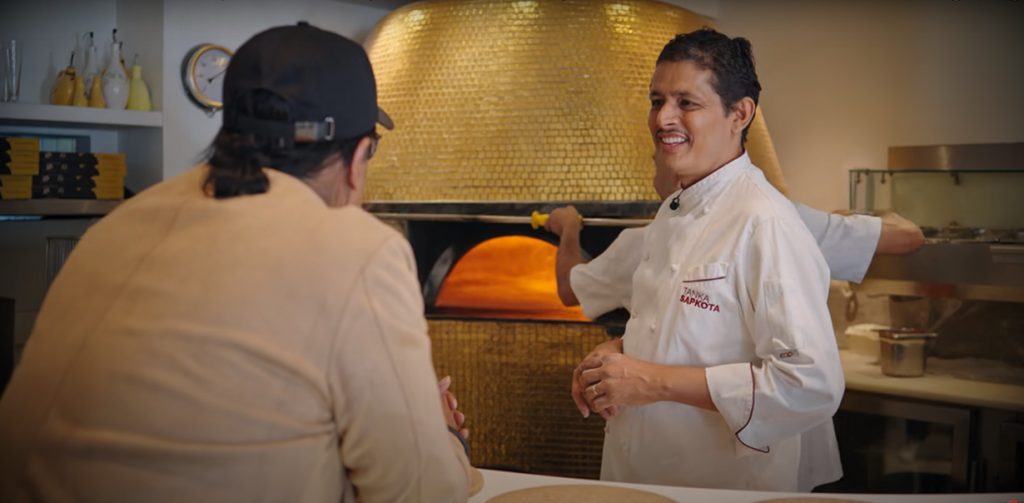
One of Sapkota’s most important culinary experiments began during a trip to Venice with his wife, Sita. At the time, he told Sita that his life had become about flour. He began experimenting with Neapolitan-style pizza.
In Portugal at the time, the style was relatively unfamiliar. People were more accustomed to thin-crust pizza. Sapkota took the risk anyway. The experiment worked.
Today, Neapolitan-style pizza has become common in restaurants across Portugal.
“I am naturally proud of it,” he says. “The path I started is now being followed by thousands.”
Then came another idea that sounded even more improbable. A gold oven.
Tanka Sapkota once told a friend he wanted to build one. The friend laughed and suggested the idea sounded arrogant. Sapkota had another way of looking at it.
“If temples, mosques, monasteries and churches can be built in gold, why shouldn’t the temple where I do my work be made of gold?” he recalls saying.
He began making pizza in a gold oven.
The idea eventually became popular too.
His restaurants also follow another principle — seasonal ingredients.
He believes food prepared with ingredients when nature provides them produces better results in both health and flavour.
Searching for Portugal’s truffles
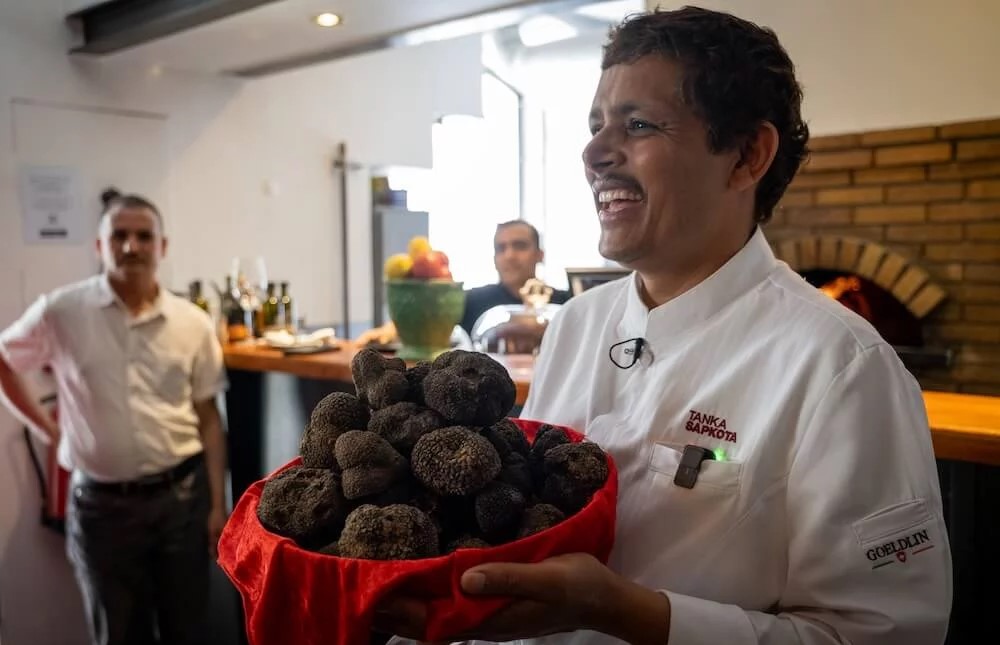
His next ambition was more difficult. He wanted to find truffles in Portugal. He told his wife that he wanted their oldest restaurant to become known for truffles. But there was a basic question.
Could truffles actually be found in Portugal?
An unexpected connection helped. At an awards ceremony where Sapkota had won a prize, Portugal’s agriculture minister was the chief guest. Through the minister, Sapkota was able to collaborate with scientists from the country’s agriculture and environment ministries.
The search began.
For five weeks, a 12-member team and two dogs investigated potential locations. Eventually, they found truffles in four places. Tanka Sapkota calls them the “diamonds of the kitchen”.
Truffles are among the world’s most sought-after and rare culinary ingredients.
News of the discovery spread nationally.
Sapkota appeared in interviews and television discussions, and his reputation grew.
Today, more than half the dishes at his oldest restaurant are based on truffles.
His name has become closely associated with the ingredient in Portugal.
In 2018, he publicly introduced a rare white truffle brought from Italy — the first time such a truffle had been presented in Portugal. A year later, in 2019, he was awarded the title “Cavaliere delle Tartufi Bianchi”, or “Knight of the White Truffle”, in Alba, Italy.
In 2024, he discovered Portugal’s first black summer truffle.
His ambitions have grown with the discoveries.
He now wants Portugal to develop into a centre for truffle tourism and cultivation, seeing the potential for a business worth tens of millions, as has happened in Italy and Spain.
When restaurants became a refuge
The pandemic changed the way Tanka Sapkota viewed his business. While restaurants and businesses around the world struggled simply to survive, he decided to use his kitchen for something else. His message was simple.
“We cannot change the world alone, but we can help change the world.”
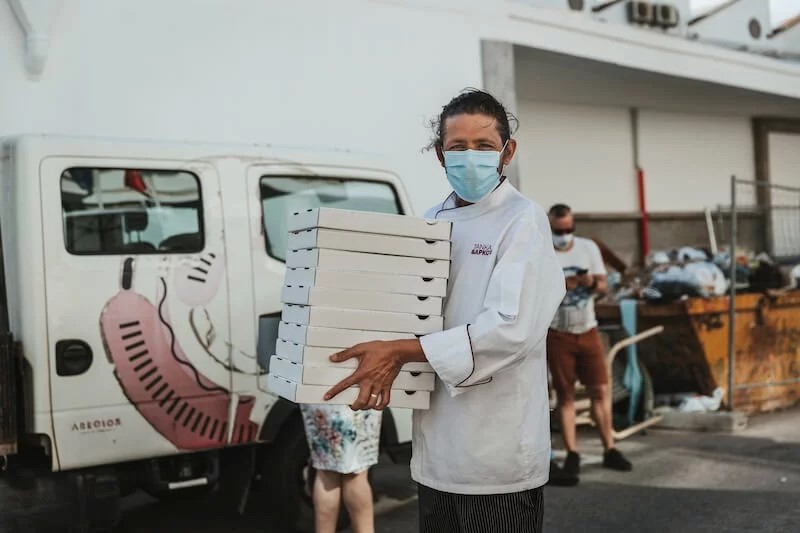
During the COVID-19 pandemic, Tanka Sapkota distributed pizzas free of charge, delivering them directly to people’s homes.
In total, he says, 10,500 pizzas were distributed. The campaign attracted national attention.
Portuguese television channels reported on his efforts, highlighting the restaurant owner who had turned his kitchen into a source of food and reassurance during a period of fear and uncertainty.
“COVID gave me an opportunity to look at my work from a new perspective,” he says. “I focused on what I could do.”
From presidents to footballers
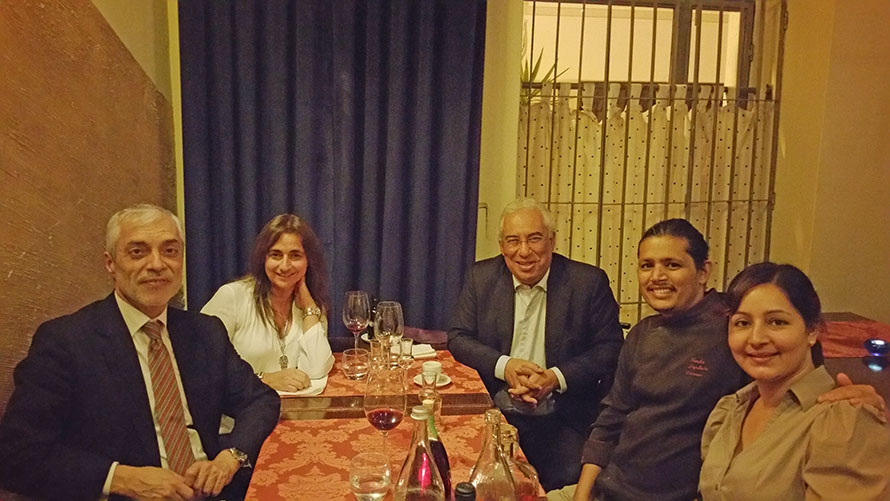
Sapkota’s restaurants have now become part of Portugal’s food landscape. His journey began with Come Prima, which recently marked 25 years. His restaurants Forno di Oro and Come Prima have appeared on lists of the world’s leading Italian restaurants.
Casa Nepalesa, meanwhile, offers another part of his identity, bringing Nepali dishes and flavours to an international audience.
After nearly three decades in Portugal, his restaurants have become meeting places for prominent figures.
Presidents and prime ministers of Portugal have visited. International artists and footballers have also stopped by while travelling through the country.
But Tanka Sapkota does not describe his success as the result of one dramatic breakthrough.
He sees it as the accumulation of small changes.
“Small improvements, continuous effort and high-quality service are what ensure business success,” he says.
A life on screen
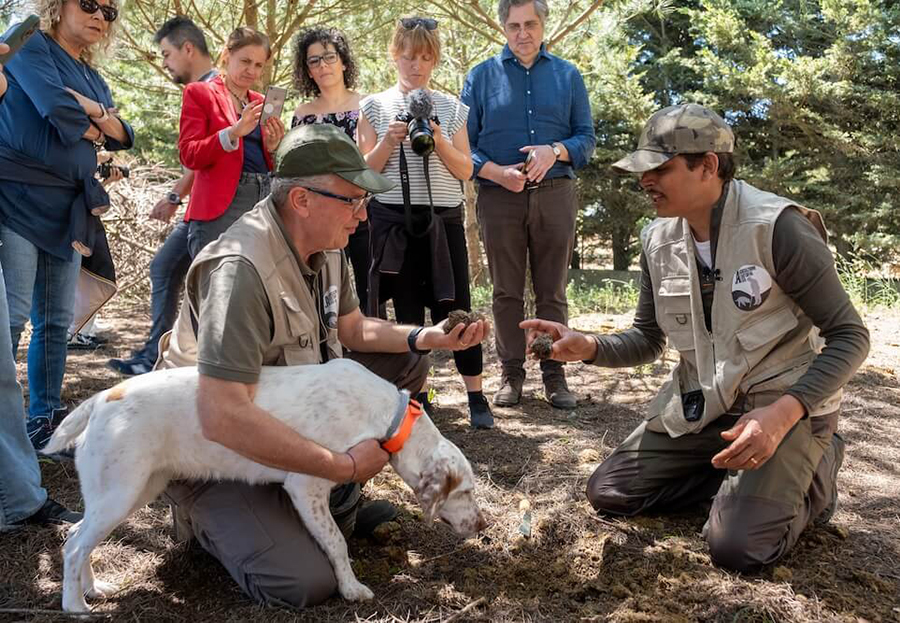
His three decades in the food industry have now been turned into a six-part documentary. Taste of Italy was broadcast on Portugal’s TVI channel. The documentary explores Italian cuisine, its ingredients and techniques, as well as Tanka Sapkota’s nearly 30 years of experience in the industry.
Filming took place across different parts of Italy over two months.
Directed by filmmaker Tiago P. de Carvalho, the documentary was produced to mark the 25th anniversary of Come Prima.
“I wanted the documentary to show how deeply I immerse myself in Italian cuisine,” Sapkota says.
It is a long way from the boy who walked barefoot to school in Baglung.
The child who sold lemons, raised chickens and goats, and once left home at 3am to learn how to repair watches in India could hardly have known where those decisions would lead.
But the thread running through his life has remained remarkably consistent.
Work. Curiosity. And the refusal to waste what he has been given.
Tanka Sapkota has a simple philosophy about food: throwing it away is one of the greatest crimes a person can commit.
His career has followed a similar principle.
He has taken difficult beginnings, failed plans, uncertain journeys and unexpected opportunities — and found a way to make something from each of them.