

Kathmandu, September 17
Ncell, Nepal’s first private-sector GSM mobile operator, has completed 21 years of service, marking more than two decades of growth and transformation in the country’s telecommunications sector.
When the company entered the market as Mero Mobile in 2005, Nepal’s telecom sector was still at an early stage of development. Mobile phone access was limited, SIM cards were difficult to obtain, and users often had to wait for months or stand in queues overnight to get a connection.
For many millennials, the experience of obtaining a telephone or mobile connection remains part of their memories. At the time, even getting a phone was considered a major achievement, while high charges for calls and other services made telecommunications expensive for ordinary users.
The arrival of Mero Mobile brought a new competitor into the market. As the company expanded its services and introduced more aggressive pricing and network expansion, Nepal’s state-owned telecom operator, Nepal Telecom, also faced greater pressure to modernise and expand its services.
Over the past two decades, Ncell has expanded its network across the country while navigating policy changes, ownership changes and other challenges in Nepal’s telecom market.
The company says it now serves more than 14 million customers across Nepal. When Mero Mobile began commercial operations, only around 6 percent of Nepal’s total population used mobile phones.
Ncell says its contribution has gone beyond network expansion, helping make telecommunications services more accessible and affordable. The company says it entered the market with the goal of connecting Nepalis through its network and providing modern, quality services at affordable prices.
From Mero Mobile to Ncell
The company was not initially called Ncell. It was registered as Mero Mobile in 2004 and began commercial operations on September 17, 2005. In 2008, Sweden-based TeliaSonera, now known as Telia Company, acquired the company. It was rebranded as Ncell in 2010. In 2016, ownership passed to Malaysia-based Axiata Group. On December 1, 2023, UK-based Spectrlite UK Limited acquired shares from Axiata, bringing Ncell under its current ownership.
Ncell expanded its 3G network to the Everest region in 2010 and launched 4G services in 2017. According to the company, its 4G network now covers around 95 percent of Nepal’s population. Ncell has also been gradually shutting down its 3G network and shifting customers towards 4G. More than 200 towers in Gandaki, Lumbini and Sudurpaschim provinces have already discontinued 3G services, according to the company.
The operator launched VoLTE commercially in 2022. The technology offers HD voice calls, faster call connections and allows customers to use 4G data while making voice calls.
Ncell also launched eSIM services on November 25, 2022. Customers can activate an eSIM by sending their citizenship number and email address to 17125 and receiving a QR code. The service allows users to connect to the network without a physical SIM card and can be particularly useful for travellers.
For homes and small offices, the company operates Wirefree Plus Internet, a 4G router-based broadband service. Ncell says the service is available in areas with 4G coverage and can provide an alternative in locations where fibre connectivity has not reached.
The company also offers prepaid, postpaid and business SIM plans, along with data, voice, combined and promotional packages.
Its “Sadhain ON” campaign has focused on continuous access to data and voice services. Ncell also operates the Ncell Loan service, allowing prepaid customers with insufficient balance to temporarily use voice, SMS and data services.
Its Personalised Ring Back Tone service allows callers to hear songs or other audio instead of the standard ringing tone while waiting for a call to be answered.
Expanding into business and IoT
Ncell has also expanded its services for corporate customers through business SIMs and corporate plans that include additional data, voice and management features.
In August 2026, the company signed an agreement to install IoT SIMs in BYD vehicles. According to Ncell, new BYD vehicles equipped with the SIMs will be able to access services such as YouTube, Spotify, karaoke and the BYD ecosystem directly from the vehicle without requiring an additional Wi-Fi hotspot or phone connection.
Major taxpayer and CSR contributor
Ncell has also presented itself as one of Nepal’s major taxpayers. The company says it paid around Rs 3 billion in taxes and fees during the 2025/26 fiscal year. It has also said it paid Rs 47 billion in capital gains tax related to the change in share ownership in 2016.
The company claims its activities directly and indirectly support employment for around 100,000 people. Ncell says it has invested more than Rs 2 billion in corporate social responsibility programmes, focusing primarily on health, education and the environment.
Its initiatives include the Ring Road Green Belt, telemedicine and personal health programmes, and the establishment of digital IT laboratories in 60 government and community schools.
The company says it also provided support to the government and communities during the 2015 earthquake, the floods of 2024 and 2026, and the COVID-19 pandemic.
Ncell has also received a number of national and international awards, including recognition as a major income-tax payer in the ICT sector, the HRM Award, NBI Business Resilience Award, Asian Telecom Award and World Communication Award, according to the company.
Revenue pressure and changing telecom market
Despite its expansion, Ncell faces challenges as telecommunications technology and consumer behaviour continue to change.
The company says both Ncell and Nepal Telecom are under increasing revenue pressure due to the growing use of over-the-top (OTT) services, declining international long-distance revenue and competition over data prices.
Although demand for mobile data continues to grow rapidly, competition has pushed data prices down.
Ncell says the telecommunications sector once contributed around 5 percent to Nepal’s gross domestic product. That contribution has now fallen to around 2 percent.
The company estimates that the telecom market, once worth around Rs 100 billion, has contracted to less than Rs 70 billion.
Ncell has also pointed to policy challenges, including the fact that more than 50 percent of telecom companies’ revenue can go towards taxes and fees, high spectrum charges and the lack of an updated Telecommunications Act since 1997.
The company says these challenges will need to be addressed if operators are to invest in new technologies such as 5G. Ncell estimates that bringing 5G technology to its network alone would require an investment of around Rs 45 billion.
Damage during Gen Z protests
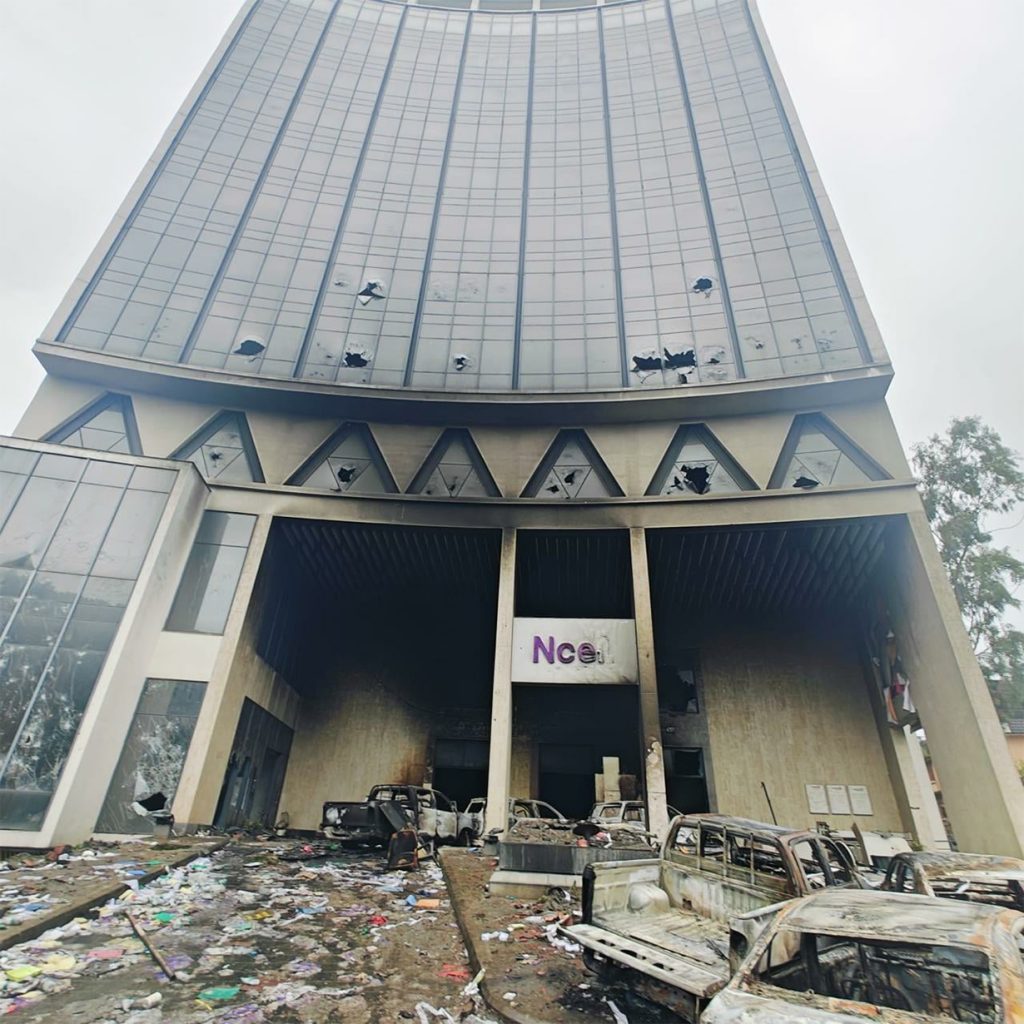
Political instability has emerged as another challenge for the company. During the Gen Z protests on September 10, Ncell’s central office and some regional offices were vandalised and set on fire, causing damage to the company.
Despite the disruption, Ncell says it continued providing services and offered all customers free local calls, internet and SMS services for three days.
The company has argued that Nepal’s ambition for IT development and digital transformation cannot be achieved without the support and sustainable growth of major players in the ICT ecosystem.
It has also pointed to the exit of companies such as United Telecom Limited, Smart Telecom, Nepal Satellite Telecom and CG Telecom from the market, saying a stable and predictable policy environment is needed to ensure the sustainability of the remaining telecom operators.
Ncell says it has invested more than Rs 130 billion in capital expenditure over the past decade, including licence renewal-related costs. However, it expects declining industry revenues to reduce the pace of future capital investment.
Looking ahead under new ownership
Under its new ownership, Ncell says it plans to focus on investment, innovation and expanding services aimed at improving people’s lives.
The company says a stable telecom sector and an investment-friendly environment are essential to achieving the goals of Digital Nepal.
Ncell has also expressed willingness to become a company with more than 50 percent Nepali ownership and has asked the government to create a legal pathway for this.
Under the existing shareholding arrangement, there is a legal provision for Ncell’s ownership to transfer to the Nepal government after 2030. The company has asked the government to facilitate arrangements that would allow its services to continue beyond that point.
The government, however, has not given a positive response to the proposal so far.
Ncell’s journey in key dates
| Date | Milestone |
| September 17, 2005 | Mero Mobile begins commercial service |
| September 27, 2008 | TeliaSonera enters through the acquisition of Spice Nepal |
| March 12, 2010 | Mero Mobile rebranded as Ncell |
| October 29, 2010 | 3G service expanded to the Everest region |
| May 3, 2011 | Ncell overtakes Nepal Telecom in subscriber numbers |
| November 18, 2015 | Recognised as Nepal’s largest taxpayer |
| April 13, 2016 | Axiata Group enters the company |
| August 18, 2016 | New Ncell brand logo unveiled |
| May 31, 2017 | 4G service launched |
| March 24, 2020 | Rs 100 million contributed to the COVID-19 fund |
| April 12, 2020 | Capital gains tax paid |
| August 3, 2021 | Converted into a public limited company |
| September 5, 2022 | Commercial VoLTE service launched |
| November 25, 2022 | eSIM service launched |
| May 9, 2023 | 970 number series announced |
| December 1, 2023 | Spectrlite UK Limited acquires shares from Axiata |
| May 15, 2024 | “Sadhain ON” campaign launched |
| September 17, 2024 | Ncell Foundation established |
| May 2, 2025 | Recognised among major income taxpayers in the ICT sector |