Kathmandu, September 10
The government has begun surveying people displaced by the Bhotekoshi–Trishuli floods to determine how many actually need temporary housing, as thousands remain in emergency holding centres across the affected districts.
Not everyone currently staying in a holding centre may require a separate temporary shelter, according to Prakash Aryal, deputy director general of the Department of Urban Development and Building Construction and coordinator of the Resettlement and Shelter Management Task Force formed by the Ministry of Infrastructure Development.
The survey is being conducted through local governments to establish the number of individuals and families who need temporary accommodation.
“Not everyone staying in the holding centres may need temporary housing,” Aryal said.
Local governments are collecting the required information through forms, after which the government will identify suitable sites and begin constructing temporary shelters. Aryal said the process would be carried out in coordination with local governments.
Sites are already being identified in areas including Galchhi and Bidur.
The Office of the Prime Minister and Council of Ministers said flood victims staying in holding centres in different districts would be provided temporary accommodation according to their preferences.
The holding centres are currently serving as emergency shelters. From there, affected families will be moved into separate temporary accommodation, while longer-term resettlement will begin only after the government completes a detailed assessment of the damage and prepares a reconstruction plan.
Teams from the Department of Urban Development and Building Construction have been deployed to the affected districts since Tuesday to carry out the assessment.
The survey will collect details on affected individuals and families, including whether their homes were completely or partially damaged, the number of family members who died or remain missing, and whether they prefer government-provided temporary shelter or rented accommodation.
It will also record whether families have access to land, their preferred relocation options, and their needs for drinking water, sanitation and other essential services.
The department expects to complete the survey within a week.
The government also plans to survey affected families who are not currently staying in holding centres. Once the broader assessment is complete, the process of constructing temporary housing will move forward.
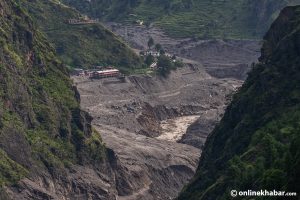
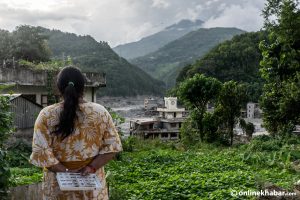
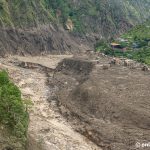
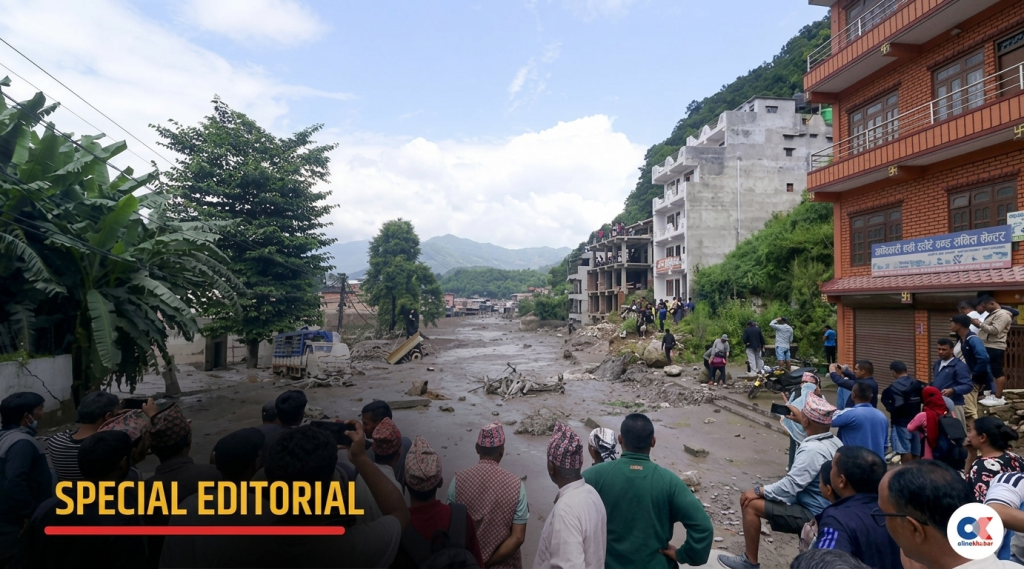
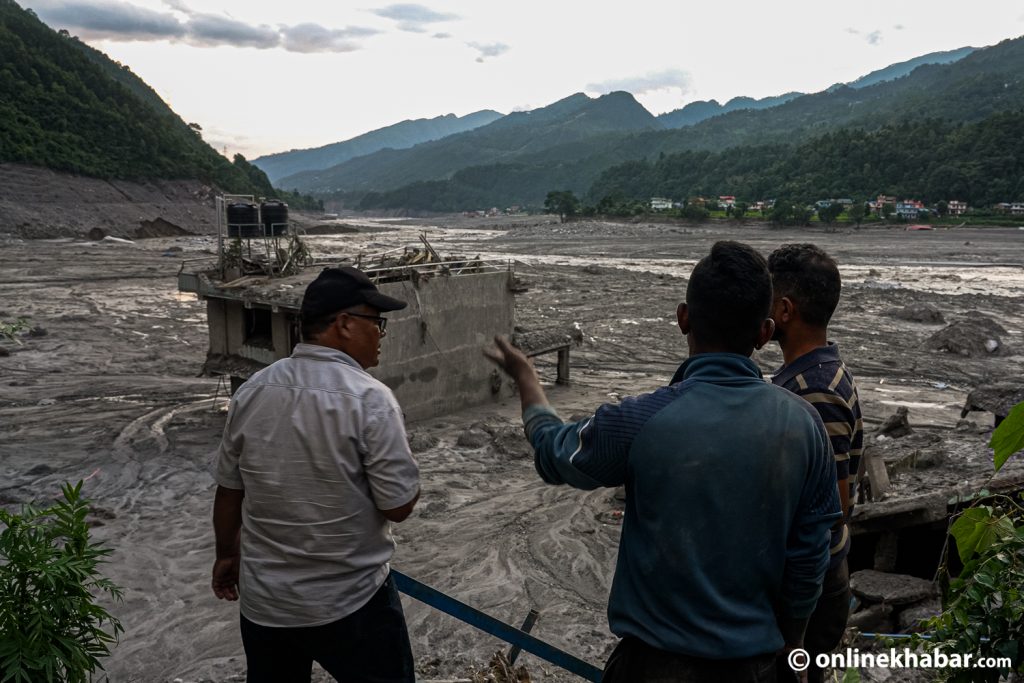
The need for safe long-term resettlement is expected to be a bigger challenge. The Rasuwa floods washed away not only homes but also land belonging to many affected families, leaving some without a safe place to return to.
Standards being prepared for donor-built homes
The Department of Urban Development and Building Construction is also preparing standards for temporary houses that donors and non-governmental organisations may want to build for flood victims.
Aryal said work was underway to establish the facilities and minimum requirements that each temporary shelter should provide.
NGOs and other organisations seeking to construct housing for flood-affected families will be able to use the same standards.
“We are preparing the standards,” Aryal said. “This will ensure that housing built by the government and non-governmental organisations follows the same standards.”
3,628 people in holding centres
According to the government’s latest figures, 1,367 bodies have been recovered so far, while 5,132 people remain missing. Of those missing, 1,393 are from Rasuwa and 651 from Nuwakot. A total of 13,646 people have been rescued.
The government has established 37 holding centres in different locations, where 3,628 people are currently receiving emergency accommodation.
Of them, 733 are in holding centres in Rasuwa, 2,699 in Nuwakot and 196 in Dhading.
The latest data from the National Disaster Risk Reduction and Management Authority shows that 7,570 private buildings have been fully or partially damaged by the floods.
The government’s preliminary assessment puts the number of people directly affected at 32,933.
Government identifies land for permanent resettlement
The government had already taken steps toward permanent resettlement, forming a committee last Friday to identify safe land for families displaced by the Bhotekoshi floods.
The Ministry of Land Management, Cooperatives and Poverty Alleviation, in coordination with the Ministry of Federal Affairs and General Administration, formed the committee to identify suitable land for the safe resettlement and temporary accommodation of families affected and displaced by the floods in the Rasuwa–Bhotekoshi area.
The committee is headed by Prakash Joshi, director general of the Department of Survey.
Its members include representatives from the Ministry of Federal Affairs and General Administration and the Ministry of Infrastructure Development, a director from the Department of Land Management and Archives, assistant chief district officers from the affected districts, chief administrative officers of the concerned local governments, district coordination officers, representatives of the Nepal Police and Armed Police Force, and chiefs of the district land administration and survey offices.
Damodar Wagle, an undersecretary, has been appointed member secretary.
The committee has been tasked with identifying families whose homes and land were damaged by the floods, those for whom returning to their previous locations is considered unsafe, and those still living in affected areas despite the risks.
It will assess potential land for resettlement, conduct field studies and preliminary disaster-risk assessments, and recommend the legal procedures required for temporary accommodation.
The committee will collect information on affected families in coordination with local governments. Land required for resettlement will be identified with the support of local governments, district land administration offices and survey offices.
Potential sites will then undergo field assessments with the help of subject experts.
The committee will examine the geographical condition of the land, flood and landslide risks, its suitability for settlement and the infrastructure required before making recommendations on where displaced families can be resettled.