Kathmandu, September 9
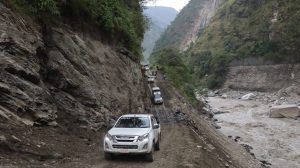
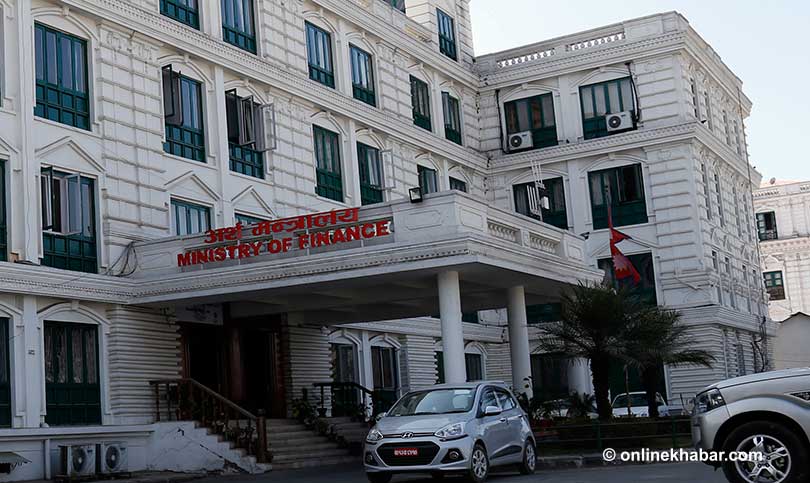
The devastating floods in Rasuwa and the collapse of the road at Krishnabhir have disrupted supplies from the northern border, causing a significant impact on customs revenue, the Ministry of Finance has said.
Finance Secretary Dr Ghanshyam Upadhyaya said the flooding at the Rasuwagadhi border point brought supplies from China to a standstill, with the disruption subsequently reflected in customs revenue.
Speaking at a meeting of the House of Representatives’ Finance Committee, Upadhyaya said the government had deployed additional staff at the Korala border point to facilitate imports as an alternative to Rasuwagadhi. But the situation became more difficult after the road at Krishnabhir collapsed, further disrupting the supply route, he said.
The flood completely destroyed 55 kilometres of the Betrawati–Rasuwagadhi road, according to Upadhyaya. Another four kilometres of the Galchhi–Devighat road suffered partial damage to its paved section.
The 10-kilometre Devighat–Trishuli–Betrawati road also sustained partial damage.
The disaster has also taken a heavy toll on bridges. Upadhyaya said 33 motorable bridges across four districts were completely destroyed, while another four suffered partial damage. A further 68 suspension bridges were damaged.
The total length of the damaged motorable bridges is estimated at 3,000 metres, he said.
The disruption has spread beyond transport infrastructure. In the financial sector, 17 branches of 12 banks have been either completely or partially damaged.
The disaster also affected 4,800 business establishments, according to the Finance Secretary.
The education sector has suffered major losses as well. Fifty-six buildings belonging to 18 schools, containing 308 classrooms, were completely destroyed.
A total of 7,570 private buildings were either completely or partially damaged, while 48 government buildings were damaged, of which 35 were completely destroyed.
Agriculture has also been affected, with 1,806 hectares of cultivable land damaged. Upadhyaya said 13 hydropower projects and 25 irrigation projects were also affected.
The detailed assessment shows the scale of the disruption across different sectors.
Flooding caused serious damage to 1,259 hotels and restaurants, 1,212 wholesale and retail businesses, and 345 electricity, gas and water-related projects. Similarly, 263 manufacturing industries and 227 other service-sector activities suffered serious damage, he said.
Upadhyaya also said contributions from within Nepal and abroad were continuing to arrive in the Prime Minister’s Relief Fund.