Kathmandu, September 8
Rastriya Swatantra Party (RSP) chairperson Rabi Lamichhane has emerged as a key diplomatic contact for major powers including India, China and the United States, even as their ambassadors have also begun engaging with Prime Minister and senior RSP leader Balendra (Balen) Shah.
While diplomatic engagement with Prime Minister Shah has started, Lamichhane appears to have become more prominent in high-level communications with major powers, according to sources.
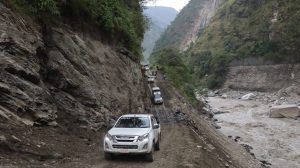
On Monday, US Secretary of State Marco Rubio held a telephone conversation with Lamichhane and expressed condolences over the heavy loss caused by the floods in Rasuwa.
According to RSP sources, Rubio assured Lamichhane that US assistance to Nepal would continue to be provided on a priority basis.
Rabi Lamichhane thanked the US government for expressing concern over the damage suffered by Nepal and the difficult situation caused by the disaster.
Lamichhane has also held high-level discussions with Indian and Chinese officials in recent months.
On June 3, Indian Prime Minister Narendra Modi invited Lamichhane to New Delhi for a meeting. Lamichhane travelled to India with an RSP delegation and held talks with Modi as well as senior leaders of India’s ruling Bharatiya Janata Party (BJP).
Foreign Minister Shishir Khanal visited India shortly after Lamichhane’s visit.
At a time when Indian Ambassador to Nepal Naveen Srivastava and other diplomats had not held separate meetings with Prime Minister Shah at the highest level, Lamichhane was engaged in high-level discussions with the Indian side.
Indian and Chinese ambassadors later held separate meetings with Prime Minister Shah.
The Chinese side has also invited Lamichhane to visit China. The visit, initially proposed for August, was postponed by Lamichhane to the second week of September citing domestic reasons.
An informal schedule had been prepared, but the visit was subsequently put on hold following the Bhotekoshi floods and other circumstances. RSP sources said the visit could take place soon when conditions are appropriate.
“The possibility of a meeting with the Chinese president, as well as preparations for some meaningful agendas, are among the reasons the visit has been put on hold. But the chairperson remains positive about travelling to Beijing,” an RSP source said.
A senior source said Lamichhane’s conversation with Rubio was possible because the US secretary of state wanted to establish communication at a level that carries significant political weight within the government.
Prime Minister Shah is preparing to travel to New York to attend the United Nations General Assembly. He is expected to present Nepal’s positions before world leaders and hold a number of bilateral and other meetings on the sidelines.
The complete schedule of those meetings has not yet been finalised.
The Nepali Embassy in Washington and the Ministry of Foreign Affairs are understood to be working on the preparations for the Prime Minister’s US visit.
Diplomacy analyst and journalist Sudhir Sharma views the attention Lamichhane has received from major powers as a reflection of how powerful countries are adapting their diplomatic engagement to Nepal’s changing political landscape.
Sharma argues that Lamichhane’s position as the powerful chairperson of the ruling party, as well as his relatively direct access to Prime Minister Shah, are among the factors behind the increased engagement.
“It appears that not only the US but other major powers are also engaging based more on access, contact and where power lies than strictly on diplomatic protocol,” Sharma said. “The meetings and telephone conversations with Chairperson Lamichhane should be understood in that context.”
“Prime Minister Shah is not easily accessible. He is also preparing to travel to the UN General Assembly soon. Even if he does not travel to the US at the invitation of the American side, the General Assembly itself will be held on American soil, so it is natural that the US is currently communicating with Chairperson Lamichhane,” Sharma said.
Following the RSP’s landslide victory in the February elections, Indian Prime Minister Modi had spoken separately with both Shah and Lamichhane.
Other countries are also understood to be stepping up engagement with Lamichhane, who heads the ruling party, as Nepal’s new political leadership takes shape.