
Kathmandu, September 2
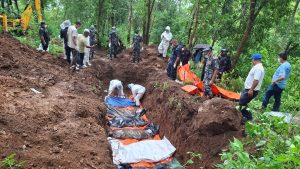
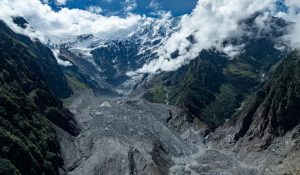
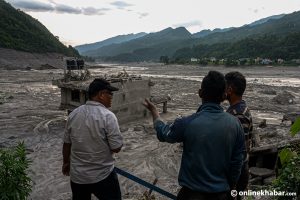
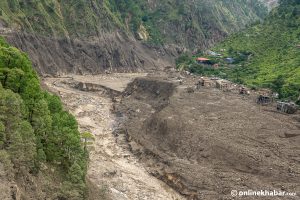
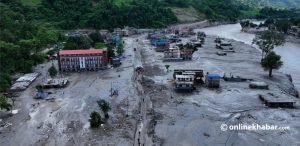
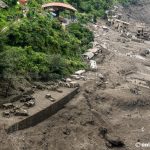
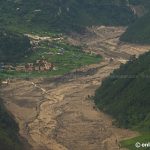
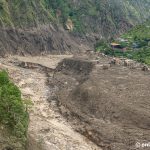
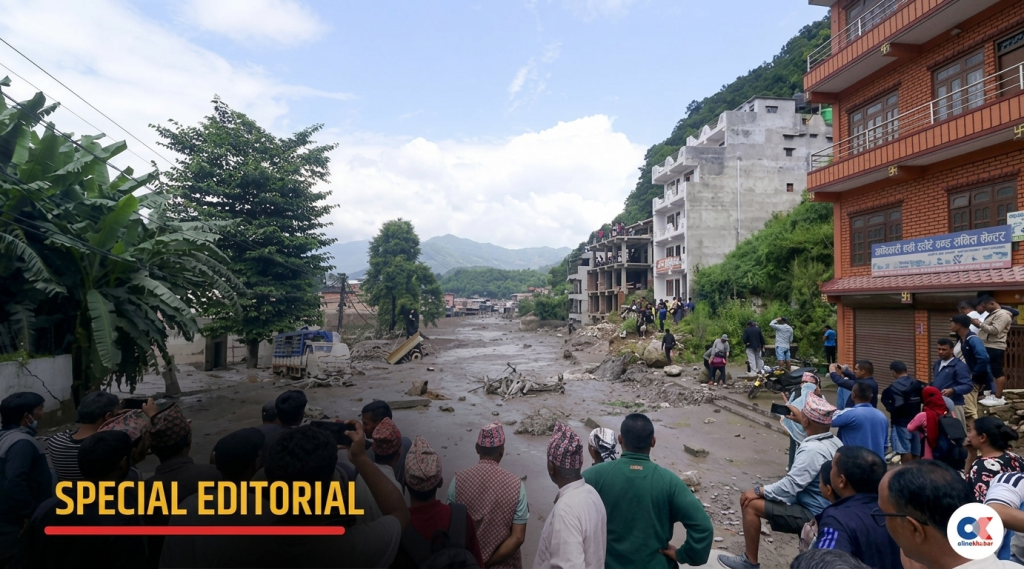
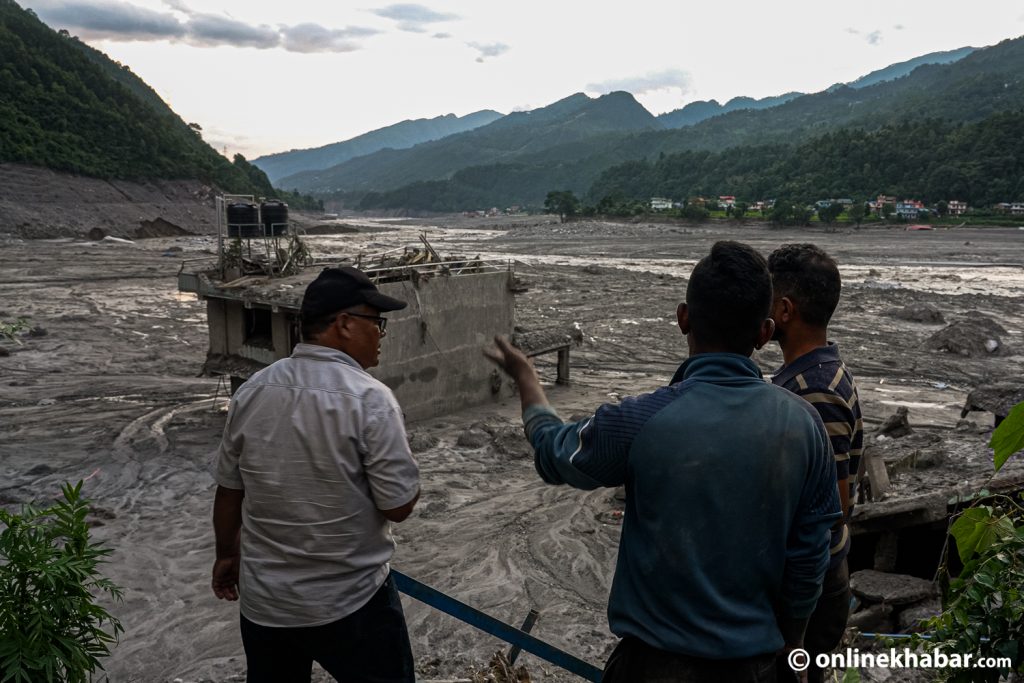
Nepal has asked the UNFCCC-backed Loss and Damage Fund to consider providing financial support for losses caused by the Bhotekoshi flood in Rasuwa, which experts have described as a climate-related disaster.
The government has written to the Fund for Responding to Loss and Damage, arguing that Nepal is suffering the consequences of climate change despite contributing very little to global carbon emissions.
According to the World Bank, an average Nepali emits 0.54 tonnes of carbon dioxide a year. That compares with 9.3 tonnes in China, 2.17 tonnes in India and 13.6 tonnes in the United States. The global average was 4.67 tonnes per person per year in 2024.
The figures highlight Nepal’s relatively small contribution to global emissions, while the country continues to face significant impacts from climate change, experts say.
Environmental experts have described the Bhotekoshi flood in Rasuwa as a climate-related disaster.
Maheshwar Dhakal, chief of the Climate Change Management Division under the Ministry of Agriculture, Forests and Environment, said Nepal suffered major loss of life and property from an event in which the country had made little contribution to the underlying problem.
“The flood and landslides in Bhotekoshi caused the kind of loss of life and property that we would classify as a purely climate-related disaster,” Dhakal said. “Developed and industrialised countries have emitted large amounts of carbon, while Nepal’s contribution is negligible. We have suffered because of the actions of others rather than our own.”
It is against this backdrop that the government has approached the Loss and Damage Fund. The fund is intended to provide financial support to particularly vulnerable developing countries facing losses and damages caused by the adverse effects of climate change.
Environmental economist Arjun Dhakal said Nepal can make such a request, but it will need to establish the link between the disaster and climate change and provide a detailed assessment of the damage.
“Nepal can make such a claim and request support. But for further assistance, it must establish that the event was caused by climate change and carry out a detailed assessment of the losses,” he said.
Nepal has not put a figure on its request

Maheshwar Dhakal said Agriculture, Forests and Environment Minister Geeta Chaudhary and Finance Minister Dr Swarnim Wagle signed the request after informal discussions with the fund’s board.
“We had already held informal discussions with the board. We sent the request to discuss how the international community can respond to Nepal’s current situation,” he said.
Nepal has not specified a particular amount it is seeking in the letter addressed to the fund’s co-chairs.
Richard Sherman, a former co-chair and member of the fund’s board, has said Nepal could potentially receive around Rs 3 billion.
A New York Times report, citing the requests from other countries as well, estimated that Nepal could receive up to $20 million, equivalent to around Rs 3.04 billion.
For Nepal, however, that amount would cover only a small fraction of the damage caused by the disaster.
The Department of Roads has made an initial estimate that around Rs 50 billion will be needed just to rebuild damaged roads and bridges.
Nepal says it is also a contributor to climate stability

The government’s argument is not limited to Nepal being a victim of climate change.
Nepali experts say the country also contributes to global climate stability by conserving its mountains, forests, vegetation and biodiversity. Its mountain-fed rivers provide freshwater, while its forests absorb and store carbon.
“We therefore argue that Nepal should not be assessed only as a victim of climate change, but also recognised and compensated as a contributor to climate stability,” Maheshwar Dhakal said.
Nepal has already submitted three proposals to the fund, according to Dhakal.
“Our main request is that the Bhotekoshi incident, being so sudden, unprecedented and exceptional in nature, be considered by the board as a special case,” he said.
The fund itself faces a shortage of money
Whether Nepal receives the requested support remains uncertain, particularly because the Loss and Damage Fund itself has limited resources.
The fund had called for proposals ranging from $5 million to $20 million from 134 countries. More than 100 countries have already sought around $3 billion in support, according to those familiar with the process.
The fund has committed to providing a total of around $820 million, but only about $400 million has reportedly been deposited into its account.
The gap between the scale of requests and available resources raises questions over how much Nepal can ultimately receive.
Sherman told The New York Times that countries that have contributed the most to climate change are not paying the costs associated with it.
The United States, one of the world’s largest greenhouse gas emitters, had previously pledged $17.5 million to the fund. That commitment was withdrawn after Donald Trump returned to the White House.
‘Compensation is becoming more important than adaptation’

Climate adaptation refers to preparing people, infrastructure, agriculture, water systems, forests and other natural systems to withstand the impacts of climate change.
Experts say countries that have contributed more to climate change should bear a greater share of the cost of adaptation and loss and damage. But many of the countries responsible for high emissions are increasingly reluctant to take on that responsibility, they say.
Journalist and author Kunda Dixit said the growing emphasis on military spending, alongside declining resources for environmental protection, is directly affecting countries such as Nepal that have contributed relatively little to climate change.
“Earlier, the focus was on funding for adaptation. Now it appears that funding for compensation itself is needed,” Dixit said. “If Nepal receives such funding, it would also benefit other countries because it could help them prepare for and protect themselves from similar disasters.”
However, Dixit said Nepal cannot depend solely on international compensation.
“Whether or not the fund provides support, countries still have to prepare for their own safety,” he said.
Given the reluctance of major emitters to contribute to climate funds and rising military expenditure, countries such as Nepal need to remain prepared to deal with climate-related disasters on their own, he added.