Kathmandu, August 27
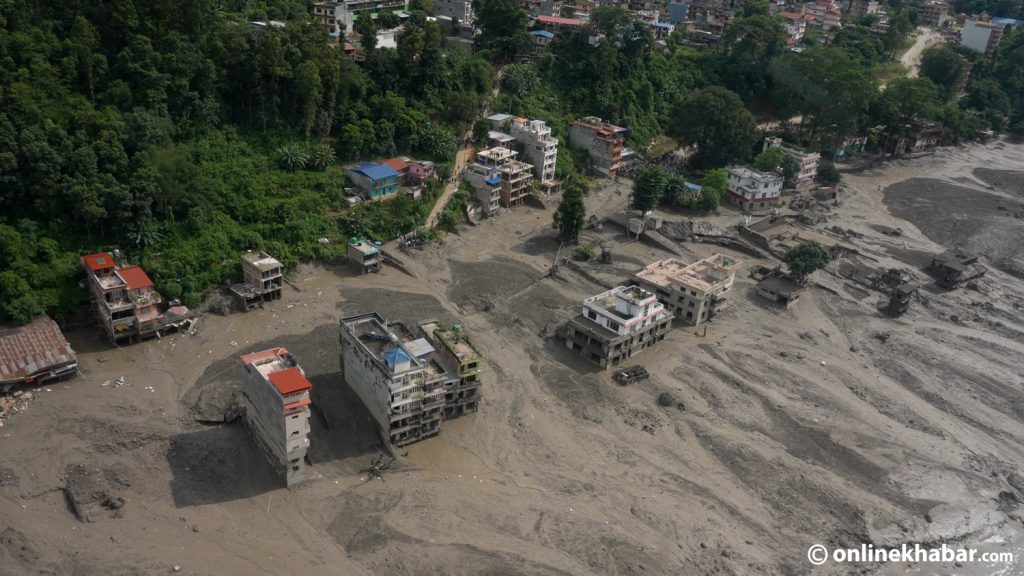
A sudden flash flood struck Nepal’s northern Rasuwa district on Wednesday, killing at least 165 people and leaving hundreds missing.
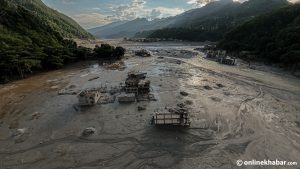
The disaster began near the Nepal-China border and sent a massive surge of mud, water and boulders down the Bhotekoshi and Trishuli river systems.
Here are 10 things to know about what happened.
Where did the disaster happen?
Rasuwa is a mountainous district in northern Nepal, bordering China’s Tibet Autonomous Region.
The worst-hit areas include Timure and Syaphrubesi, near the Rasuwagadhi border crossing, an important route for trade and tourism between Nepal and China.
What happened on Wednesday morning?
At around 9 am on August 26, a huge surge of water, mud and rocks entered the Bhotekoshi River from the area near the Nepal-China border.
The flood rapidly swept through settlements and infrastructure before moving downstream into the Trishuli River.
What may have triggered the flood?
The exact cause is still being investigated.
Satellite imagery and preliminary analysis by experts suggest that a massive avalanche or landslide blocked the Lhende Khola, a river along the Nepal-China border.
Water then accumulated behind the blockage, forming a temporary lake. When the blockage failed, the stored water and debris surged downstream into Nepal.
Where does the earthquake fit in?
A magnitude 4.4 earthquake was recorded at 8:37am, shortly before the flood.
Scientists are still investigating whether the earthquake triggered the slope collapse or whether the enormous avalanche itself may have generated the seismic signal.
So far, it would be premature to say that the earthquake definitively caused the flood.
Why was the flood so destructive?
This was not simply a rise in river water. The flood carried enormous amounts of mud, rocks, boulders and debris, giving it tremendous destructive force.
Communities near the river had very little time to react as the surge moved rapidly downstream.
How far did the flood travel?
The flood began in the high mountains of Rasuwa but its impact extended far downstream.
It travelled through the Bhotekoshi and Trishuli rivers, affecting parts of Rasuwa, Nuwakot and Dhading before reaching the Muglin area and eventually the Narayani River.
By the afternoon, floodwaters had reached Devghat, far from the original source.
How many people have been affected?
As of Thursday morning, 165 people had been confirmed dead and 826 people were reported missing.
Among those missing are 579 tourists, including 466 foreign nationals and 113 Nepali nationals.
Security personnel were also among those reported missing after several posts and facilities in the affected area were swept away.
Why were so many tourists in the area?
Rasuwa is not only a border district. It is also an important destination and gateway for tourism in the Himalayas, particularly those travelling to the Kailash Parbat and Mansarovar Lake.
The area provides access to the Langtang region, while Timure and Rasuwagadhi are located on the Nepal-China border.
The sudden disaster therefore struck both local communities and travellers who were in the region.
What has been destroyed?
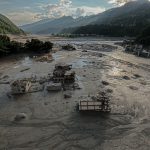
The flood caused extensive damage to homes, hotels, roads, bridges, vehicles, hydropower projects, electricity transmission infrastructure and border facilities.
Around 19 bridges have reportedly been destroyed or swept away.
Several hydropower projects and transmission lines were damaged, while four hydrological monitoring stations were also swept away.
The Prithvi Highway, one of Nepal’s major road connections, was also blocked by flood debris further downstream.
Why does this disaster matter beyond Rasuwa?
The disaster highlights a growing concern in the Himalayan region: climate change is altering the stability of high-mountain environments.
Glaciers are retreating, glacial lakes are expanding, and permafrost and mountain slopes are becoming increasingly unstable. When landslides, avalanches or glacial lake outburst floods occur, enormous volumes of water and debris can move rapidly downstream across borders.
Wednesday’s disaster is therefore not only a story about one devastating flood in Nepal.
It is also a warning about the growing risks faced by communities living downstream of the rapidly changing Himalayas.
The search for survivors and missing people is continuing, while scientists and authorities investigate exactly what triggered the flood.