
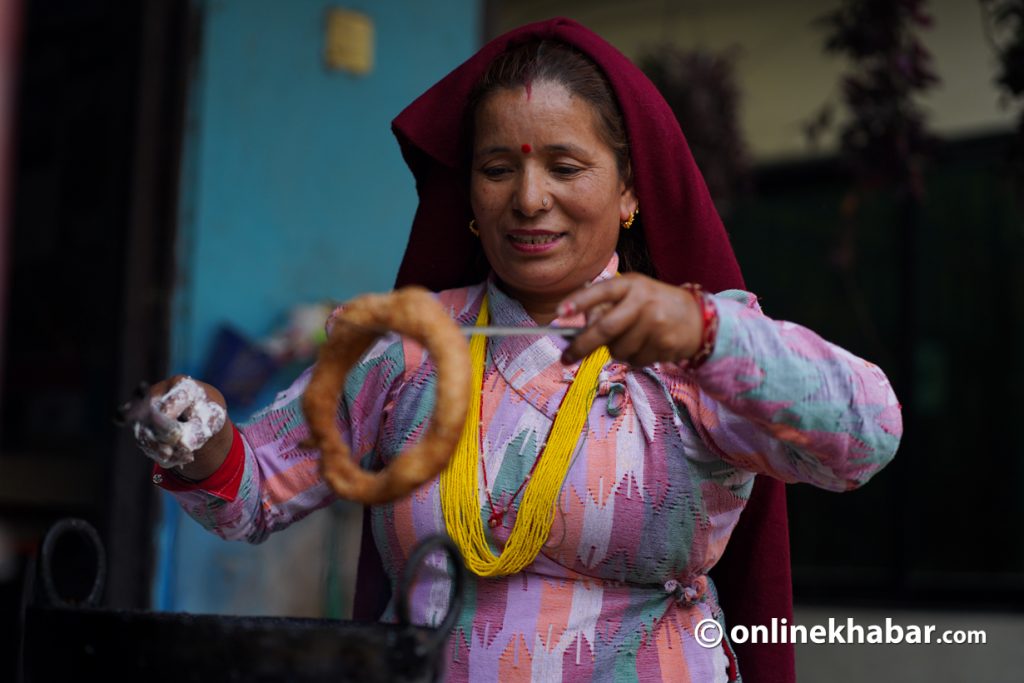
Near Shree Sita Bal Bikash Basic School in Gairigaun, Nagarjun Municipality-3 of Kathmandu, there is a small roadside shop. Even before you reach it, the sweet aroma of sel roti fried in pure ghee greets your nose.
Inside, a woman is busy skillfully shaping sel roti in hot ghee in one corner. Moments later, she turns to serve tea, calling out to customers that “the tea is ready.”
At the counter, her husband keeps track of accounts while supporting her.
Known on TikTok as “Jumli Didi” or the “viral sel-roti wali,” this woman is Samjhana Rawal. The confidence and glow of success seen on her face today hide two decades of tears, hardship, and relentless struggle. This is the story of a courageous woman who came from a remote village in Jumla and built her life from nothing in the expensive city.
Married young, burdened early
Born in Michagaun (Chhina), Chandannath Municipality-7 of Jumla, Samjhana is the eldest among five sisters and one brother. With a father in a modest job and a mother as a homemaker, the responsibilities of the household fell on her shoulders from an early age.
“I always wanted to study, but I only remember going to school for two days,” she recalls while cooking the sel roti in the hot pan. “Before I even turned 15, I was married. At an age when others played with friends, I became a daughter-in-law.”
When she got married in 1995, her husband Harka Rawal was in grade nine. While he continued his studies after marriage, her life became confined to household chores, farming, and caring for her in-laws and extended family.
“My in-laws chose me for marriage because I was hardworking,” she says. “Back in the village, there was never a moment of rest.”
After her husband passed the SLC, he joined the Nepal Police in 2000. By then, Samjhana had already given birth to their first child, a daughter. As the armed conflict in Nepal intensified, her life became even more difficult. Her husband, posted on duty, would take two to three years to return home, leaving her to manage the household and children alone while constantly worrying about his safety.
Alongside the fear for her husband’s life during the conflict, she faced deep-rooted societal pressure. After giving birth to four daughters in a row, the mental anguish she endured is hard to describe.
“People in the village would say that since I only had daughters, someone else would inherit the property. They treated daughters as if they weren’t even real children,” she recalls. “When I went into labour, there was no one to take me to the health post. I gave birth on the way.”
The financial condition was so weak that her husband’s modest salary was barely enough to run the household. Amid constant societal pressure insisting that “a son is necessary,” her life took a new turn after the birth of a son in 2010.
Due to continuous work and a lack of proper care during childbirth, she developed serious health problems. To seek treatment, she eventually came to Kathmandu, where her husband was stationed.
Reaching Kathmandu, however, was not the relief she had imagined. Life in the city was far more expensive and unforgiving. Her husband, a police havildar, earned only around 7,000–8,000 rupees a month. Yet there were seven people to feed in the rented room, five children and the couple themselves. That income was nowhere near enough to cover food and rent.
Began by selling a gold earring
It is said that when all doors close, people carve their own path. The high cost of living in Kathmandu, hunger, and concern for her children’s future kept her awake for many nights. Finally, she made a decision: she would start something of her own.
But where would the money come from to open a shop? With no other option, she took off the gold ring from her ear and went to the market to sell it.
“It felt like my heart was breaking when I sold that ring. But compared to my children’s hunger and future, I had no choice,” she recalls, being emotional.
Even that money was not enough, so she asked her husband to withdraw 50,000 rupees from his provident fund. With an investment of around 1,50,000 rupees, they opened a small grocery shop in Gairigaun, Kathmandu. The same room was divided into two halves for the shop and the other for living.
On the first day, when the shop made sales of 1,200 rupees, her joy knew no bounds. Since there was a drinking water office nearby, there was a steady flow of customers. At their request, she began selling tea. As the business grew slightly, she bought an old rack and started a small snack shop. However, she knew nothing about business, nor did she know how to prepare snacks.
“Customers would ask for samosas and pakodas, but I didn’t know how to make them. I used to secretly watch others cooking and then come home and try mixing flour by guesswork,” she says. “Sometimes it failed, sometimes it burned, but I never gave up. I kept learning and improving.”
Emergence of set roti brand
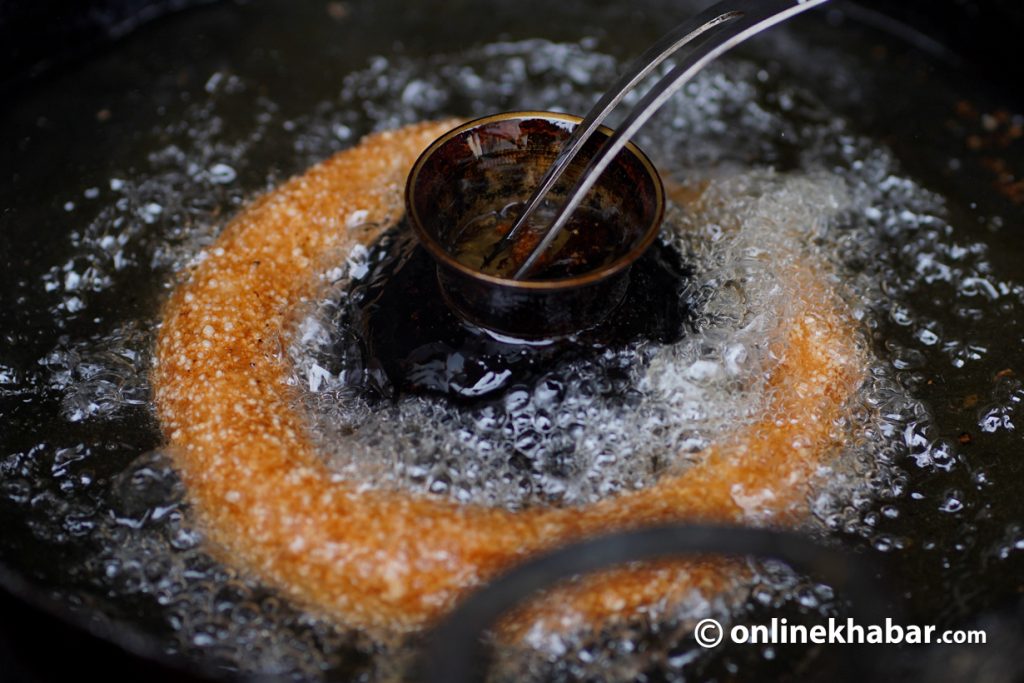
Although she struggled with urban snacks, she was skilled in preparing traditional items like sel roti, anarsa, and fini roti. She thought, why not make what she already knew? That’s when she began making sel roti in her shop.
Gradually, the taste of her sel roti won everyone over. The business grew so much that the small room could no longer accommodate it.
She then rented a nearby shed with 8–9 rooms for 15,000 rupees a month. From there, her self-roti business took on a more professional form.
Initially selling sel roti at 10 rupees per piece, demand grew so rapidly that she barely had time for anything else. She turned organic products from Jumla into her shop’s brand identity. Using local items like Marshi rice, beans, and millet, she brought the taste of the village to the city.
That TikTok post
Her business saw its biggest boost when she began preparing dough in a traditional wooden mortar in the Jumli style, mixing it with ghee and frying sel roti in pure ghee. Customers, impressed by the taste, encouraged her to post videos on TikTok.
At first, she had little knowledge of social media.
“My sel roti was already famous in the village, why would I need TikTok?” she used to think.
One day, her children recorded a video of her making sel roti and uploaded it. Within no time, it went viral. People began coming from far and wide searching for the “viral didi’s sel roti.”
Some neighbours even filed complaints with the police, saying the sound of rice pounding and the smoke from frying disturbed the area. But Samjhana, hardened by years of struggle, was not shaken by such obstacles.
“Earlier, I used to sell 10–15 pieces a day. Now, during festivals, the orders are more than I can handle,” she says proudly. “During Dashain and Tihar, the whole family stays up all night making sel roti.”
Today, she sells sel roti made from Marshi rice for 50 rupees, Taichin for 40 rupees, and those fried in pure ghee for 100 rupees. People travelling abroad even take her sel roti as gifts to countries like Australia and the United States.
Children’s progress is the real wealth
Once living in a cramped shed, Samjhana has now become a landowner in a city like Kathmandu. Through selling sel roti alone, she has purchased land in Ichangu and Thankot. Yet, in her eyes, her true wealth is her children.
“I worked hard to educate my children. Even though my own desire to study remained unfulfilled, my children fulfilled that dream,” she says. Two of her daughters are already married. One has completed hotel management studies and is now in Dubai, while the youngest is studying nursing.
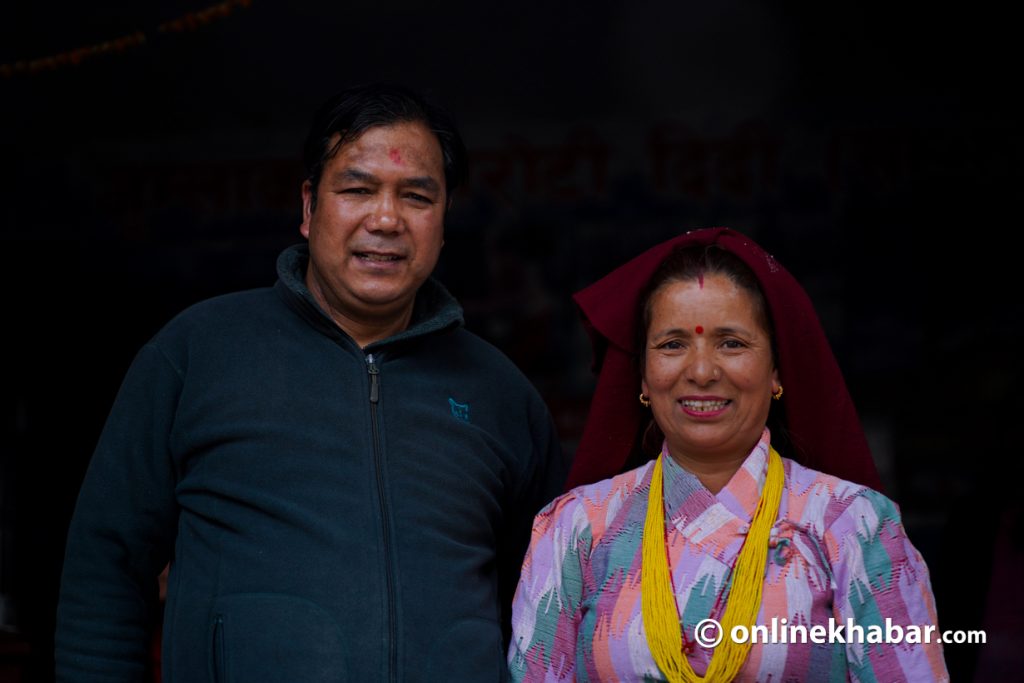
Her husband, now a retired havildar, helps at the shop. While he manages the counter, the main decisions, recipes, and management remain in Samjhana’s hands. Despite coming from a remote village in Jumla and lacking formal education, she has passed the school of life with distinction.
Continuing her tireless work, she has a message for the younger generation: “No work is small or big. Instead of going abroad, you can work hard in your own country and turn Nepal into gold.”