

Kathmandu, October 27
The Nepal Premier League (NPL) has grown significantly in economic scale as it enters its third edition, with the Nepal Cricket Association (CAN) projecting direct business transactions worth more than Rs 1.5 billion during the tournament.
The figures point to a sharp rise from the league’s second edition, which generated total revenue of Rs 473.6 million, according to details released by CAN in March 2026.
The second edition cost Rs 219.6 million to organise. Of the net earnings, CAN distributed Rs 161.8 million among the eight franchise teams, while the association retained Rs 92.1 million in revenue. The first edition had generated Rs 276.9 million.
The league’s financial footprint is expected to expand further this season, driven by sponsorships, broadcasting rights, ticket sales, franchise spending and increased economic activity across hospitality, transport, restaurants and retail.
According to CAN treasurer Padam Bahadur Khadka, the association expects to generate around Rs 700 million from sponsorships and ticket sales in the third edition.
Franchise teams are expected to spend even more collectively. Each team is projected to incur an average expenditure of around Rs 150 million this season, compared with approximately Rs 80 million to Rs 100 million last season.
Based on these estimates, direct transactions associated with the tournament could exceed Rs 1.5 billion, Khadka said. The indirect economic impact is expected to be substantially higher.
CAN has already secured more than Rs 330 million from broadcasting rights alone. It received Rs 146.4 million from Himalaya Sports and Rs 180.4 million from NetTV.
For former president of the Koshi Province Cricket Association, Mingma Dandu Sherpa, the NPL is more than a sporting spectacle. He sees it as an important driver of national economic activity.
The arrival of internationally recognised players, coaches, broadcasters and thousands of spectators brings fresh business to hotels, restaurants, transport operators, tourism businesses and local enterprises.
Broadcasting, sponsorships and ancillary services also create employment opportunities, encouraging income generation and entrepreneurship among young people, Sherpa said.
Rising prize money reflects the league’s growth

As the tournament expands, CAN has increased its prize money. The champions of the third edition will receive Rs 15 million, Rs 4 million more than the previous season’s winners.
The champions received Rs 11 million in the second edition, while the inaugural edition offered Rs 10 million to the winners.
The runners-up this season will receive Rs 8 million, the third-placed team Rs 4 million and the fourth-placed team Rs 3 million, Khadka said.
He believes the increase in prize money will enhance the tournament’s appeal and competitiveness.
An invaluable opportunity for country promotion
Beyond its direct financial returns, the NPL offers Nepal an opportunity to promote itself as a tourism destination, particularly through sports tourism.
Yubaraj Shrestha, treasurer of the Hotel Association Nepal (HAN) and a businessperson actively involved in promoting sports tourism, said the tournament brings hotels a steady flow of guests who contribute to the wider economy.
Airlines and transport operators also benefit from increased demand. However, the broader value of international exposure generated by the tournament is difficult to quantify, he said.
International players with large global followings can introduce Nepal to audiences who might otherwise have little knowledge of the country.
Andre Russell, one of the internationally renowned players participating in the NPL, has shared his presence in Nepal on social media. A photograph he posted a day earlier, showing him wearing a Dhaka topi, had received more than 50,000 reactions and over 1,800 comments.
“Players like Russell have a unique fan following. Some of the people who follow him may have learned about Nepal for the first time because of his participation,” Shrestha said.
Each of the eight franchises has six foreign players, bringing 48 overseas players to Nepal for the tournament. Their social media posts, photographs and interactions with the country provide additional international exposure.
Teams also arrange special excursions for players on their days off, including visits to destinations such as Everest Base Camp, Shrestha said.
He believes the combination of international sporting personalities and tourism experiences creates a valuable opportunity to showcase Nepal to a global audience.
Hotels secure business for around six weeks

Each franchise has a travelling group of approximately 30 to 35 people, including players, coaches, support staff and videographers. Teams have accommodated their members in separate hotels.
According to Shrestha, team members begin attending closed training camps about a week before the tournament starts. As a result, franchises typically book hotel accommodation for at least six weeks.
Each team spends between Rs 8 million and Rs 15 million on hotels during this period, he estimated. A team occupies at least 25 to 30 rooms, with foreign players and senior team members often staying in more expensive rooms.
The sustained demand has made the NPL an important business opportunity for hotels. Teams’ growing social media presence also offers promotional benefits to the establishments where they stay.
“Consistent business for a hotel helps stimulate activity in several other sectors, including agriculture. This contributes to the wider economy,” Shrestha said.
The tournament has also begun attracting fans of foreign players and members of the Nepali diaspora who travel to Nepal specifically to watch matches, adding to hotel demand. All eight franchises are staying at separate hotels this season.
HAN president Binayak Shah said the tournament has contributed positively to the hospitality and tourism sectors. The participation of all eight franchises, their association with major hotels, and the extended stays of players, coaches and other team members have generated business for the industry.
Supporters of franchises such as Sudurpaschim, Biratnagar, Lumbini and Chitwan are also travelling from different parts of the country to watch their teams, staying in hotels and other accommodation establishments at varying price levels.
Their spending on accommodation, food and transport has further increased economic activity, Shah said.
Restaurants cash in on big-screen screenings
Restaurants in Kathmandu and other urban centres are also benefiting from the popularity of the NPL.
Many establishments have arranged live screenings on large screens, allowing customers to watch matches while dining with friends. Some have introduced packages combining food and cricket viewing.
With stadium seats limited and tickets selling quickly because of high demand, restaurants offer fans an alternative place to follow their teams.
Shrestha said major sporting events such as the NPL create valuable business opportunities for restaurants of different sizes.
Growing market for jerseys and fan merchandise
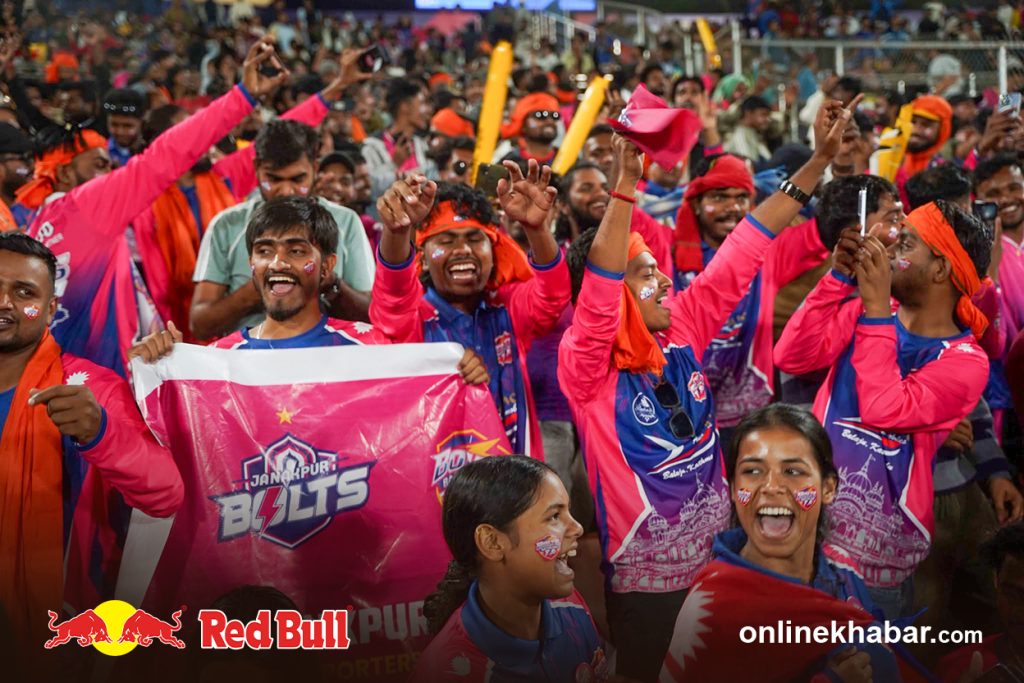
The demand for team jerseys and accessories has also increased as supporters seek to display their allegiance at stadiums and while watching matches elsewhere.
Much of the merchandise is available through online platforms. Lumbini Lions, for example, sells jerseys and other team kits through its website, with a playing jersey from the second season priced at Rs 2,000.
Franchises have also introduced fan jerseys, hoodies, helmets and other products aimed at supporters.
Biratnagar Kings, Karnali Yaks and Chitwan Rhinos sell official jerseys through their websites, while Janakpur Bolts offers scarves and jerseys online.
The growth of franchise merchandise adds another commercial dimension to the tournament, allowing teams to generate revenue beyond sponsorships and other traditional sources.
Players benefit from improved earning opportunities
The NPL has also created opportunities for Nepali cricketers to improve their financial circumstances and develop professionally.
Players receive remuneration from their franchises and gain access to additional training, sponsorship opportunities and other professional prospects. These benefits could contribute to the long-term development of the national team.
Under CAN’s provisions, each franchise’s marquee player can receive up to Rs 2 million. Teams are also permitted to spend up to Rs 9 million on their 14 domestic players.
The earnings represent a significant opportunity for local cricketers during a tournament that runs for approximately a month. Franchises have not publicly disclosed their spending on foreign players.
Local businesses feel the impact
The area around the Tribhuvan University International Cricket Ground in Kirtipur sees thousands of spectators on match days, creating additional business for local vendors.
Food stalls and small shops benefit from increased sales of snacks, bottled water, soft drinks, tea and coffee. Transport operators and other service providers also experience higher demand.
Although individual transactions may be relatively small, the collective spending of thousands of spectators helps keep the local economy moving throughout the tournament.
Greater investment in technology
The NPL’s growing financial capacity is also reflected in its investment in cricket technology.
During the second edition, CAN secretary Paras Khadka had said the Decision Review System (DRS) was too expensive for the league. Within a year, however, the tournament has managed to introduce the technology.
The investment is expected to improve the reliability of umpiring decisions and reduce controversies during matches.
The introduction of DRS reflects the league’s growing commercial confidence and its efforts to strengthen the quality of competition.
Private sector participation drives commercial growth
Private sector involvement has been another major factor behind the NPL’s financial expansion, CAN president Chatur Bahadur Chand has acknowledged.
While the inaugural edition did not have digital broadcasting, sponsorship support helped establish a stronger digital coverage model from the second season onwards. Chand believes this development will support the growth of Nepali cricket and improve the long-term prospects of players.
Siddhartha Bank is the title sponsor of this season’s NPL. Red Bull is the principal sponsor of the tournament’s broadcast on Himalaya Sports. Other sponsors include Bajaj Pulsar, Prostyle, Nepal Life Insurance, Proton, Asian Paints, Soyam and Himstar.
Each franchise also has its own sponsors, which CAN identifies as a major source of team revenue.
The combination of broadcasting deals, sponsorships, ticket sales, merchandise and franchise investment has helped the NPL evolve into a larger commercial property within Nepali sport.
Growth brings renewed demand for cricket infrastructure
Despite the league’s financial growth, Nepal’s cricket infrastructure remains inadequate.
Major projects, including the Mulpani Cricket Stadium and the Gautam Buddha International Cricket Stadium, have remained stalled or incomplete. As a result, the Tribhuvan University International Cricket Ground in Kirtipur continues to shoulder much of the country’s international and domestic cricket activity.
HAN president Shah said the NPL should no longer be viewed solely as a cricket tournament but also as a platform for promoting tourism. He argued that Nepal should use the league as a foundation for a more systematic sports tourism strategy.
The NPL’s recognition by the International Cricket Council (ICC) offers an opportunity to strengthen Nepali cricket’s international standing, he said, adding that the country must prioritise upgrading its international cricket grounds.
Sherpa also stressed the need to use the tournament’s success as a foundation for sustainable domestic cricket development.
He called for stronger grassroots programmes, the production of technical personnel, the expansion of cricket activities across provinces and districts, and greater investment in infrastructure.
The NPL’s growing economic footprint demonstrates the commercial potential of cricket in Nepal. Whether that growth translates into lasting benefits for the wider economy and the country’s cricketing future will depend on how effectively the momentum is converted into sustained investment, stronger infrastructure and broader participation.