

Kathmandu, October 28
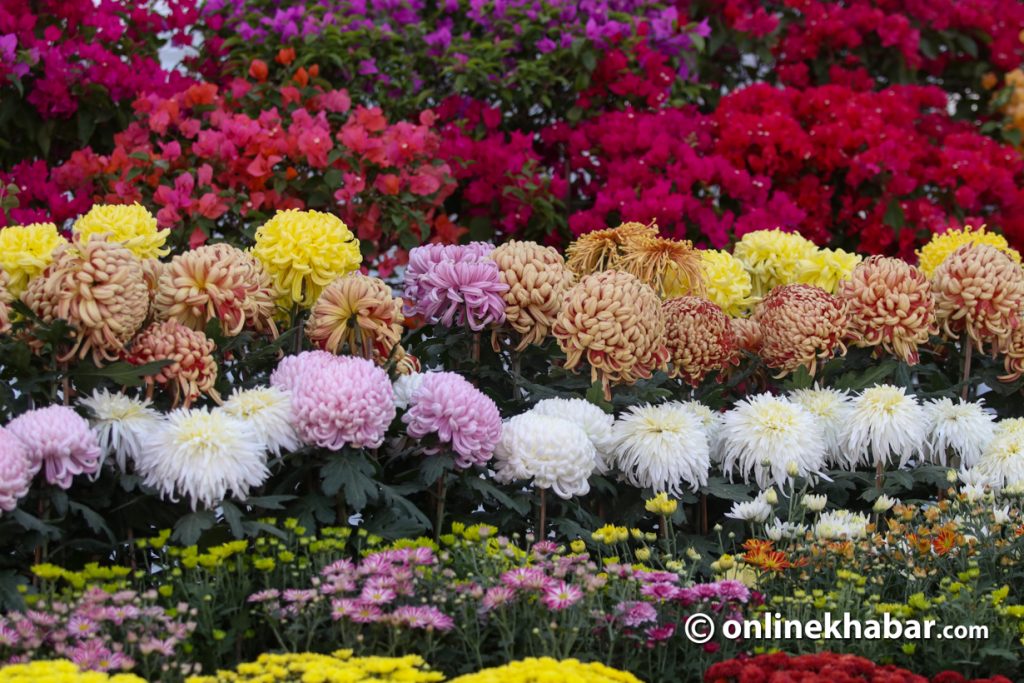
Nepal’s floriculture industry has grown into a major commercial agricultural sector, with investments exceeding Rs 11.5 billion and more than 62,500 people employed directly and indirectly. However, the industry continues to depend heavily on imports, with the value of flower and flower-related product imports nearly 22 times higher than exports.
According to the latest figures from the Floriculture Association Nepal (FAN), the gap reflects the challenge of keeping up with rising domestic demand despite the expansion of commercial flower farming across the country.
Flowers in Nepal are no longer used only for festivals, religious ceremonies and weddings. Urbanisation, changing lifestyles and growing interest in aesthetics have expanded their use, creating new opportunities for commercial growers and flower traders.
Yet, the industry continues to face difficulties related to production capacity, policy implementation, access to seeds and planting materials, and seasonal demand.
An industry spanning 54 districts
Commercial floriculture in Nepal began on a small scale in 2011 BS, but growth remained limited for decades. By 2049 BS, the country had only 80 nursery businesses.
The industry has expanded considerably since then. FAN General Secretary Hiramani Sharma said the flower market now reaches all 77 districts, while commercial flower farming is taking place in 54 districts.
The sector covers more than 225 hectares and involves over 1,485 businesses. These include 594 nursery businesses, 418 cut-flower producers, 110 cut-flower retailers, 291 wholesale flower businesses and 25 input suppliers.
Investment in the industry has exceeded an estimated Rs 11.5 billion, according to FAN. The association says the sector provides direct and indirect employment to more than 62,500 people, contributing to the national economy.
Imports surge as exports decline
The gap between imports and exports remains one of the industry’s biggest challenges.
According to Department of Customs data for fiscal year 2024/25, Nepal exported flowers and flower-related products worth just Rs 11.578 million, a decline of 45.71 per cent from the previous fiscal year.
Imports, meanwhile, reached Rs 261.372 million, up 105.66 per cent from approximately Rs 127 million in the previous year.
The figures show that Nepal’s imports of flowers and related products were nearly 22 times the value of its exports.
Sharma attributed the rise in imports primarily to growing market demand rather than a complete lack of domestic production.
“Imports have increased because market demand has grown unusually fast, rather than because production is absent,” he said. “We are moving towards self-sufficiency in domestic production, but production has not increased at the same rate as the market.”
He said festival-related demand was a major factor behind the increase.
Nepal requires hundreds of thousands of garlands during Tihar, while demand for roses rises sharply in the week around Valentine’s Day. Meeting such short-lived demand would require substantial production infrastructure that could remain underused during the rest of the year.
“Tihar requires millions of garlands over four or five days, while millions of rose stems are needed during the week of Valentine’s Day. It is not feasible to build infrastructure and produce flowers solely to meet demand for those few days,” Sharma told Onlinekhabar.
He said producing exclusively for peak periods could also leave growers with surplus flowers that bloom before or after the festivals, making imports necessary to meet demand during those short windows.
Policy hurdles affect domestic production
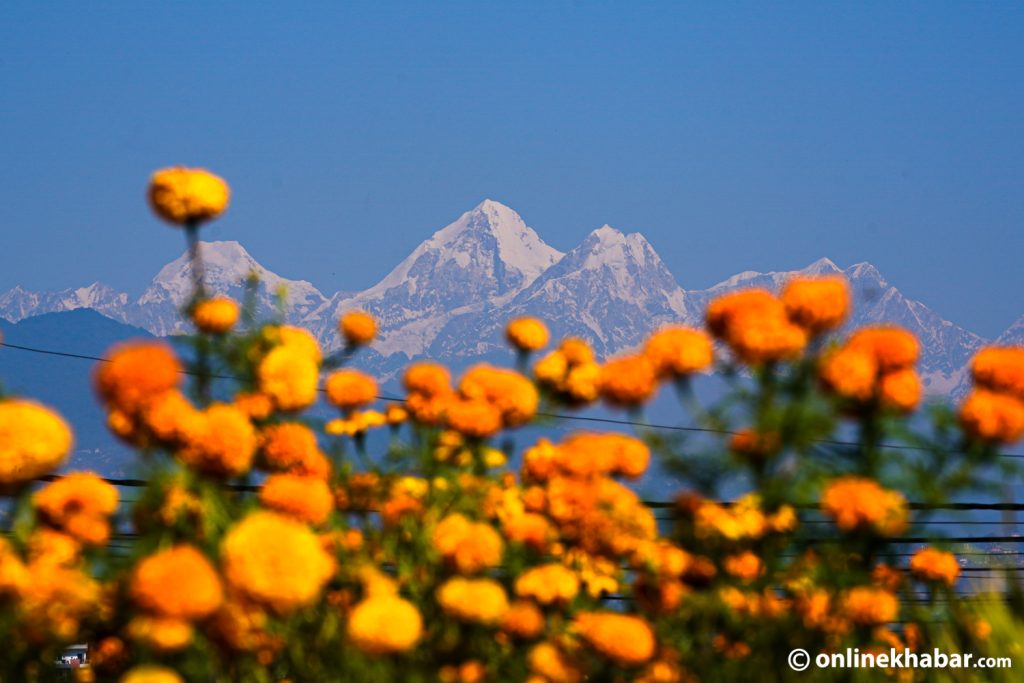
Industry representatives say policy-related difficulties have also affected flower production.
Sharma said the ineffective implementation of the Floriculture Promotion Policy 2069 and tighter import requirements for agricultural inputs had created problems for growers during fiscal year 2024/25.
Businesses have particularly raised concerns about stricter requirements under the Plant Quarantine Act and the Seed Act.
Previously, seeds and mother plants could be brought into Nepal through relatively straightforward procedures. Under the newer requirements, seed varieties must be registered, and imports are subject to pest risk analysis (PRA).
Although such measures may serve legitimate regulatory purposes, Sharma said their sudden implementation created difficulties for the industry.
“The policy may be sound in principle, but the sudden tightening of requirements meant we faced considerable difficulties for around one to one-and-a-half years,” he said.
Delays in importing seeds and mother plants affected planting schedules and reduced domestic production, according to Sharma. As local supplies fell short, businesses had to rely more heavily on imported flowers to meet market demand.
Why Nepal still relies on imported seeds
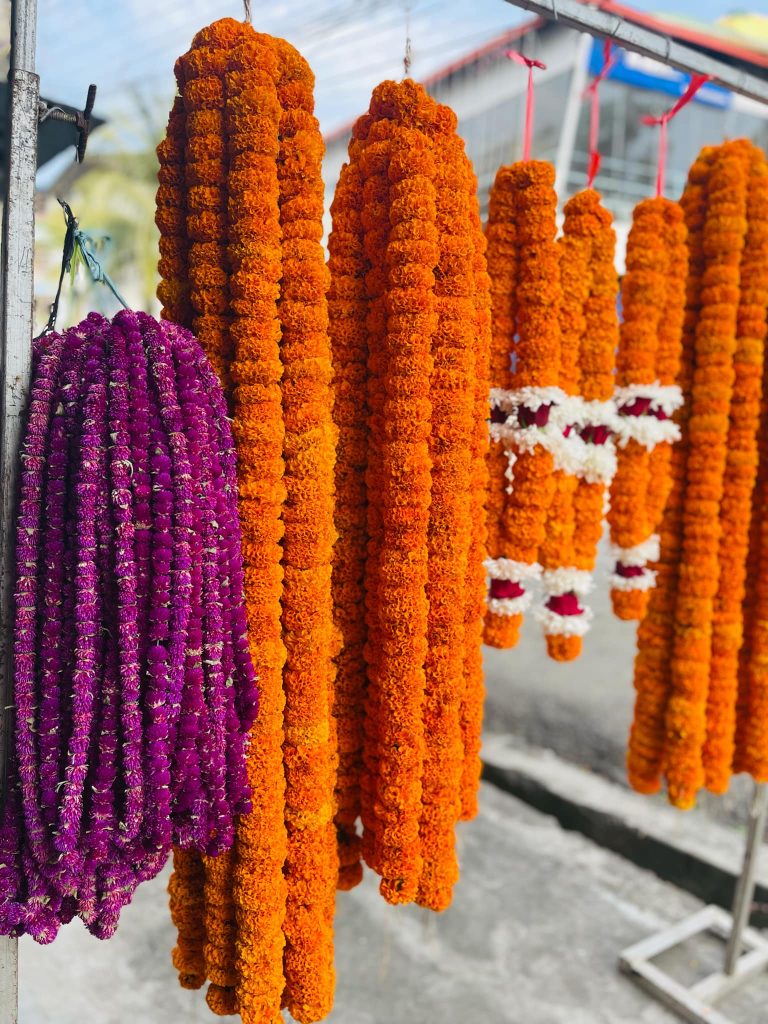
Despite billions of rupees in investment, Nepal continues to depend on countries including India, the Netherlands, China, Japan, Germany, the United States and Thailand for live plants, flower seeds, fresh-cut flowers, bulbs and tubers.
Sharma said the limited size of Nepal’s market was a major obstacle to establishing domestic seed-production facilities and tissue-culture laboratories.
Such facilities require substantial capital, specialised infrastructure and research capacity. Recovering the investment solely through sales in Nepal would be difficult, he said.
“Building seed-production facilities and tissue-culture laboratories requires significant capital and infrastructure, but our market is small. It is difficult to recover the investment by selling seeds produced in Nepal only within the domestic market,” Sharma said.
He added that importing seeds from India and other countries with lower production costs often remained a more affordable option than establishing expensive research and production facilities locally.
Festival exports and competition across the open border
Despite the import dependence, Nepal has export opportunities, particularly for marigold and globe amaranth garlands during Tihar.
Sharma said demand came from countries such as the United States, Australia and Japan, where large Nepali communities celebrate the festival. Some indigenous seeds and other flowers are also exported occasionally.
However, domestic growers face competition from flowers that enter Nepal through the open border with India.
FAN believes flowers are sometimes brought into Nepal illegally through border crossings, particularly during festivals when demand is high. The association does not have official figures for such imports, Sharma said, but warned that cheaper flowers entering border towns could disadvantage Nepali farmers.
Annual flower trade approaches Rs 4 billion

According to FAN, demand and supply in Nepal’s floriculture market have generally grown by 10 to 15 per cent annually, apart from a few exceptional years. Domestic production, however, has increased by only around 7 to 9 per cent a year.
The industry recorded annual business of Rs 3.37 billion in the previous fiscal year, amid policy-related difficulties and reduced production. In fiscal year 2025/26, turnover rose by 16.91 per cent to more than Rs 3.94 billion, according to the association.
Ornamental plants accounted for the largest share of the market, with turnover of Rs 1.1219 billion.
Other segments included cut flowers, worth Rs 793.9 million; seasonal flowering plants, Rs 287.7 million; landscaping and gardening, Rs 292.6 million; and globe amaranth and marigold garlands, Rs 116.9 million.
The figures point to a growing industry that has created employment and attracted substantial investment, but whose production capacity has yet to keep pace with demand.
Addressing the import gap will require more predictable policies, smoother procedures for importing essential seeds and planting materials, and measures to support domestic growers, industry representatives say. Better management of seasonal demand and action against illegal imports could also help local producers compete.
For Nepal’s floriculture industry, the challenge is no longer simply expanding the market. It is increasing domestic production at a pace that allows growers to benefit from that growth while reducing reliance on imported flowers and related products.