

Nuwakot, August 30
Every time a helicopter lands at the Nepal Army’s No. 1 Military Training Centre in Trishuli, Nuwakot, families of people missing since the Rasuwa floods turn their eyes towards it, hoping their loved ones might be among those rescued.
But when the helicopter arrives without them, the families return to waiting.
They have been doing this for nearly five days.
Relatives of people who went missing after a sudden flood struck the Bhotekoshi River in Rasuwa early Wednesday say they are increasingly dissatisfied with the government’s search and rescue efforts.
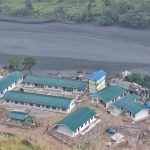
Many of them are now staying at the Trishuli army barracks, waiting for news of their loved ones.
The families of those who have been rescued are relieved and happy. But for those whose relatives remain missing, the wait has become increasingly agonising.
Among them is Shobit Pokharel from Lamjung, who has been staying at the Trishuli barracks for three days. His cousin, a mechanical sub-engineer working at the Upper Trishuli 3A hydropower project, has been missing since the flood.
According to Pokharel, around 45 people were working at the site when the flood struck.
He last spoke to his cousin through a video call on the evening of August 25.
“She told me she had duty from 7 pm and would be working for 12 hours. She said we would talk again in the evening. It has been four days and we have not been able to contact her,” he said.
Her location was detected inside the tunnel at 9:18:56 pm that night. There has been no information since.
The Nepal Electricity Authority has told the family that the tunnel was designed in a way that could allow people to remain safe inside.
“But we have no information,” Pokharel said.
Like Pokharel, several other relatives have spent their days at the Trishuli barracks waiting for news.
They say they are not reassured by government claims that Home Minister Sudan Gurung himself has been involved in the rescue operation.
“The problem is that the tunnel was built, but there is no skilled manpower to carry out the rescue. We were told that the Home Minister himself went into the tunnel and worked. We thank him for that, but even if he stays there and works for 10 days, nothing will happen. Rescue requires skilled manpower. Experts need to be brought in,” Pokharel said.
He questioned the pace of excavation.
“An excavator is being used as if it were simply removing sand from a river. How can people be rescued that way?”
The families say a much larger operation should have been mobilised, with 15 to 20 excavators and specialised personnel working continuously.
They complain that the operation has instead been progressing at what they describe as office-hour speed.
“They work for eight hours as if it were office hours. The Army used night-vision equipment for operations 15 years ago, but now they stop work before 6 pm saying visibility is poor,” one relative said.
Some relatives have even risked their own lives to reach the tunnel sites themselves.
“Four people walked from the other side and reached the tunnel. But the work there is nowhere near what is being portrayed outside,” relatives said.
‘Give us their lives or their bodies’
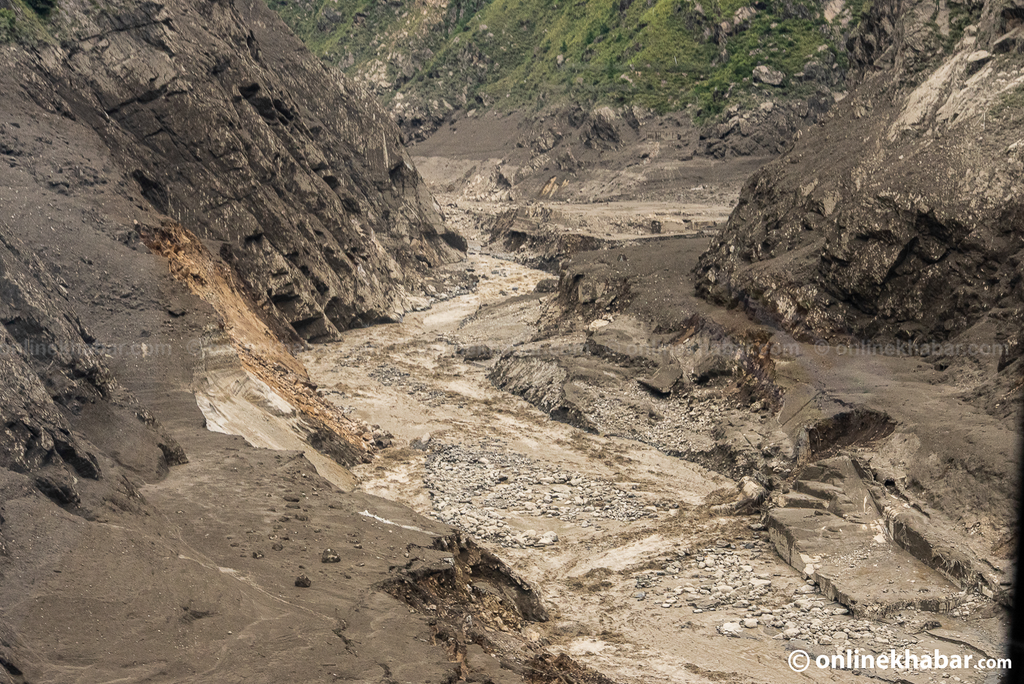
Tapendra Bista of Kalikot has also come to the Trishuli barracks in search of his younger brother.
His brother is believed to be missing inside the tunnel of the Upper Trishuli 3B project.
Bista said his brother last spoke to the family at around 8 am on August 27, after completing his duty and saying he was heading to his room.
He has not been heard from since.
Another worker, Nepal Bista, who was with him, is also missing.
“Give us their lives or give us their bodies,” Tapendra said, expressing his frustration over the lack of progress.
The message from most families waiting at the barracks is the same: their relatives must be rescued as quickly as possible.
Hundreds still believed trapped inside tunnels
The frustration comes as hundreds of workers and employees remain missing or are believed to be trapped inside tunnels of hydropower projects along the Trishuli corridor, four days after the flood.
The 60 MW Upper Trishuli 3A, 216 MW Upper Trishuli-1, 20 MW Langtang and 22 MW Chilime projects are among those affected.
The concerned hydropower projects say full-scale rescue operations have been delayed by a lack of specialised manpower, expertise, equipment and government coordination.
At Upper Trishuli 3A, where Home Minister Gurung visited on Friday, authorities have so far been excavating to locate one of the access tunnels.
NEA Deputy Executive Director Madan Timsina said some of the equipment required for the operation reached the affected area only on Friday.
Two excavators and other equipment are now being used to dig towards the tunnel.
“It does not appear immediately possible to enter through the headrace or tailrace tunnels. There are also two access tunnels, both of which have been buried. Work has begun with the objective of locating those tunnels and entering through them, but they have not yet been opened,” Timsina said.
The project’s powerhouse is underground and the operational project had been shut down for an overhaul when the flood struck.
Timsina said around 42 employees were believed to be trapped inside the tunnel.
He said the Nepal Electricity Authority had provided available equipment and manpower, while the Nepal Army was also involved in the operation.
However, transporting equipment has been difficult because everything has to be flown in by helicopter, he said.
400 may be trapped at Upper Trishuli-1

The situation is also critical at the Upper Trishuli-1 project, the largest hydropower project under construction along the Trishuli corridor.
Giriraj Adhikari, chief executive officer of Nepal Water and Energy Development Company, said around 600 people working at the project remained out of contact, with around 400 believed to be trapped inside tunnels.
“Of those who managed to save their lives on the surface, 260 have been rescued, including 10 Korean nationals,” Adhikari said.
“But the rescue of those trapped inside the tunnel has not even started. We expect the work to begin tomorrow.”
A six-member Chinese tunnel expert team has arrived in Nepal to assist with the rescue operation.
China Railway is carrying out the civil construction work at the project, and the Chinese experts arrived in coordination with the company, Adhikari said.
Around 300 people are believed to have been working inside the tunnel and another 100 at the headworks when the disaster occurred.
The project expects the Chinese team to begin field operations on Sunday.
Langtang families have waited for four days
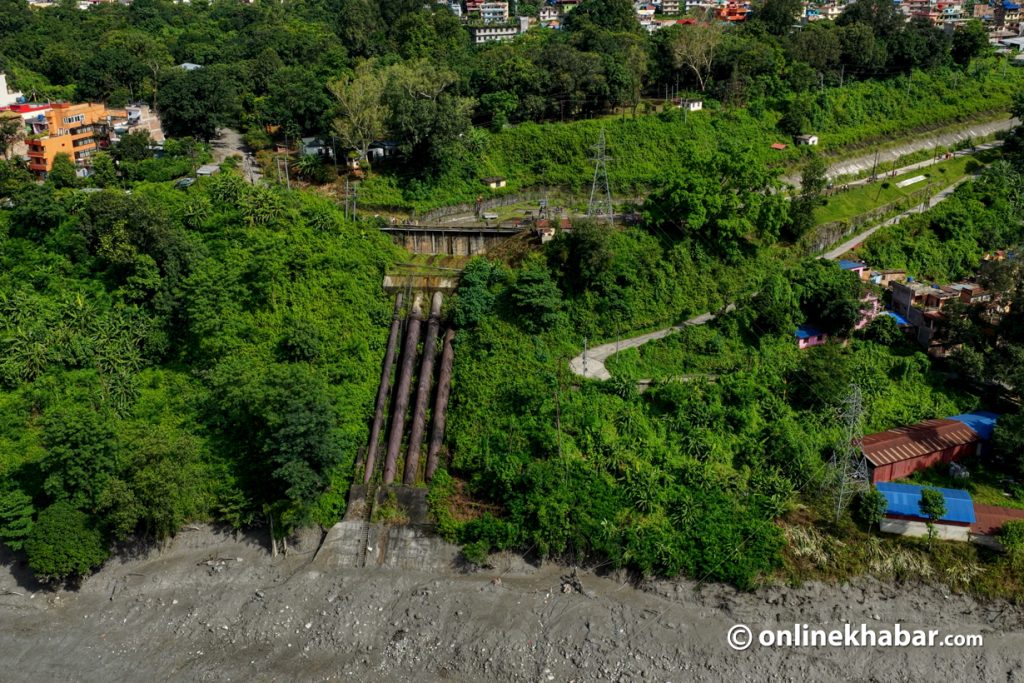
Around 25 people are believed to be trapped inside the tunnel of the Langtang Hydropower Project.
Project promoter Bijayman Bhattarai said 19 of the 60 people working at the project had been rescued, but those believed to be inside the tunnel had yet to be reached.
“Employees who managed to get out alive have also said that people are trapped inside the tunnel. I have repeatedly asked the concerned officials to rescue them, but the operation has not even started,” Bhattarai said.
“It has been four days. They keep saying they will do it today or tomorrow. Nothing has happened. I am exhausted.”
Chilime tunnel blocked by mud
Six employees trapped inside the Chilime Hydropower Project tunnel have also yet to be rescued.
Project chief executive officer Baburaja Maharjan said a mountaineering rescue team was flown to the site by Simrik Air helicopter on Saturday, but it could not reach those trapped inside.
“After going around 100 metres inside the tunnel, they found that it was completely blocked. They said they could not clear it and that a specialised team with special equipment was required,” Maharjan said.
An Indian rescue team that arrived in Nepal has conducted a reconnaissance of the area, and efforts are underway to deploy it for the rescue operation.
Experts question government response
Nepal Engineers’ Association President Subas Baral said there had been significant delays in rescuing people trapped inside the tunnels.
“Nepal has the capacity, equipment and skills for tunnel rescue. Even if any particular equipment was unavailable, it could have been brought immediately from neighbouring countries,” he said.
“The rescue of those trapped inside the tunnels should have been prioritised from the beginning. But there has been much more effort to rescue people outside than those trapped inside.”
Hydropower expert Surya Prasad Adhikari said the people trapped inside the tunnels should have been rescued within two days if the government had treated the situation with the required urgency.
He said the disaster had exposed Nepal’s lack of specialised expertise, equipment and technology for tunnel rescue.
He argued that the government should have immediately sought assistance from foreign teams with the required technical expertise.
The government finally decided on Saturday to allow foreign rescue teams to enter Nepal. A Chinese team and an Indian team have since arrived.
However, officials familiar with the operation said the teams were unable to begin field operations immediately because of a lack of government coordination.
898 people still out of contact
The Independent Power Producers’ Association, Nepal (IPPAN), said 898 people from 11 hydropower projects remained out of contact following the Rasuwa floods.
The Upper Trishuli-1 project has the highest number, with 576 people still out of contact.
The Upper Trishuli 3B project has reported 201 people out of contact. The project said none of them were trapped inside its tunnel, and that the missing people included surface workers, office staff and employees staying at camps.
IPPAN said four people from the Rasuwa-Bhotekoshi Hydropower Project and 42 from the Langtang Khola Hydropower Project were missing. Eight people were missing from Chilime and seven from the Melung Khola Hydropower Project.
A further 42 people from Upper Trishuli 3A were out of contact, along with two from Middle Trishuli Ganga and one each from the Trishuli Hydropower Project and Devighat Hydropower Project.
IPPAN estimates that around 300 people are trapped inside the tunnels of Upper Trishuli-1, Upper Trishuli 3A and Upper Trishuli 3B.
So far, 361 people have been rescued from the affected hydropower projects, including 254 from Upper Trishuli-1, 18 from Langtang and 91 from Upper Trishuli 3B.
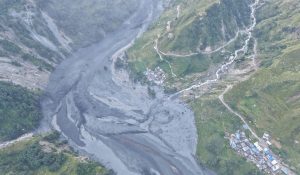
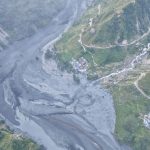
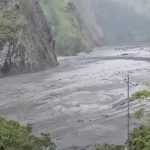
The floods struck the Bhotekoshi River in Rasuwa at around 8:45 am on August 27 after floodwaters entered from the Tibet side, causing damage in Rasuwa as well as downstream areas including Nuwakot and Dhading.
More than 15,000 security personnel have been deployed in search and rescue operations following the disaster.
For the families waiting at the Trishuli barracks, however, the priority remains unchanged: they want their loved ones brought home — alive if possible, and accounted for as soon as possible.