
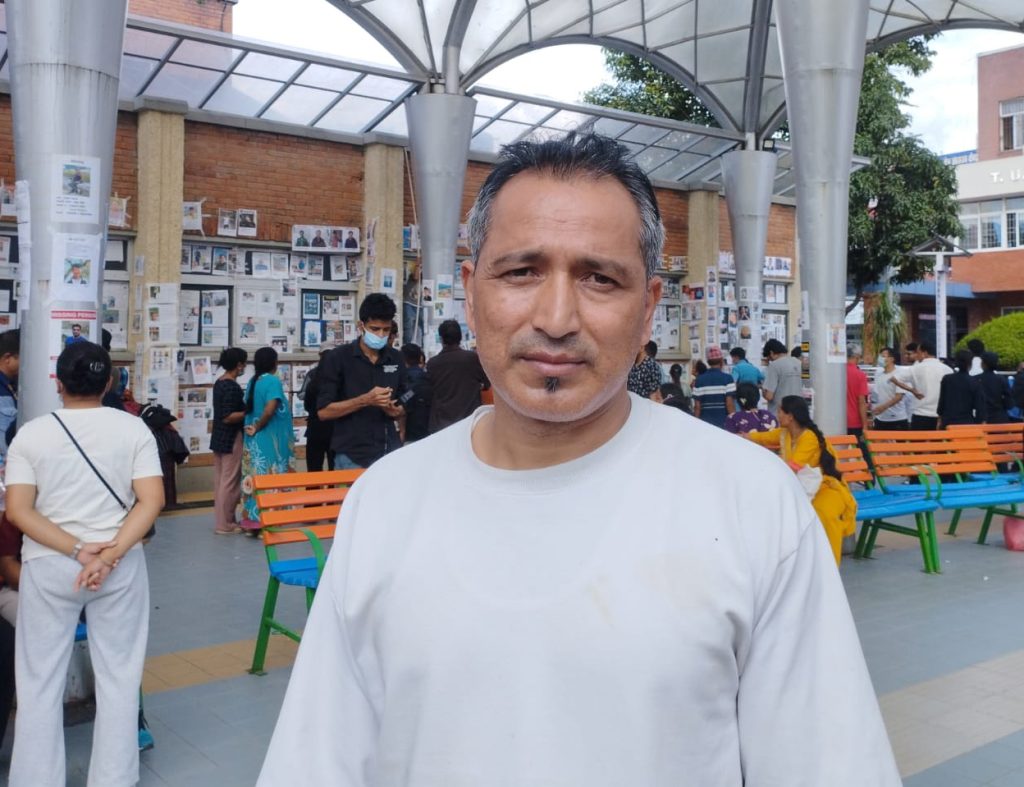
When Shiva Giri of Ghorahi, Dang, left for work at around 7:30am on August 26, it was a routine start to his day.
Giri, a lab technician at the 216MW Upper Trishuli Hydropower Project, was heading towards Tunnel No. 3 when a dry landslide blocked the route.
He and his colleagues informed the office about the landslide and turned back towards their accommodation.
But before they could reach their rooms, Giri received another warning: A flood was coming from upstream, and everyone needed to be alerted.
Giri and his colleagues immediately ran towards their camp.
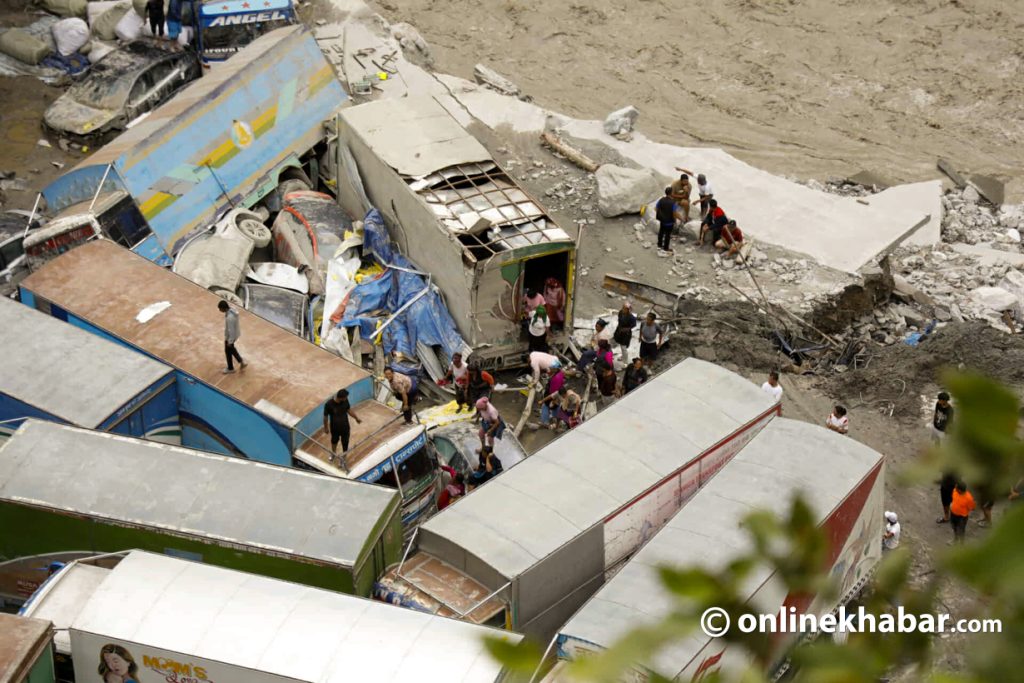
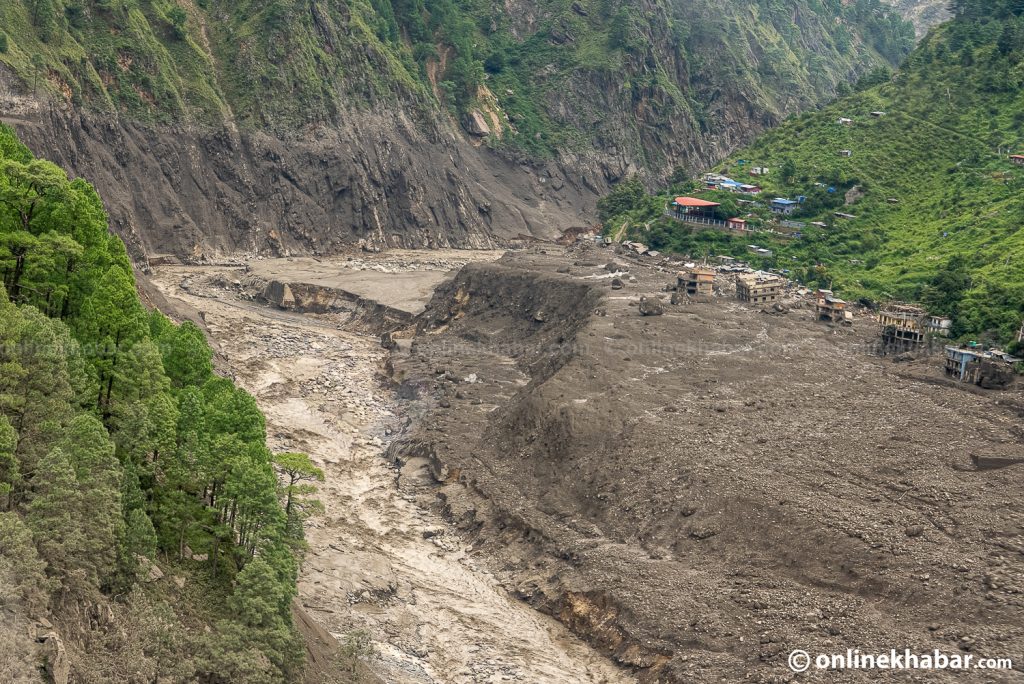
They managed to escape. But from a short distance away, they watched helplessly as the flood swept away vehicles, colleagues, a bridge, their camp and other project structures.
“Boulders as high as 50 metres were being tossed around as the flood came towards us, destroying the bridge and the camp,” Giri recalled. “We survived by jumping into the forest just two seconds before it reached us.”
The scene remains vivid in his mind.
“People were running on the road, and there were vehicles. It swept everything away. It left nothing behind,” he said.
All eight members of the lab team, including Giri, survived.
“There were eight of us in the group. Because we were warned on time, all eight of us survived,” he said.
But surviving the flood was only the beginning of their ordeal.
Waiting for a rescue that did not come
Around 10 or 11am, as the river began to subside, they moved a little further down. Helicopters soon began circling overhead to assess the situation.
“When the helicopter arrived, we felt there was hope of survival,” Giri said. “We lit a fire to signal them and called for help.”
But the helicopter left without rescuing them.
“We kept watching as some people on the other side were rescued,” he said.
By 3pm, however, there was still no sign of rescue for Giri and his colleagues.
They were running out of options.
“It became difficult even without water. When I could no longer walk properly, I called my family and asked them to send a helicopter at their own expense,” he said.
That effort also failed.
Through phone conversations, they were told that a village could be reached after walking for eight to 10 hours.
“It was already 3pm. What were we supposed to do by staying there? What would we eat? So we started climbing uphill,” Giri said.
As they climbed, the group split into two. Those who could walk faster went ahead, while Giri and some others fell behind.
Giri had injured his knee after falling while running to escape the flood.
“Darkness fell while we were walking. My phone had already switched off. I had no idea what time it was,” he recalled.
He eventually spent the night in a cave.
A dog that had followed him along the way became his companion for the night.
After walking for eight to 10 hours, Giri was exhausted. He had neither food nor water.
“I thought, if only it would rain, at least I could drink water,” he said. “And half an hour later, it started raining. I had an empty bottle, so I filled it with rainwater and drank it.”
Only then, he said, did he begin to feel that he might survive.
He could not sleep that night. As he lay awake thinking about what to do next, he decided it would be safer to return to where the flood had occurred rather than continue uphill.
“I thought a helicopter might come to where the incident had happened. It wouldn’t come all the way up there. There were no vehicles either. At least I might find some food there,” he said.
After spending around 10 hours climbing uphill, Giri turned back the next morning and spent another six hours walking downhill.
Three attempts to rescue him failed
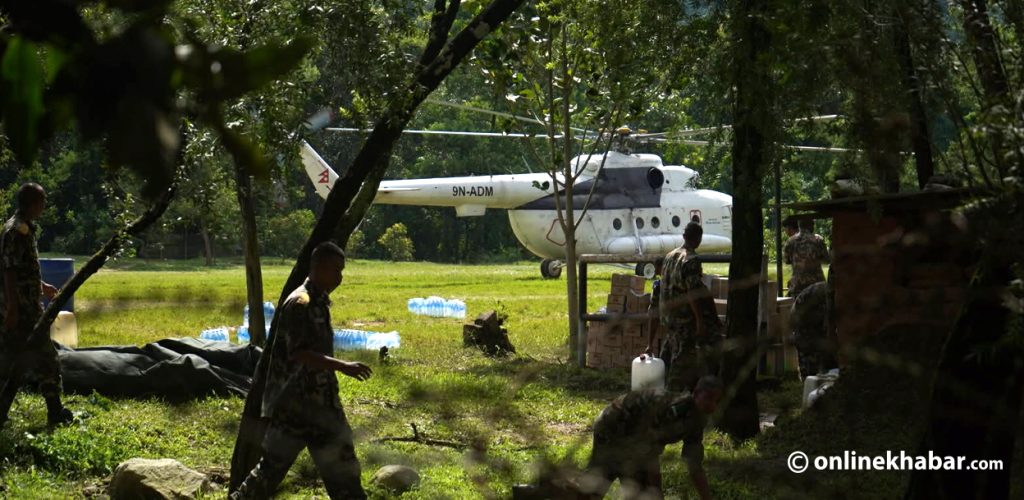
Helicopters began arriving again after 10am.
Giri started signalling to them. At around 11am, one helicopter spotted him and attempted a rescue.
But the attempt failed.
When he tried to move towards the helicopter, he became stuck in the mud.
“They tried to pull me out three times, but they couldn’t,” he said. “After they failed, I signalled to them to drop some food and water.”
About half an hour after that helicopter left, a Nepal Army helicopter arrived.
“The ground sank wherever I stepped. The helicopter couldn’t land,” Giri said. “It held itself in the air and lifted me out.”
After being rescued, Giri was taken to Trishuli Hospital. Following initial treatment there, he is now receiving treatment at Tribhuvan University Teaching Hospital in Kathmandu.
‘I told my family I might not survive’
Giri has survived to tell the story. But during those hours stranded after the flood, he said he repeatedly lost hope that he would make it out alive.
He called his family and recorded a video for his wife.
“I told her, ‘I don’t think I’ll survive. I haven’t even had water since morning,’” he said.
Now, after surviving what he describes as an experience that could easily have ended differently, Giri says his outlook on life has changed.
“It feels like my life has changed. I feel like I died once. But then I survived,” he said.