
When delegates arrive in Antalya on November 9, they will enter a world quite unlike the one that produced the Paris Agreement. As wars, tariffs and fractured alliances crowd the agenda, COP31 will likely protect the Paris framework without advancing it significantly. The conference runs from November 9 to 20, with a leaders’ summit scheduled for November 11 and 12. The political climate outside the conference halls is stormy. UN climate chief Simon Stiell has described these as extraordinary times, marked by a “new world disorder”.
Under these circumstances, what can such a meeting realistically deliver? The likeliest outcome is a modest, incremental package that keeps multilateralism alive, disappoints the most ambitious countries and leaves the hardest questions to be settled elsewhere.
COP31 begins with unfinished business. At Belém last year, more than 80 countries demanded a roadmap for moving away from fossil fuels, yet the final text made no mention of a fossil fuel phase-out. The Brazilian presidency promised that a roadmap for transitioning away from fossil fuels and halting deforestation might be presented at COP31. However, this would be a presidential initiative outside the negotiated text, rather than a binding decision.
Adaptation finance faced a similar setback. Global public adaptation finance fell from $28 billion in 2022 to $26 billion in 2023, even as needs continued to rise. According to UNEP’s 2026 Adaptation Gap Report, total international public adaptation finance from developed to developing countries stands at approximately $28.2 billion to $31.7 billion, while actual global needs are estimated at $305 billion annually. Antalya must therefore address these issues alongside other pressing agenda items.
The geopolitical headwinds
The current geopolitical climate is working against the objectives of the Paris Agreement. Three forces are likely to shape the talks more than any negotiating text.
The first is the retreat of the United States. Its withdrawal from the Paris Agreement took effect in January 2026, and Washington sent no delegation to COP30. Its absence removes a major emitter and financier from the negotiating table. Other developed countries, constrained by rising defence spending and domestic political pressures, are less willing to fill the gap. Securing financial commitments will therefore become more difficult.
The second is war and energy insecurity. Conflicts across several continents, particularly the war in Ukraine and the crisis in West Asia, have jolted energy markets. This cuts both ways. Germany’s environment minister has argued that the Iran war should strengthen the resolve to move away from fossil fuels. Similarly, COP31 president-designate Murat Kurum has noted that recent events have exposed the vulnerabilities associated with dependence on fossil fuel imports. The energy security argument for renewables is now stronger than the climate argument in many capitals. However, oil and gas exporters, as well as countries scrambling to secure energy supplies, can equally argue that this is not the time to discuss a phase-out.
The third is trade. Analysts expect negotiations to be complicated by divergent national priorities, slowing growth in climate finance and geopolitical tensions surrounding clean technology trade. Carbon border taxes, subsidies for green industries and competition over solar panels, batteries and critical minerals are no longer peripheral issues. The concerns of small and highly vulnerable countries such as Nepal may receive little priority. Developing countries increasingly view border adjustment measures as protectionism disguised as climate policy, while developed economies see them as necessary safeguards against carbon leakage. This disagreement is likely to surface in the corridors and possibly in the negotiating text.
The Third Pole at the table
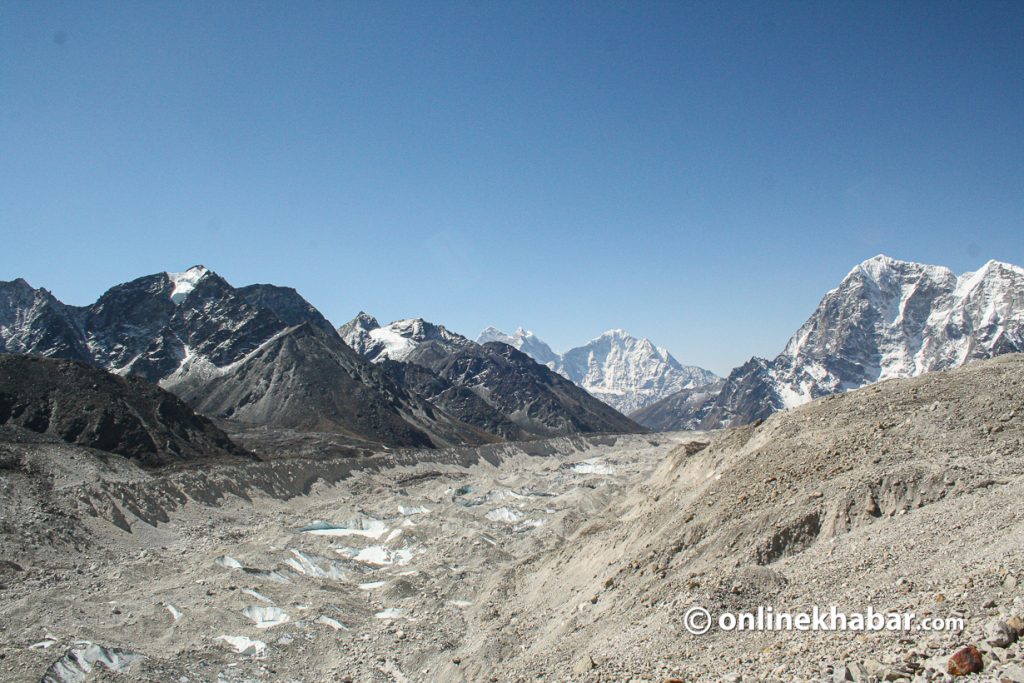
Nowhere are the stakes of Antalya clearer than in the Hindu Kush Himalaya (HKH). Stretching approximately 3,500 kilometres across eight countries — Afghanistan, Bangladesh, Bhutan, China, India, Myanmar, Nepal and Pakistan — the region holds the largest volume of ice outside the polar regions and feeds rivers on which more than two billion people depend.
The scientific evidence is alarming. An ICIMOD report published in March 2026 found that the rate of ice loss has doubled since 2000, with glaciers losing 12 per cent of their area between 1990 and 2020. Catastrophic events are becoming increasingly frequent. The latest occurred on 26 August 2026 along the Nepal-China border, and many more could follow. Under current emissions trajectories, glaciers could lose up to 80 per cent of their volume by the end of the century. Scientists warn that parts of the Himalayan cryosphere may be approaching critical tipping points.
The danger is not limited to gradual water scarcity. It can also be sudden and devastating, in the form of glacial lake outburst floods, flash floods and landslides that sweep away villages, roads and hydropower plants. These are challenges that no single country can manage alone.
This is why HKH countries should press for three key demands in Antalya. First, mountain-specific indicators should be included in the Global Goal on Adaptation so that glacier monitoring, early warning systems and flood protection are recognised as essential adaptation measures. Second, dedicated financing windows should be established for high-mountain communities, many of which are poor and remote, with faster access to funding through loss and damage arrangements. Third, regional concerns should be incorporated into discussions on fossil fuel transition and a just transition. The countries of the Third Pole have contributed relatively little to historical emissions but bear a disproportionate share of the consequences.
Shared rivers also call for greater cross-border cooperation. Promoting an ecological civilisation requires everything from data-sharing to joint flood forecasting. The global climate process can encourage such cooperation, even if it cannot compel countries to participate.
An unusual hosting arrangement
The structure of COP31 reflects a compromise. Türkiye will host the conference and hold the presidency, while Australia’s Chris Bowen has been appointed President of Negotiations. Pre-COP meetings were held in Fiji and Tuvalu. This arrangement gives the Pacific, a region on the front line of rising sea levels, a louder voice while offering Ankara a diplomatic showcase.
How the concerns of mountain communities will be received at the meeting remains to be seen. Kurum has promised that Türkiye and Australia will work as one body, guided by consultation and cooperation. Dual leadership can bring creativity, but it can also blur accountability. Both countries are fossil fuel producers and consumers, and neither is a natural champion of a firm phase-out deadline. This matters because presidencies set the tone of negotiations, and a cautious tone usually produces cautious outcomes.
What is likely to emerge
Based on the available evidence, four outcomes appear most plausible.
First, a procedural advance on adaptation. The Global Goal on Adaptation indicators and the Baku Adaptation Roadmap, whose first phase covers 2026–2028, provide negotiators with concrete technical work. Agreement on practical indicators is realistic, but a firm, adequately funded pathway is less likely. Vulnerable countries such as Nepal may leave with more progress on processes than on actual financing.
Second, a roadmap without teeth. The transition away from fossil fuels will probably advance through a presidency-led roadmap and coalitions of willing countries rather than through a consensus-based decision. A group of countries, including Pacific Island states and Latin American nations, is already pushing this agenda forward, supported by initiatives such as the Colombia-Netherlands conference on a just transition. Since the UN climate process operates on consensus, fossil fuel-producing countries can block binding language. At Bonn, Oxfam recently noted that the long-agreed phase-out had not come any closer. A voluntary alliance would represent progress, but it would not amount to a global commitment.
Third, finance disputes without resolution. The gap between the financial needs of least developed and other developing countries and the funding actually available will dominate the late-night negotiations. We can expect renewed commitments, new reporting arrangements and some announcements from the European Union, Japan and others, but not a breakthrough on the scale required. A decisive shift may come only if middle-income and wealthier developing economies are also encouraged to contribute, an idea that remains politically contentious.
Fourth, a leaders’ summit dominated by declarations. The heads of government gathering on 11 and 12 November are likely to deliver speeches, announce coalitions and make sectoral pledges on carbon emissions, methane, clean energy and resilient infrastructure. These announcements can generate momentum and attract headlines. Their real value, however, will depend on whether they translate into concrete national policies and plans.
Why it may still matter
It would be wrong to dismiss Antalya as a failure before the conference even begins. Simply keeping the process alive would be an achievement. Despite the US withdrawal, parties reaffirmed their commitment to the Paris Agreement on its tenth anniversary and to its implementation at COP30. If COP31 does the same while resisting attempts to dilute existing commitments, the multilateral system will have demonstrated its resilience.
There is also a quiet shift in who sets the global climate agenda. Analysts note that agenda-setting power is gradually moving towards the Global South, with COP31 in Türkiye to be followed by COP32 in Ethiopia. Countries in Asia, Africa and the Pacific, along with mountain nations facing glacier loss and flash floods, are increasingly framing the debate around climate justice, adaptation and equitable finance rather than emissions alone. China, the world’s leading manufacturer of clean technologies, is also becoming a more influential player as the American role diminishes, giving the process a different centre of gravity.
Moreover, economic developments are moving independently of diplomatic negotiations. The costs of solar, wind and battery technologies have fallen significantly, prompting many countries to pursue clean energy for reasons of energy security and economic competitiveness, regardless of the outcome of climate talks. The role of COP is increasingly to coordinate action, mobilise finance and hold governments accountable rather than compel them to act.
The measure of success
Judged against the scale of the climate crisis, any likely outcome will fall short of what is needed. Emissions remain too high, adaptation remains underfunded and trust remains fragile. However, judged against the current geopolitical circumstances, an outcome that preserves the Paris Agreement framework, advances adaptation indicators, keeps the fossil fuel transition on the agenda and avoids a breakdown in negotiations would count as a genuine, if modest, success.
The real test will come after Antalya. A roadmap becomes meaningful only when it is followed by national plans, budgets and investments. A financial pledge matters only when the money is delivered. A leaders’ declaration counts only when it leads to changes in domestic policy.
If world leaders treat COP31 as a venue for diplomatic theatre, it will confirm the sceptics’ doubts. If they use it to rebuild trust, protect vulnerable communities and advance cooperation among willing countries, it could mark a quiet turning point. The odds favour the former, but the stakes demand the latter.