
Myagdi, May 19
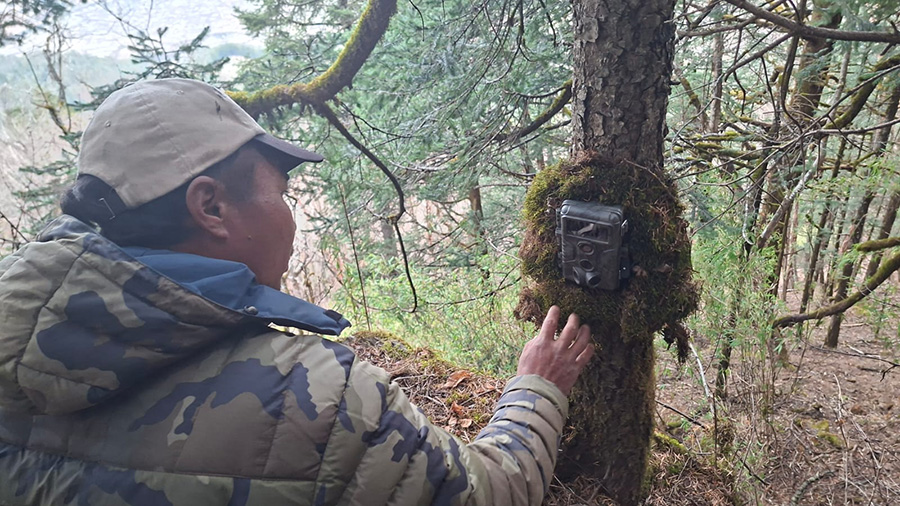
Camera trapoings have been installed at various places of Jaljala and Dhorpatan Hunting Reserve in Dhaulgiri Rural Municipality in order to ascertain the condition of the endangered red panda. The Biodiversity Conservation Society Nepal set up the devices with the assistance of a donor agency.
The devices are set up at Jaljala, Muna, Mareni and Dhorpatan of ward no 2 and 3 in Dhaulagiri Rural Municipality. The camera trapping method is adopted to know about the red panda’s behaviour and habitat. Society chairman Paban Rai informed that the trapping devices were installed at a dozen places where the red panda passes by, and at these spots their droppings were found.
The camera traps are automated devices recording the mobility and behaviour of the species facing extinction. “It helps ascertain the number of red the tree-living animals,” he said, adding that even the study of parasites afflicting the animals was underway. A technical team has been mobilised to collect and examine red panda’s scat, which would help determine the health condition of the endangered wildlife and forward conservation activities accordingly. The red panda is a wild animal found in the hilly forests of 2,200 to 4,500 metres altitude.
In the last record, 6 to 25 red pandas were found in the Jaljala area, according to officer Rai. Red panda takes rest in trees at night and eats bamboo shoots during the day. The National Park and Wildlife Conservation Act, 2029, has listed this mammal as a protected species. Anyone found poaching this mammal faces jail terms of 1 to 10 years and a fine ranging from Rs 100,000 to Rs 500,000 or both as per existing law.
The latest study has estimated the number of red pandas to be between 500 and 1,000 in Nepal. In addition to Nepal, the tree-living animal is found in China, India, Bhutan and Myanmar. Nepal’s red panda is of the Ailurus fulgens species.