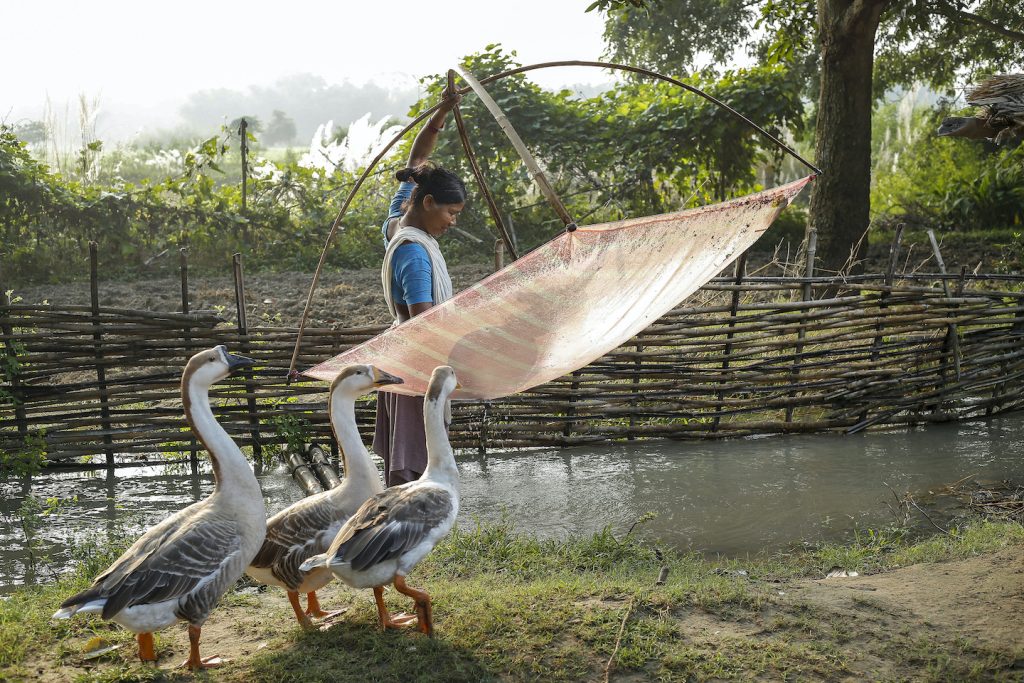


What if Nepal’s prisons produced fruits and vegetables instead of simply holding prisoners? What if inmates were given opportunities to learn agriculture, livestock farming, plumbing, carpentry, tailoring and other skills that could help them earn a living after completing their sentences?
Imagine a prison where inmates grow fruits and vegetables, cultivate cereals, rear livestock, make furniture for schools, produce garments and manufacture other goods consumed daily in Nepal.
Imagine another where a person serving a prison sentence learns plumbing, electrical installation, tailoring or commercial farming. By the time they complete their sentence, they would leave with more than a release document. They would have a skill that could help them reintegrate into society and potentially earn a living.
With Nepal facing overcrowded prisons and inmates being held beyond the capacity of correctional facilities, the country should explore productive correctional institutions where imprisonment is accompanied by opportunities for education, vocational training, manufacturing, agriculture, craftsmanship and other socially useful work.
Experiences from Burkina Faso, South Africa, India, Namibia, the United States, New Zealand, Finland, Japan and Canada offer interesting starting points.
A lesson from Burkina Faso
In Burkina Faso, the Baporo Agricultural Penitentiary Centre represents an alternative approach to imprisonment. Established under the leadership of Thomas Sankara in 1986, the centre was designed to combine incarceration with agricultural production and rehabilitation.
Inmates at the centre participate in farming and livestock rearing, turning the correctional facility into a productive agricultural institution.
According to the Burkina Faso government, the centre produced 240 tonnes of agricultural output in 2025. For 2026, it has announced a production target of around 782.5 tonnes of agricultural products.
Burkina Faso’s experience demonstrates how a correctional facility can be organised around productive activities rather than treating confinement as its sole function.

A lesson from South Africa
South Africa has a similar programme. According to the Department of Correctional Services’ 2024/25 annual report, 11 departmental prison bakeries produced more than 500,000 loaves of bread during the fiscal year, achieving 95.52 per cent self-sufficiency in bread supplied to inmates. The department estimates that its in-house bread production saved around 27.2 million.
South African correctional facilities also manufacture furniture for government institutions and produce uniform items for correctional officers.
A lesson from India
India’s Maharashtra Prison Department is another example. According to the department, prison industries operate across nine correctional institutions, with activities including carpentry, blacksmithing, leatherwork, textiles, carpet-making, tailoring, paper production, baking, laundry services and more.
The department also states that its prison industries produce more than 70 items, including wooden doors and windows, bed sheets, candles, detergents, leather products and bakery goods.
A lesson from Namibia
Namibia offers another interesting example of how environmental sustainability, productivity and rehabilitation can be combined.
In February 2020, Namibia introduced several prison-based programmes. At Windhoek Correctional Facility, inmates produced soap and detergents for use within the prison system, with surplus products sold to generate income.
At Gobabis Correctional Facility, inmates were trained in hydroponic farming, while female inmates were offered training in sewing and basket-making.
Walvis Bay Correctional Facility also taught inmates to make greeting cards as a means of generating income.
Namibia demonstrates that prison-based production does not necessarily require large factories or extensive agricultural land. Even small production units can help meet institutional needs while equipping inmates with marketable skills.
A lesson from the United States
The United States offers an example that challenges the traditional understanding of prison work as being limited to manual labour.
At San Quentin State Prison in California, inmates were trained in computer programming, web development and digital production. The curriculum included HTML, CSS, JavaScript, React, Node.js, databases and professional development.
Similarly, in the state of Maine, inmates can receive training in a diverse range of fields, including computer programming, commercial printing, laser engraving, woodworking, garment production and furniture-making, alongside other vocational programmes.
A lesson from New Zealand
New Zealand offers perhaps one of the most comprehensive examples of diverse prison-based production.
New Zealand’s Department of Corrections has reported operating more than 130 businesses and industry programmes across the country’s prisons.
These include construction yards, cafes, barista training, carpentry, farming, horticulture, painting and other programmes.
The diversity of programmes in New Zealand offers Nepal an important lesson. Rather than assigning the same occupation to all inmates, correctional facilities can provide a range of training and work opportunities based on individual interests, aptitude and future employment prospects.
Other examples
In Finland, the Finnish Prison and Probation Service identifies prison work as an important means of supporting desistance from crime and improving employment opportunities after release.
Its programmes include carpentry, metalwork, construction, traffic sign and number plate production, packaging, agriculture, horticulture, textile and clothing production, automobile repair and more. Finland also operates open prisons as an alternative to conventional incarceration.
Japan, Canada and several other countries also employ similar approaches to prison work, vocational training and rehabilitation.
Can Nepal implement a similar prison policy?
Yes. Nepal already has a relatively diverse sentencing framework under the Criminal Offences (Sentencing and Execution) Act, 2074 (2017), which provides for various forms of punishment and sentencing alternatives.
These include fines, community service, imprisonment, rehabilitation centres, reform homes, weekend or night imprisonment, open prisons, parole, probation, suspended sentences, property confiscation, victim compensation and reprimands, among others.
This suggests that Nepal’s legal framework already provides a foundation for exploring alternatives and reforms in the way sentences are served.
Section 22 of the Act incorporates provisions for community service, while Section 31 provides for the conversion of imprisonment into manual labour. Under the provision, for every three days of manual labour, one day is deducted from the inmate’s total imprisonment term.
These provisions indicate that Nepal already has a legal basis for exploring productive prison programmes. What is needed is greater initiative, institutional planning and implementation by the government.
However, there is an important distinction between productive rehabilitation and forced labour. The state cannot justify exploiting prisoners simply because they have been deprived of their liberty. Work programmes must be accompanied by fair incentives, appropriate safeguards and meaningful opportunities for rehabilitation. They must not become an additional punishment or a source of cheap labour for private businesses.
It is time for Nepal to stop thinking of prisons merely as places where people serve their sentences and begin considering how correctional institutions can help inmates prepare for life after incarceration.
A prison can be a place that simply holds people until their sentences end. Or it can be a place that produces vegetables, furniture, goods and skilled workers who can contribute to Nepal’s economy while rebuilding their own lives.