
Kathmandu, November 5
Eight years ago, a Facebook post by Education Minister Sasmit Pokhrel began circulating widely again. It read: “However much Dr KC fights, and whoever he fights against, I will always stand by him.”
Pokhrel was among those who repeatedly expressed solidarity with Prof Dr Govinda KC’s campaign to reform medical education. At the time, he warned that taking on the medical mafia would not be easy, arguing that powerful interests had the government under their influence. He vowed to stand by Dr KC, whatever happened.
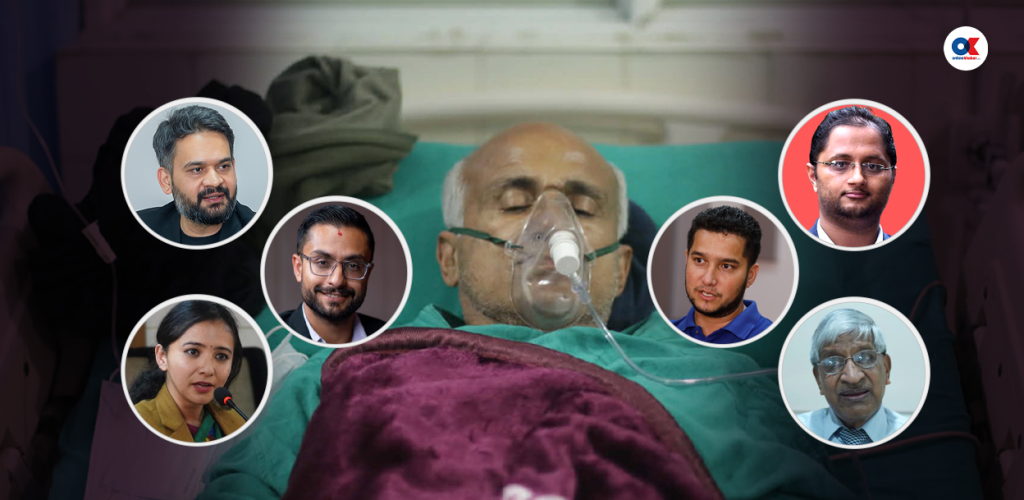
Today, the two are on opposite sides of a very different equation. Dr KC is on his 25th hunger strike, once again pressing for the reforms he has long demanded. His health is deteriorating. But Pokhrel, who once promised to stand by him, has yet to take a visible initiative to bring the government and the fasting doctor to the negotiating table, even after six days of his strike.
The irony extends beyond the education minister. Many of those who once stood alongside Dr KC are no longer protesting from the streets. They are in government, in Parliament and in positions where they can influence policy. Some are ministers and lawmakers; one is the prime minister. Yet as Dr KC’s health becomes increasingly precarious, the commitments they made during his earlier struggles appear to have faded.
Since the Rastriya Swatantra Party (RSP)-led government came to power, Dr KC has launched two hunger strikes, both over longstanding concerns about medical education and healthcare. When he ended his 24th strike, the government pledged to address his demands promptly. But he returned to fasting, saying the agreement had not been implemented.
So far, the government has made no substantial effort to resolve the issues. Its response has largely consisted of a press statement promising action. On some of the disputed matters, critics argue, the government is more concerned with defending its own decisions than addressing the concerns raised by Dr KC.
Where is the minister who promised to stand by him?
On July 3, 2018, Pokhrel posted a message on Facebook in support of Dr KC’s movement. “The fight against the mafia is not easy. They have the government in their grip. That is why I say with my chest held high that this fight can only be won with the support of the people. Whatever happens, truth will ultimately prevail,” he wrote.
At the time, Pokhrel was among those taking to the streets. Today, he heads the Education Ministry, a government body with direct responsibility for several of the issues at the heart of Dr KC’s campaign. Making the Medical Education Commission effective, implementing the Medical Education Act and curbing arbitrary practices by private medical colleges all fall within the ministry’s remit.
Yet now that he holds a position from which he can influence those very issues, her earlier pledge to stand with Dr KC has not been matched by visible action.
Why is it so difficult to speak against the medical mafia after entering government? Why does the resolve to stand with Dr KC seem to disappear once a ministerial chair is secured? These are among the questions being raised over Pokhrel’s response to the latest hunger strike.
“Oli, Deuba, Prachanda, your love for the mafia will never bring the country happiness.”
“One, two, three, four, stop corruption.”
“Our health is in our hands; we stand with Dr KC.”
These slogans once rang out from Maitighar to Baneshwar. Supporters of Dr KC took to the streets wearing headbands emblazoned with the words “I am crazy too”.
When critics dismissed Dr KC as an “old madman”, his supporters turned the insult into a declaration of solidarity. If fighting for people’s health and education was madness, they said, then they were mad too.
Among those who joined the movement were political figures such as Tosima Karki, Pukar Bam, Milan Pandey and Ranju Darshana. They had pledged to take the campaign for medical education reform into Parliament and work towards making education and healthcare a responsibility of the state.
Some of those figures are now lawmakers, ministers or part of the government’s leadership. But many of the issues Dr KC fought to address remain unresolved.
RSP lawmaker Dr Tosima Karki was among the most visible political supporters of his movement. During his hunger strikes, she visited him in hospital to enquire about his health and joined protests against the government at Maitighar and Baneshwar. She also regularly used social media to express her support.
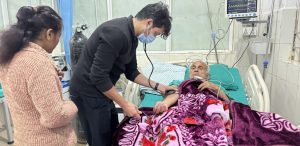
On July 17, 2018, Karki shared a photograph taken with Dr KC as he received treatment in a hospital bed. She described him as a warrior, campaigner and revolutionary.
Her response to his prolonged hunger strike in January 2019 was equally emotional. In a poem that attracted widespread attention, she wrote:
“Couldn’t do it. I couldn’t eat this meal, this morsel. Thinking of that body, which has gone to bed hungry for 18 days for me, for everyone, this morsel has become a lump in my throat.”
Back then, Karki spoke of Dr KC’s suffering and the threat to his life. Now in Parliament, she has again called on the government to honour its commitments.
In a social media post on Wednesday, she wrote: “The agreements made with Dr KC by every previous government, as well as the agreement made by this government, must now be implemented by our government. Dr KC did not fight alone. You and I fought alongside him. Now let us take responsibility for bringing those issues to their destination. Let us not subject that elderly body to further suffering. Let talks with Dr KC be concluded today and his life be protected.”
Her appeal for talks is welcome. But it also raises questions about the action she took before Dr KC’s health deteriorated. As a lawmaker from the governing party, how effectively did she use her position to press the government to act? So far, there has been little visible evidence of such an effort.
Pukar Bam is another political figure whose association with Dr KC’s movement dates back to the streets. He has said the campaign inspired him to undertake a hunger strike of his own. Dr KC later supported Bam when he contested the 2022 House of Representatives election from Kathmandu-1.
Bam is now an RSP lawmaker. He once presented Dr KC’s campaign as a struggle for civil rights and reform in the health sector. As a member of Parliament, he now has a platform to raise those same concerns and push for policy changes. But as Dr KC’s health deteriorates, questions are being asked about Bam’s role and his level of engagement.
Milan Pandey, another figure associated with the movement, had also promised to carry its demands from the streets into Parliament. In 2022, addressing Dr KC, he wrote: “Thank you very much, Doctor Sir, for your support, wishes and goodwill. The issues I raised with you on the streets, I will now raise in Parliament.”
Pandey contested the recent election as well. He is now an adviser at the Education Ministry, which is led by Pokhrel. But the person who once promised to take the issues he had raised alongside Dr KC to Parliament has remained largely silent and out of public view.
“They are going to finish Dr KC off in the same way”
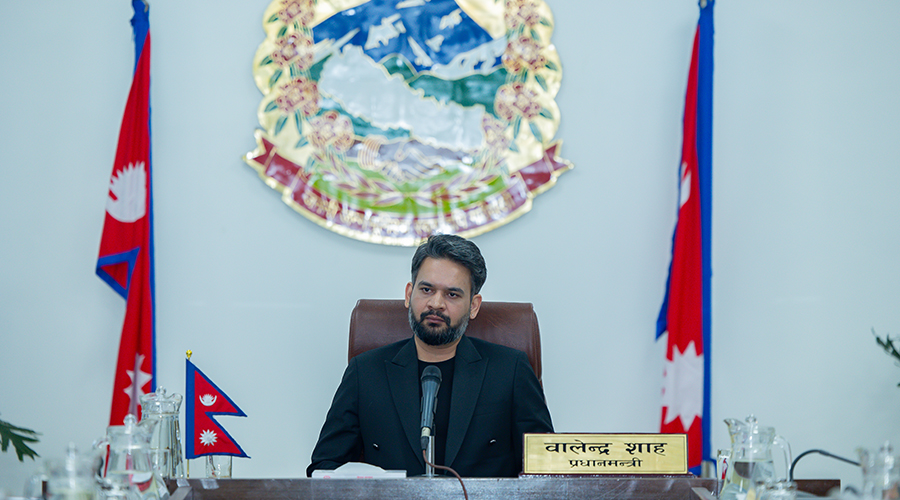
Prime Minister Balendra Shah, too, had publicly expressed concern for Dr KC. Around six years ago, he wrote on social media: “They are going to finish Dr KC off in the same way they did Laxmi Prasad Devkota.”
The remark reflected his criticism of a state that, in his view, neglected people who spoke the truth and struggled for reform. Today, Shah leads the government. Yet since the RSP came to power, Dr KC has gone on hunger strike twice without any effective government initiative to resolve his demands.
The prime minister once spoke out in Dr KC’s defence. Now, under his own government, the doctor’s health is deteriorating, but the administration has not taken the lead in resolving the dispute through dialogue.
Dr KC’s supporters were not limited to political leaders. Medical education experts and doctors also backed his campaign. Prof Dr Jagadish Prasad Agrawal, former dean of the Institute of Medicine, has long supported Dr KC’s demands and his efforts to reform medical education. He is now the prime minister’s health adviser.
In other words, people who understand the problems Dr KC has raised, and who have previously advocated reform, are now in senior positions within the government.
Agrawal represented the government when Dr KC ended his 24th hunger strike. Yet the agreement reached at the time was not implemented to Dr KC’s satisfaction. Within three months, he was back on hunger strike.
A long struggle for medical education reform
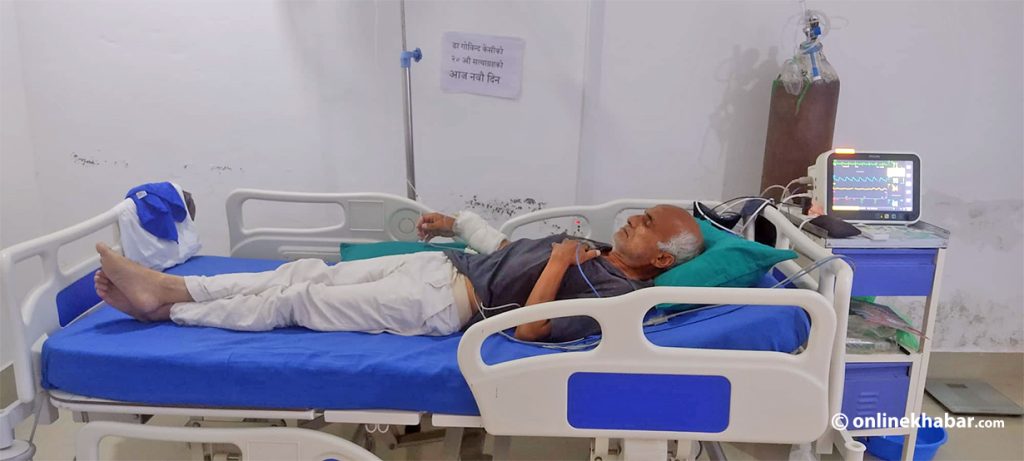
Prof Dr Govinda KC has spent more than 14 years trying to bring lasting reform to Nepal’s medical education system. His campaign brought issues such as the arbitrary practices of private medical colleges, political interference, irregular affiliations, high tuition fees and weak state regulation from the streets into the national political debate.
Over those years, the form of his protests changed, the locations of his hunger strikes shifted, and governments, prime ministers and ministers came and went. But the problems he has consistently raised have proved stubbornly persistent.
The National Medical Education Act, 2018, was one of the major outcomes of the pressure generated by his movement. The law was intended to curb political interference in medical education, regulate private medical colleges, expand government medical teaching institutions in remote areas and make access to healthcare more equitable.
Nearly eight years after its enactment, however, important provisions of the law remain unimplemented.
Dr KC’s struggle with the state has rarely been straightforward. His attempts to resolve disputes through dialogue often went unanswered. When he resorted to protests to apply pressure, his demands were frequently ignored. Eventually, he came to rely on his own body as a means of resistance. His hunger strikes have since become a defining part of Nepal’s long-running struggle over healthcare and medical education reform.
One significant achievement associated with his movement was the provision requiring at least 75 per cent of seats in government medical teaching institutions to be reserved for full scholarships.
Before Dr KC’s campaign, passing the medical entrance examination did not necessarily guarantee admission. Students who performed well on merit could still lose out because they lacked the money to pay, while those with financial resources and connections could secure places by paying additional fees.
Dr KC challenged the practice of selling seats, collecting extra payments and prioritising financial means over academic merit. He insisted that admission to medical colleges should depend on a student’s performance, not their wealth or political connections.
Private medical colleges initially resisted the introduction of merit-based admissions. But sustained pressure from Dr KC, Supreme Court orders, directives from the Education Ministry, university admission procedures and regulation by the Nepal Medical Council helped establish a system in which admissions were determined by merit rankings.
The change significantly restricted the open sale of medical college seats and widened opportunities for students who performed well in entrance examinations but came from financially disadvantaged backgrounds.
Why is Dr Govinda KC on hunger strike again?
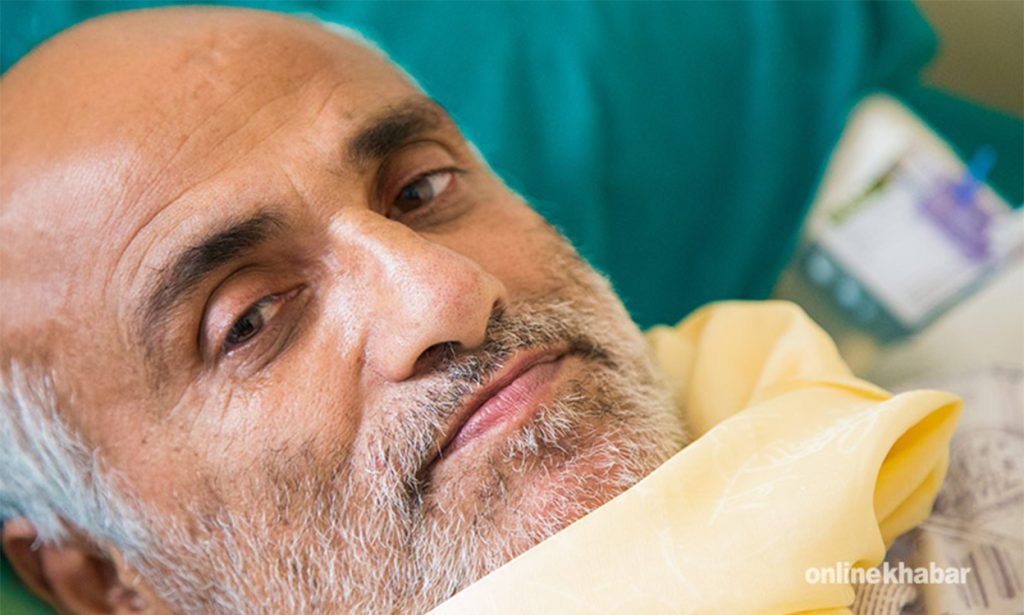
The demands behind Dr KC’s latest hunger strike are rooted in the same longstanding concerns about medical education and healthcare.
He has called for the cancellation of appointments at the Medical Education Commission and Dasharath Chand University of Health Sciences in Geta, arguing that they involve conflicts of interest and violate the law.
His latest protest followed the government’s appointment of Prof Dr Sunil Kumar Joshi as vice-chancellor of Dasharath Chand University of Health Sciences and Dr Bhim Bahadur Chand as registrar on July 15. Joshi had previously led the university. Although the Balen-led government removed him from the position through an ordinance in April, it later appointed him again.
Dr KC argues that appointing people with links to private medical colleges and hospitals to senior administrative positions at the university creates a risk of conflicts of interest.
He has also demanded that permission for MBBS and nursing programmes at Geta University be revoked if they are being launched without adequate infrastructure and academic staff. Other demands include cancelling medical college seat increases that he says were made illegally, suspending Medical Education Commission Vice-Chairperson Dr Devendra Bahadur Khatri and the university’s vice-chancellor and registrar, and conducting an impartial investigation into their appointments and decisions.
After Dr KC began his latest hunger strike, the government issued a statement defending its decisions. The ministry claimed that permission to run MBBS and nursing programmes at the Shahid Dasharath Chand Health Sciences Academy in Geta, Kailali, had been granted only after the institution met the necessary infrastructure, academic staffing and legal requirements.
It also said that increases in seat numbers had been approved in accordance with established standards and on the basis of monitoring reports from the Medical Education Commission, primarily at government medical colleges.
On Dr KC’s concerns about the role of commission officials and possible conflicts of interest, the government has promised an investigation.
One of the allegations concerns Medical Education Commission Vice-Chairperson Prof Dr Devendra Bahadur Khatri. He has been accused of leaving the post of director vacant while assigning his wife acting director responsibilities, and of allowing medical college seat allocations to be determined under her oversight.
The ministry has also said it has formed a task force to examine the implementation of previous agreements with Dr KC.
A ministerial decision on August 12 established the task force to review the agreement reached on July 27, 2026, as well as commitments made during earlier hunger strikes. The ministry says the task force is preparing a draft report.
The government formed a dialogue committee only after Dr KC’s health had become serious.
The committee, coordinated by Education Ministry Joint Secretary Jayaram Adhikari, includes a joint secretary from the Ministry of Health and Food Hygiene, the member secretary of the Medical Education Commission and an undersecretary from the Education Ministry.