

Kathmandu, November 1
At a time when serious questions are being raised about Nepal’s judiciary and its justices, a major irregularity has been reported in the lottery system used to assign cases to benches at the Supreme Court.
On Friday, a new cause list was found to have been published after justices had already drawn lots to determine their benches and proceeded to hear cases.
The bench of Justices Sharanga Subedi and Shanti Singh Thapa, after drawing lots and selecting their cases, was found to have been assigned another list of cases.
The second list included six habeas corpus petitions, which are supposed to receive priority under Supreme Court rules. However, while the two justices heard cases from the first list, separate habeas corpus petitions filed by Chaturbhuj Bhatta, father of detained businessman Deepak Bhatta, and others in the second list were not heard. All the cases on that list were subsequently marked as adjourned.
Two separate lottery draws
The Supreme Court introduced the lottery system for assigning cases and forming benches after lawyers protested alleged manipulation in bench formation during the tenure of then Chief Justice Cholendra Shumsher Rana.
Under the system, lots are first drawn to determine which justices will sit on single-justice benches. A list of justices, from the chief justice to the 10th senior-most justice, is then prepared. Other justices draw lots to determine which numbered justice they will sit with on a joint bench.
During Friday’s draw, Justice Shanti Singh Thapa was assigned to the bench of Justice Sharanga Subedi, who was listed at number six. The two were thus assigned a joint bench.
Once the benches are formed, justices draw lots to select the groups of cases assigned to them. They are then expected to hear cases from the selected lists.
According to Friday’s published cause list, the bench of Justices Subedi and Thapa had five petitions related to a murder case, including the case of Dhan Bahadur Tamang versus the Government of Nepal.
These were petitions filed at the Supreme Court challenging orders issued by lower courts, including district, high and special courts. Lawyers commonly refer to such petitions as “number 73” petitions.
Court records show that the two justices heard three of the five petitions, while lawyers sought adjournments in the remaining two.
A second list appears unexpectedly
According to several Supreme Court justices who spoke to Onlinekhabar, another list of cases was assigned to the bench of Justices Subedi and Thapa during the same period.
That list included a habeas corpus petition filed by Chaturbhuj Bhatta, among others, on behalf of his son Deepak Bhatta, who is in custody, along with around 15 other cases.
Six of the cases on the second list were habeas corpus petitions. However, the bench did not hear any of them. The Supreme Court website marked all the cases as “not reached”.
The Supreme Court has rules governing the priority given to different types of cases. Rule 76(5)(1) of the Supreme Court Regulations specifically addresses the matter.
Except for a few limited categories of petitions, habeas corpus cases have traditionally been given priority. The rules even require the court to remain open to hear such petitions when it is closed for more than three consecutive days.
Even justices who have boycotted court hearings at various times have not been able to refuse to hear habeas corpus petitions.
Onlinekhabar contacted Supreme Court spokesperson Dr Ashok Chhetri, who also heads the court’s case management division, to ask why a case that was not included in the lottery process was suddenly added to the cause list. He did not respond.
Meanwhile, justices who have been discussing Friday’s incident virtually are preparing to raise the issue at Monday’s full court meeting.
“Some of our colleagues are preparing to raise this issue at the full court meeting,” a justice said.
If the cases had been assigned from the beginning…
Some Supreme Court justices say that if the list containing the habeas corpus petition filed by Chaturbhuj Bhatta and others had been assigned to the bench alongside the other cases from the outset, Justices Subedi and Thapa would have been legally obliged to give priority to the petition.
However, because the second list was added after the justices had already proceeded to their bench, the habeas corpus petitions were not heard, the justices said.
“What is the point of the lottery system if a list of cases can be left out during the draw and suddenly added later?” one justice told Onlinekhabar. “It is particularly surprising that the petition filed by Chaturbhuj Bhatta was added in this manner and then ended up being adjourned.”
Deepak Bhatta is facing a money laundering case at the Special Court over allegations that he managed financial assets obtained through various crimes. His father, Chaturbhuj, approached the Supreme Court with a habeas corpus petition, arguing that the Special Court’s order to keep his son in custody was flawed.
Although the law requires habeas corpus petitions to be heard and decided as quickly as possible, the Supreme Court administration does not appear to have given Bhatta’s petition priority.
On October 25, Justice Meghraj Pokharel issued an order asking the authorities to submit a written response within three days and directed that the case file be produced before the bench on the hearing date. However, Bhatta’s petition was not subsequently listed for a hearing.
According to a senior source familiar with the Supreme Court, the petition was suddenly included in Friday’s cause list after some justices raised questions in recent days about why habeas corpus petitions were not being heard promptly.
Developments following Rana’s arrest
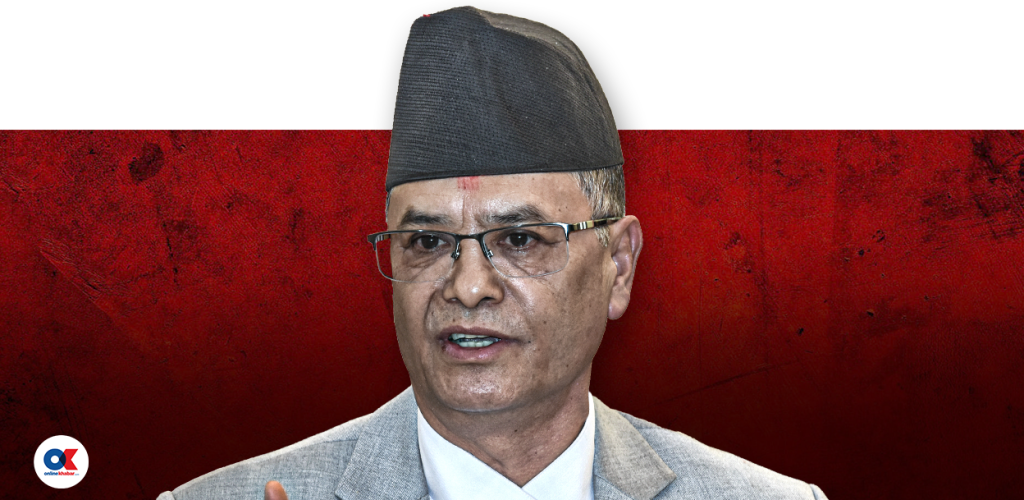
Former Chief Justice Cholendra Shumsher Rana was taken into police custody early on September 27 but was released a short time later. Sources involved in the investigation claim that an examination of the phone seized by police revealed attempts by Rana to influence cases pending before the Supreme Court.
Before Rana’s arrest, Prime Minister Balen Shah’s team had reportedly received information that Rana had attempted to influence cases involving Deepak Bhatta and others and had already made efforts to secure Bhatta’s release through a habeas corpus petition.
Following this, Inam Sapkota was arrested on allegations of acting as an intermediary.
While Sapkota was under investigation, details emerged last Thursday showing that Justice Hari Phuyal had been in regular contact with him. On the same day, Justice Phuyal spoke to journalists about the cases in which Sapkota had shown interest.
According to Phuyal, Sapkota had initially shown unusual interest in a case involving the Nepali Congress and attempted to influence its handling. He later approached him seeking help with Deepak Bhatta’s petition.
Sapkota had reportedly asked Justice Phuyal and some others to look into Bhatta’s petition.
Phuyal told journalists that after Sapkota became active in cases involving financial disputes and attracting direct interest from the Prime Minister’s Office, he had told him not to expect such assistance from him.
Sapkota then asked him to speak to other justices about Bhatta’s case. Phuyal claimed that Sapkota had also told him he was in discussions with Chief Justice Dr Manoj Sharma on the matter.
Phuyal said suspicions about Sapkota grew when he began claiming that Prime Minister Shah himself had directed that Bhatta be released. This prompted further inquiries into his activities, Phuyal said.
Why was the case suddenly listed?
According to some justices and sources close to the Supreme Court administration, had the list containing Bhatta’s habeas corpus petition been included in the initial lottery, the petition could have been heard by whichever bench was assigned to it on Friday.
The justices could also have decided the matter on its merits. Since it was a habeas corpus petition, the scope for justices to defer the hearing was limited.
Lawyers, too, cannot repeatedly seek adjournments in habeas corpus cases.
But because the list containing the petition was not included in the initial draw and was added to the cause list unexpectedly, the justices were not aware of it in time, and the hearing did not take place.
The case was marked “not reached” on Friday. There is now no certainty about when it will be listed again or when the petition will be heard.