In the heart of Bardiya—a district bearing the highest toll of enforced disappearances during Nepal’s ten-year armed conflict—a quiet, solemn bridge has been built across time, geography, and language.
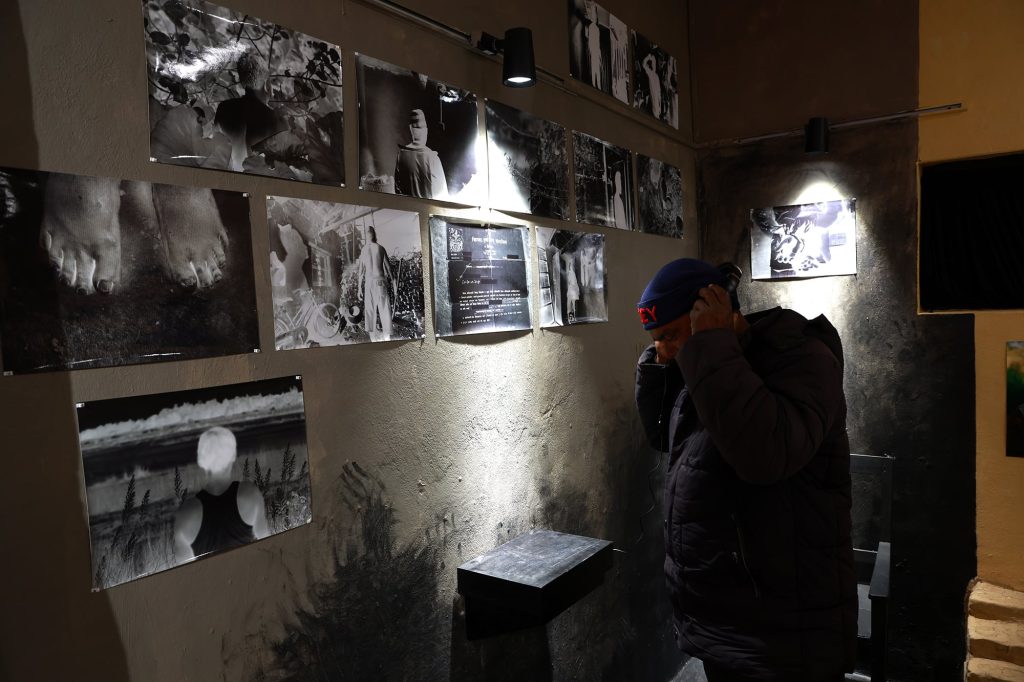
On August 30, marking the International Day of the Disappeared, the Kumbharadda Disappeared People’s Memorial Park inaugurated a 100-day exhibition featuring Chilean photographer Claudio Pérez’s landmark series, Última Huella (Last Footprint)
Organised in partnership with Photo Circle, the exhibition brings the visual archive of Chile’s 17-year military dictatorship (1973–1990) directly to the families of Nepal’s missing in Barbardiya.
Guided tours led by park administrators allow visiting family members to encounter documentation of state atrocities from halfway across the globe. Though the geography of the Atacama Desert or the Pacific Ocean differs vastly from the plains and rivers of the Tarai, the families who gazed intently at Pérez’s contact sheets and landscape portraits instantly recognised the shared terrain of state violence, loss, and unanswered questions.
A shared grammar of loss
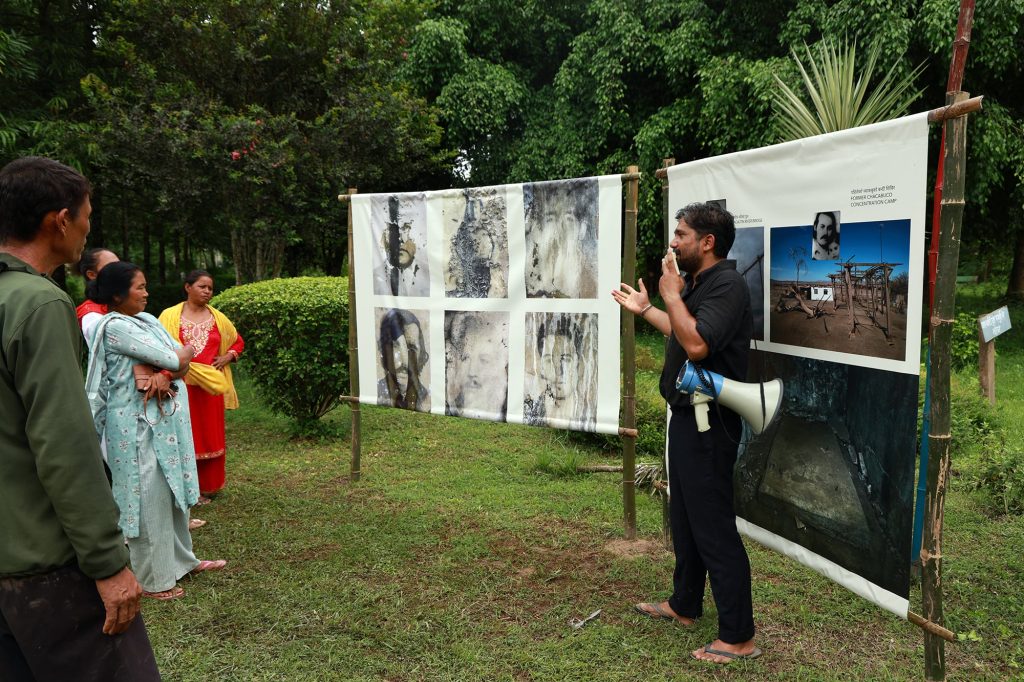
During the opening weeks, relatives of Nepal’s disappeared stood quietly before the frames, observing how Pérez took his lens to the last known whereabouts of Chile’s victims—former clandestine torture sites, bridges, and ocean drop zones.
Every photograph in Última Huella bears witness to a specific human life, paralleling the stories of thousands of Nepalis who were dragged from their homes during the armed conflict and never heard from again.
“People connected deeply through this shared sense of loss,” said Bikkil Sthapit, memory expert, activist, and advisor to the memorial park. “The loss and the memory that communities in Chile and Nepal are working to preserve will forever remain a tool of resistance. Many years may pass, but answers will continue to be sought. State mechanisms all over the world will eventually have to bow without shame and ask for forgiveness before the families—even if that moment comes generations later.”
A pleasant pain: Organising from the epicentre of grief
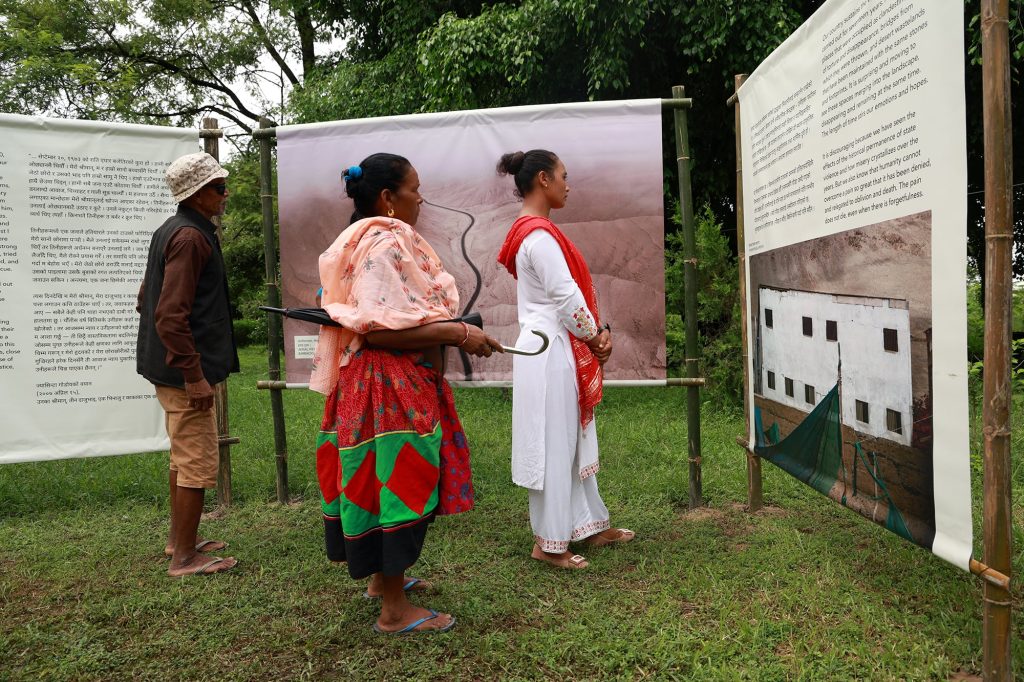
For the administrators and community members who steward the victim-led memorial park, hosting an international exhibition of this magnitude is both a heavy emotional burden and an act of solidarity.
Niranjan Kumar Chaudhary, President of the Memorial Park, whose father was forcibly disappeared by security forces during the conflict, reflected on the significance of holding the event in Barbardiya. “Organising an exhibition like this in a victim-led park is a kind of pleasant pain for us. We want to tell the world that we are still bleeding. But at the same time, as family members, we want to show that we are healing across many dimensions. Together, through solidarity across borders, we will keep asking the same question: Where are they?”
South-to-South solidarity: Two exhibitions side by side
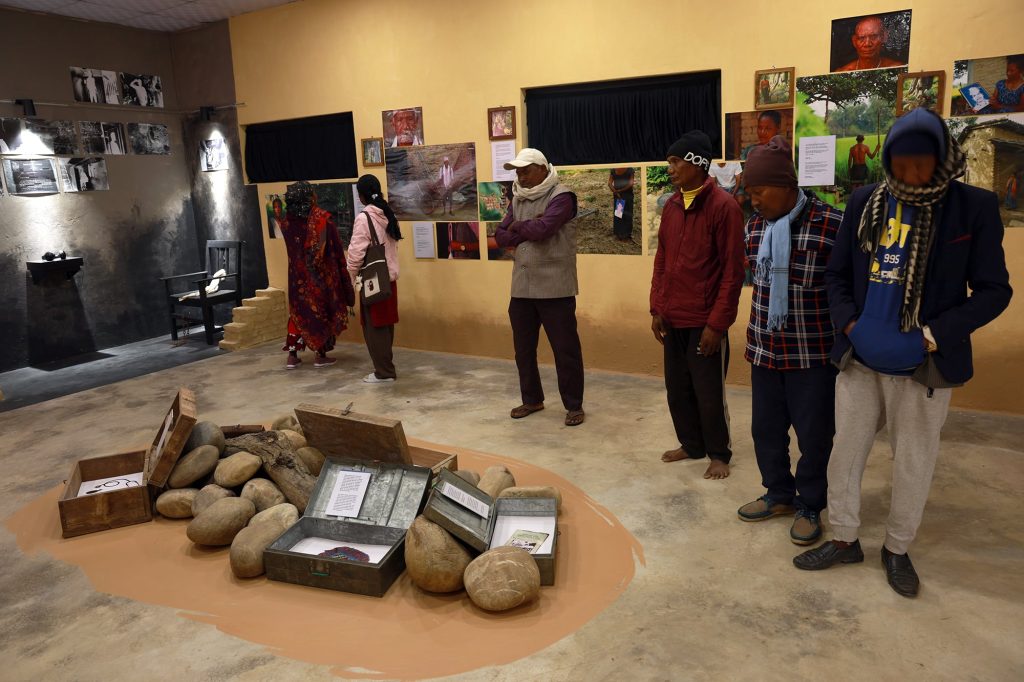
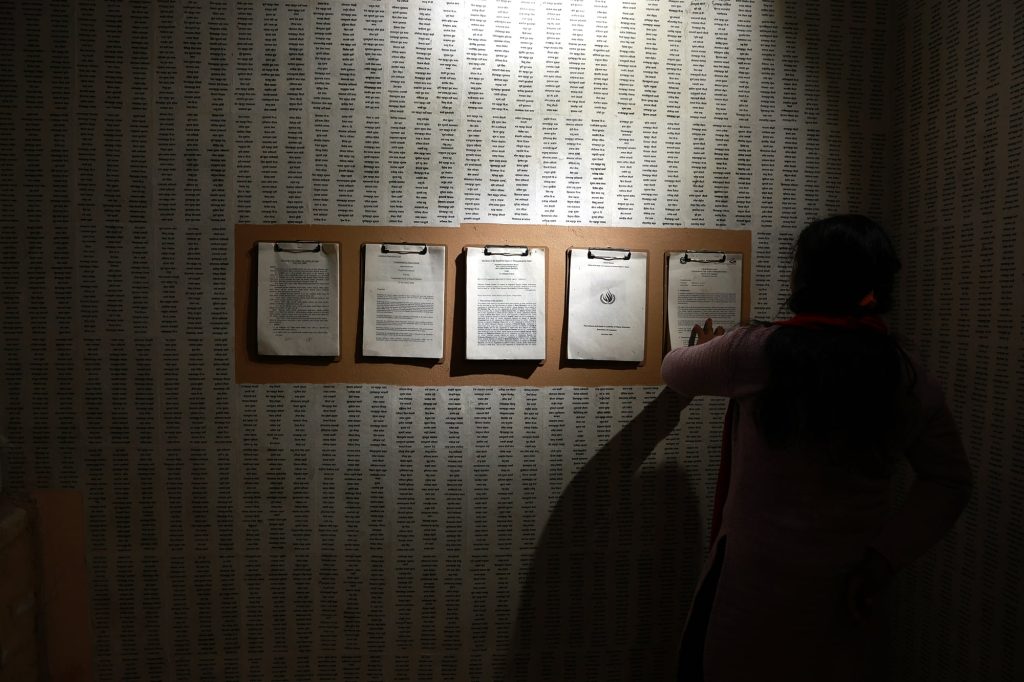
The 100-day installation at Kumbharadda does not stand alone. Visitors walking through the exhibition hall also encounter Memories Will Haunt, a complementary exhibition curated by VOW Media that documents the lived experiences, testimonies, and resistance of Nepali conflict victims.
Placing these two exhibitions side-by-side creates a physical dialogue of Global South-to-South solidarity. It underscores that state-sponsored disappearances are not isolated regional incidents, but systemic abuses that demand collective global accountability.
Visitors from across the region leaving the memorial park carry a profound weight of sorrow, but also a renewed clarity: so long as families hold photographs, ask questions, and preserve memory, no state mechanism can relegate their loved ones to oblivion.