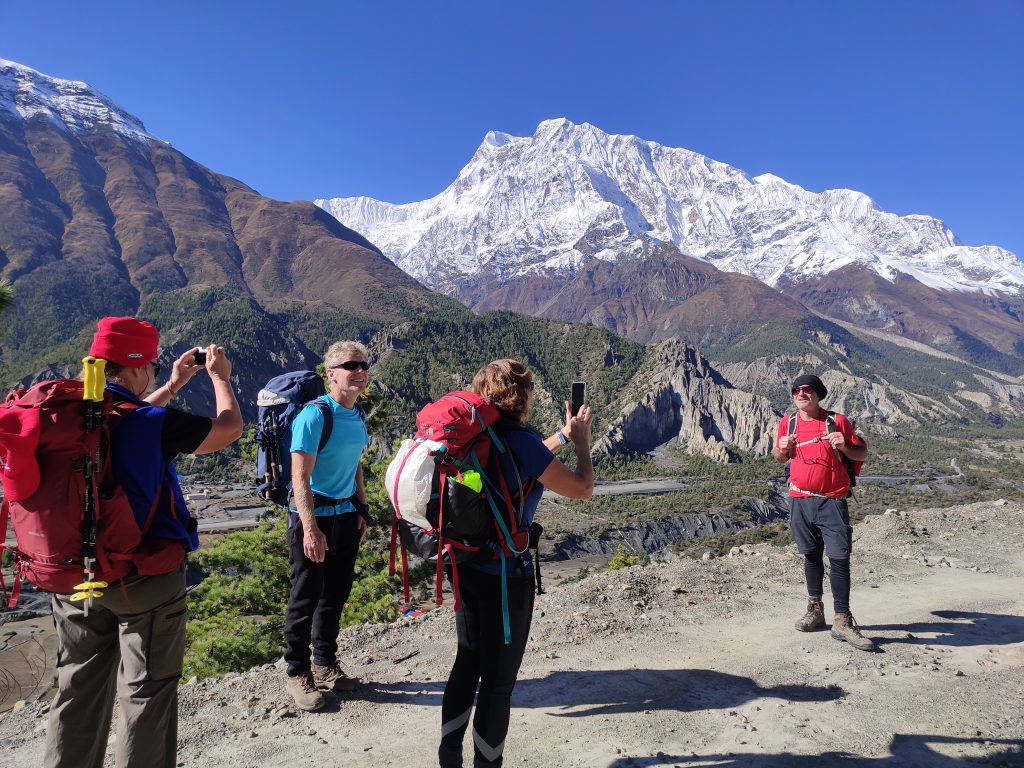
For decades, Nepal’s tourism identity has rested on three pillars: spirituality, culture and adventure. The Himalayas remain its most recognisable draw, while its living heritage extends its appeal beyond spectacular landscapes.
Nepal’s tourism demand also proved resilient during the COVID-19 pandemic. Although Everest expeditions were suspended in 2020, Nepal issued 394 Everest permits in spring 2021, exceeding the 2019 figure. The recovery demonstrated the persistence of international demand, but it did not necessarily reflect the resilience of the tourism system itself.
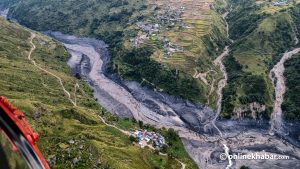
That distinction became particularly important on 26 August 2026, when a slope failure on Langtang Lirung triggered an ice-rock avalanche and a fast-moving, debris-laden flood through the Lhende Khola, Bhote Koshi and Trishuli river system.
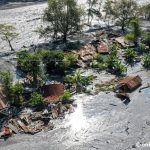
The disaster devastated communities and infrastructure along the corridor, affecting municipalities across six districts. Beyond the immediate destruction, it exposed a growing gap between how international travellers perceive Nepal and how communities elsewhere experience the disruption. This tension between traveller perceptions and host realities is now central to the country’s tourism recovery and long-term resilience.
It was not all of Nepal
International travellers often form their impressions through news reports, social media images and fragmented information consumed thousands of kilometres away. Images of washed-out roads, buried settlements and swollen rivers can influence travel decisions long before prospective visitors understand conditions on the ground. In a geographically diverse country such as Nepal, a localised disaster can therefore become a national image of danger.
Communities along the Bhote Koshi–Trishuli corridor suffered profound losses, displacement and destruction. These realities must not be minimised. Yet tourism stakeholders elsewhere face a different concern: the assumption that the disaster rendered the entire country equally inaccessible or unsafe.
The distinction matters because the geography of physical damage rarely matches the geography of public perception. Although the impacts were severe along affected river systems, transport corridors and settlements, other parts of Nepal’s tourism landscape lay outside the direct flood footprint.
For businesses and workers in those areas, the challenge is not necessarily recovery from direct damage. It is countering the perception that their destinations have become equally disrupted. Recognising this distinction does not diminish the suffering of affected communities; it allows recovery efforts to respond to different needs without treating Nepal as a single, uniformly affected destination.
Understanding the dilemma
Tourism depends on interactions between hosts and guests who assess risk through different experiences, information sources and expectations. The resulting dilemma is not simply a conflict between fear and reassurance. It is a tension between a generalised perception of national danger and a more geographically differentiated reality.
However, being outside a disaster’s direct impact zone does not automatically make a destination ready to receive visitors. Access roads, bridges, communication networks, accommodation facilities and emergency services all require route-specific assessment. Travellers are therefore justified in seeking reliable information before making decisions.
Nepal remains exposed to monsoon floods, landslides, glacial hazards and cascading risks in its mountain environments. The 2026 event also requires precise scientific description. It was not a conventional monsoon flood, nor has it been conclusively established as a glacial-lake outburst flood.
Initial assessments identify a slope failure and ice-rock avalanche on Langtang Lirung as the initiating event, while the respective roles of geology, glacier dynamics, permafrost degradation and climatic change require further investigation. Climate change is altering high-mountain risk environments, but attributing this particular event to specific climatic factors requires additional scientific evidence.
Addressing the dilemma means accepting two realities simultaneously: travellers need credible assurances, while host communities need recognition that the disaster did not affect every destination equally.
From reassurance to preparedness
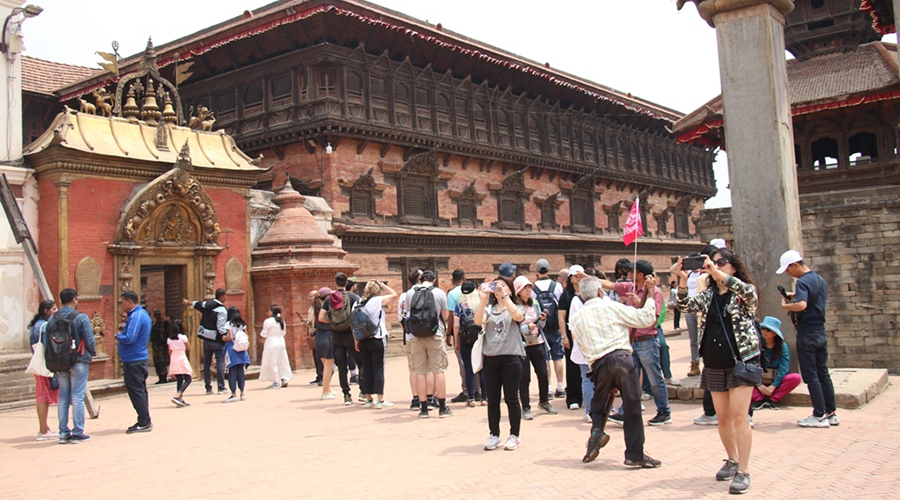
The most effective way to bridge the gap between perception and reality is through preparedness. In mountain tourism, the ability to monitor conditions, adapt plans and reduce avoidable exposure is increasingly part of the visitor experience. Hazards cannot be eliminated, but their consequences can be better managed.
Consider journeys to Thorong La, Larke Pass or Makalu Base Camp. These destinations were not directly affected by the Bhote Koshi–Trishuli flood simply because they are part of Nepal’s Himalayan tourism landscape. Yet they illustrate why travel decisions must be based on conditions specific to each route, including weather, transport access, communications, medical support and alternative arrangements.
Travellers need practical answers. Are official forecasts being monitored? Who can change an itinerary when conditions deteriorate? What happens if an access route becomes impassable? Do guides, porters and accommodation providers understand their emergency responsibilities?
Confidence comes not from broad declarations that a destination is safe, but from visible systems for sharing information, adapting plans and managing emergencies. Preparedness becomes credible when visitors can understand how decisions are made, rather than simply being told that everything is under control.
Natural disasters and destination image
Destination image, perceived safety and familiarity influence travel decisions. Nepal experienced this after the 2015 earthquake, when the scale of destruction was sometimes interpreted internationally as evidence that the entire country had become a disaster zone.
The Bhote Koshi–Trishuli disaster presents a similar challenge. Dramatic images can circulate rapidly through digital media, shaping perceptions far beyond the actual area of damage. Their emotional impact may outlast the immediate disruption and influence decisions about destinations that were not directly affected.
Yet destination image depends on more than the disaster itself. It is also shaped by how authorities and tourism businesses communicate uncertainty, explain changing conditions and demonstrate their capacity to respond. Nepal’s challenge is therefore not only to restore damaged infrastructure, but also to ensure that public narratives reflect verified conditions.
Promotional messaging must not obscure the losses suffered by affected communities, just as reporting on those losses should not imply universal disruption across the country. Nepal’s cultural and natural attractions remain important tourism assets, but they cannot substitute for verified access, functioning services and demonstrable readiness in individual destinations.
The need for a long-term preparedness roadmap
Building confidence requires institutional capacity. Hazard monitoring, forecasting, early-warning systems, infrastructure assessments, emergency coordination and public communication cannot be left entirely to tourism businesses or marketing agencies.
Nepal has relevant institutions and operational capabilities, but the 2026 disaster also exposed limitations. Sudden-onset hazards damaged monitoring infrastructure and reduced the time available for warnings. In response, the Kathmandu 10 Action Points called for redesigned warning triggers, inventories of multi-hazard hotspots, greater integration of cascading risks into infrastructure planning and improved cross-border information systems to support decisions.
The lesson is neither that Nepal lacks preparedness nor that existing arrangements are sufficient. The priority is to ensure that information is translated into timely decisions across institutions operating in increasingly dynamic conditions.
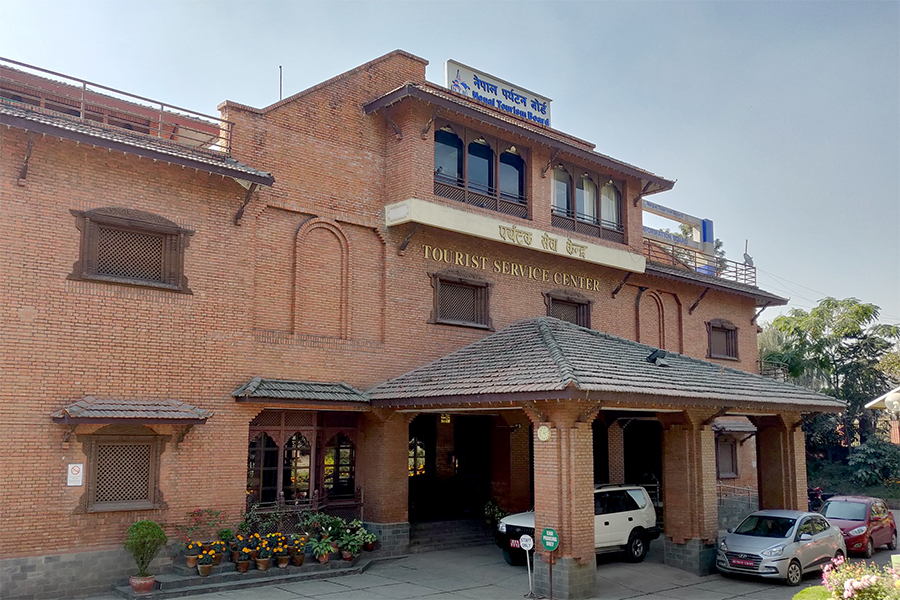
Responsibility extends throughout the tourism sector. Following the disaster, the Nepal Tourism Board, together with government and industry organisations, established a joint information mechanism concerning rescued and missing tourists. This highlighted the need for reliable information-sharing among authorities, businesses, embassies and families.
Tour operators and trekking agencies must translate technical warnings into itinerary decisions. Guides and porters need clear communication procedures and the authority to act when conditions change. Accommodation providers must maintain continuity plans and appropriate visitor-safety arrangements.
Nepal already has Tourism Policy 2082, which addresses resilience, sustainability and safety. Rather than necessarily introducing another broad policy, the country needs an operational framework that connects disaster intelligence, infrastructure status, destination readiness and visitor communication. Such a framework would help authorities and businesses make consistent decisions and give travellers access to current, destination-specific information.
Rebuilding trust is a shared responsibility
The traveller-host dilemma can be narrowed only when both sides have access to credible, geographically specific and timely information. Affected communities should not be pressured to declare normality before they are ready, while travellers should not be expected to dismiss alarming images or accept promotional assurances without evidence.
Both need a shared account of conditions: where disruption occurred, which routes and services remain affected, what has been inspected, what uncertainties persist and when assessments will be updated. Communication must do more than distribute information; it must help people understand what that information means for their decisions.
Governments and tourism businesses have complementary responsibilities in preparedness, travel planning, emergency response and recovery. Their communication should acknowledge uncertainty without exaggerating danger or offering assurances that cannot be substantiated.
Trust grows not by pretending uncertainty does not exist, but by showing how it is monitored, communicated and managed.
The Bhote Koshi–Trishuli disaster has challenged Nepal’s destination image, but the country’s recovery after the 2015 earthquake demonstrated that international demand can return following major disasters. Infrastructure restoration, credible communication and coordinated partnerships all have a role in that process.
Nepal has long promoted the beauty of its landscapes and the richness of its cultural heritage. Those assets remain essential, but they are not enough on their own. The country must also demonstrate how it responds when conditions change.
The future of Nepal’s tourism reputation will depend less on declaring the country safe than on showing that risks are assessed locally, information remains current, affected communities are respected and travel resumes where readiness can be verified. Confidence should follow evidence, not precede it. That is how traveller perceptions and host realities can converge without denial, exaggeration or promotion that comes at the expense of communities recovering from disaster.