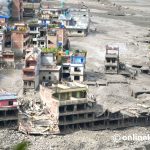

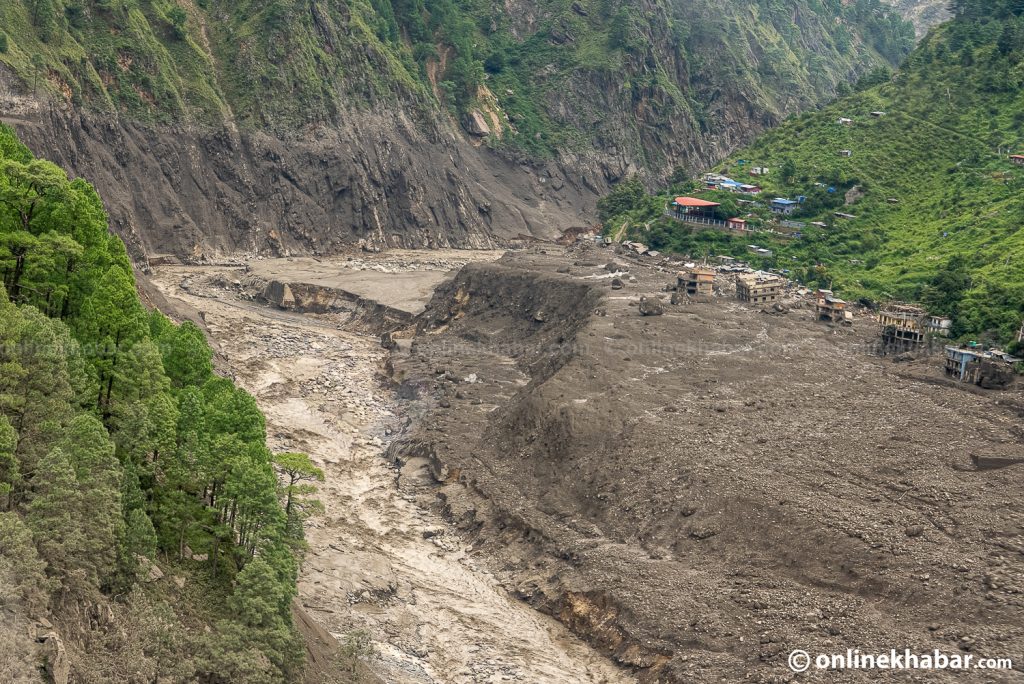
In the days after a devastating flood swept through Rasuwa and the Trishuli River corridor, more than 1,294 people have been confirmed dead, thousands remain missing and more than 12,000 people have been rescued.
The government says more than 21,000 security personnel have been deployed since the disaster struck.
But what exactly did the state do during those first 10 days—and where did its response fall short?
The answer is a mixed record: a rapid mobilisation of security forces, helicopters and medical services in the immediate aftermath; growing efforts to manage the dead and deliver relief; and, later, international assistance for increasingly difficult tunnel rescues.
At the same time, the disaster exposed major gaps in early warning, local preparedness, volunteer mobilisation and the government’s ability to rescue people trapped underground.
Here is what the government has done over the past 10 days.
Mobilised security forces and helicopters
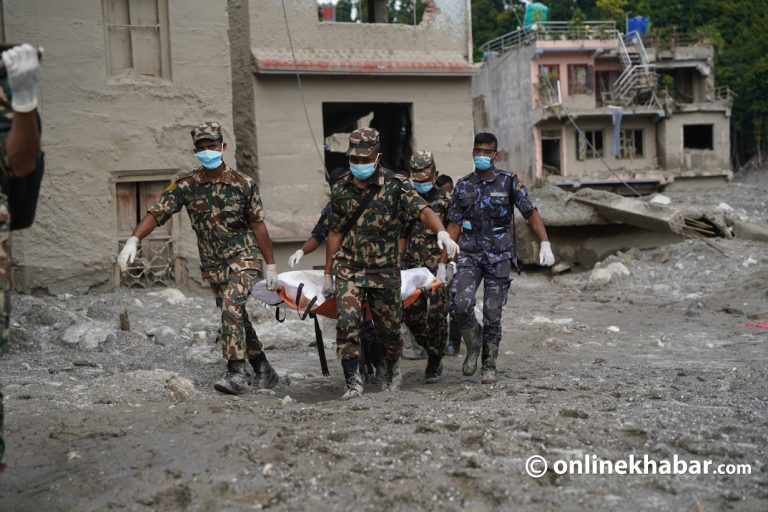
The government moved security personnel into the affected areas immediately after the flood struck on August 26.
The National Disaster Risk Reduction and Management Council held an emergency meeting within an hour of the disaster and directed security agencies to prioritise search, rescue and treatment.
The Cabinet subsequently authorised the Home Ministry to mobilise helicopters and other available rescue resources.
The Nepal Army deployed MI-17 helicopters for rescue and medical operations, while private helicopters were also kept on standby.
According to the National Disaster Risk Reduction and Management Authority, 21,402 security personnel have since been deployed for rescue and response operations.
The Nepal Army, Nepal Police and Armed Police Force have been involved in search and rescue, evacuation, body recovery and relief distribution.
The Armed Police Force also deployed trained sniffer dogs to search areas where people were believed to have been buried.
Expanded emergency medical response

The Health Ministry activated the health emergency system immediately after the disaster.
Hospitals in Dhunche and Trishuli were brought into the emergency response, while arrangements were made to transfer seriously injured people to Kathmandu.
Bir Hospital, the National Trauma Centre and Tribhuvan University Teaching Hospital were prepared to receive patients from the affected areas.
The government says 5,384 people have received medical treatment since the disaster.
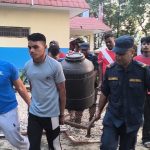
The scale of the deaths, however, created a separate challenge. Mortuaries across the country had capacity for only around 600 bodies, forcing authorities to look for additional locations to manage unidentified and unclaimed bodies.
The government subsequently made arrangements to manage unidentified bodies in Chitwan, Kathmandu, Kaski and other areas.
Sent relief supplies to affected areas

The government has also mobilised relief materials to communities affected by the floods.
On the first night alone, the Nepal Army sent eight trucks carrying mosquito nets, dignity kits, sleeping bags, blankets, plastic sheets, tents, solar lights and generators towards the affected areas.
The government has continued collecting and distributing relief materials, although complaints emerged that supplies were not reaching some affected communities quickly enough.
The response has also involved local governments, security agencies and volunteers in distributing relief and assisting displaced families.
Tried to rescue people trapped inside hydropower tunnels
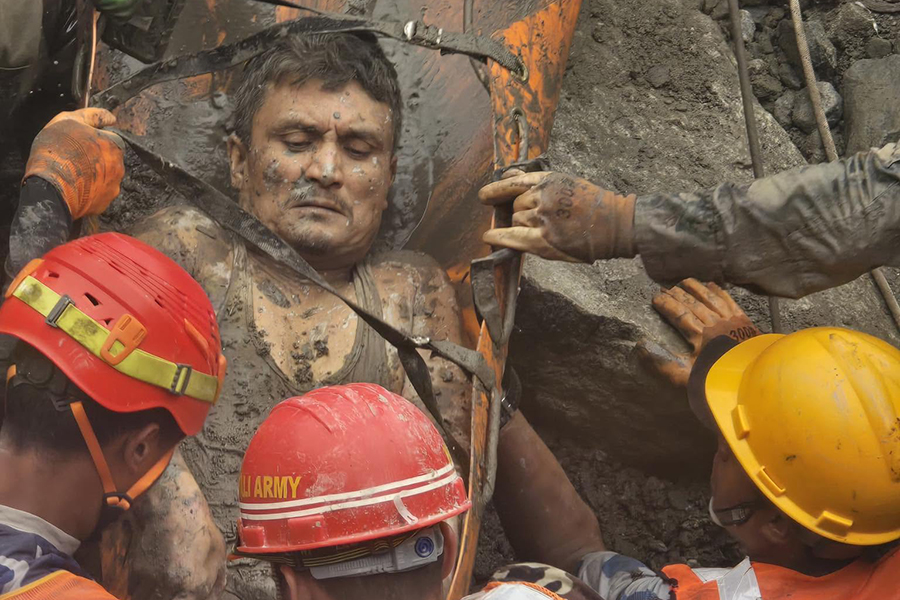
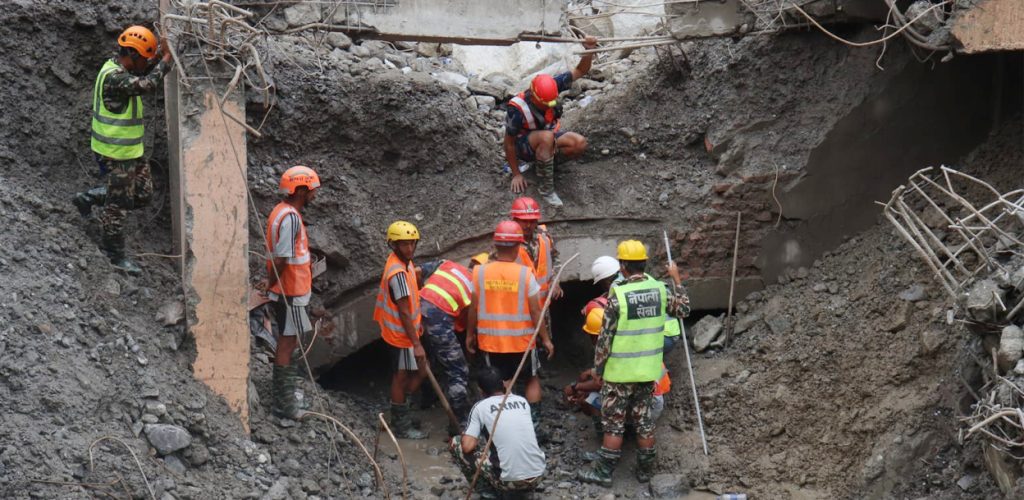
One of the government’s biggest challenges has been the search for people believed to be trapped inside hydropower tunnels.
Search teams have been working inside the Upper Trishuli-3A, Chilime, Langtang and Upper Trishuli-1 hydropower tunnels.
Nepali security forces initially led the efforts, but the government later brought in specialised tunnel-rescue teams from China and India, with assistance from other countries.
Chinese and Indian rescue teams arrived after criticism grew over the delay in reaching people believed to be trapped underground.
Nepali and foreign teams have since entered several tunnels, reaching approximately 50 metres inside the Chilime tunnel, 150 metres inside the Langtang Hydropower tunnel and 200 metres inside the Upper Trishuli-1 tunnel.
Two bodies were recovered from the Chilime hydropower tunnel, while another two were later recovered from the Langtang Khola Hydropower Project tunnel.
The tunnel operation remains one of the most difficult parts of the government’s response.
Former executive chief of the National Disaster Risk Reduction and Management Authority Anil Pokharel says the disaster exposed Nepal’s lack of specialised tunnel-rescue capacity.
“We have no knowledge, skills or capacity for rescuing people from tunnels,” he says. “That needs to improve.”
Former chief executive officer of the National Reconstruction Authority Yubaraj Bhusal also says international assistance should have been mobilised earlier.
Restricted movement and worked to restore connectivity
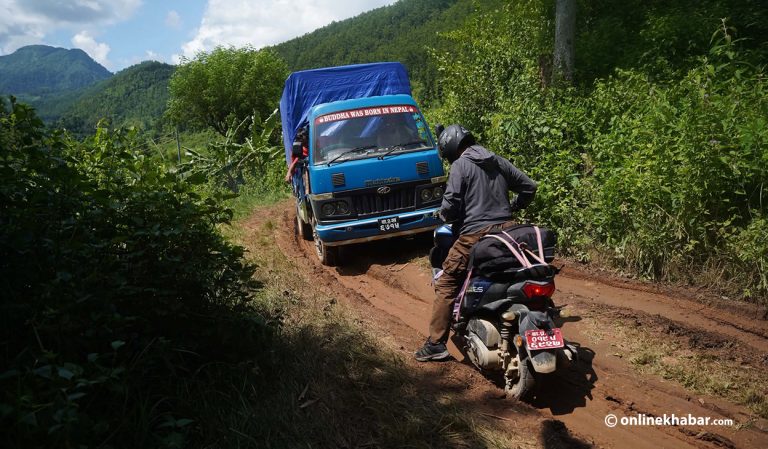
The government also imposed restrictions on movement towards affected areas as the flood damaged roads and bridges.
Traffic was stopped towards Rasuwa, Nuwakot, Chitwan and Dhading, while authorities also restricted movement along major highways and roads connecting the affected districts.
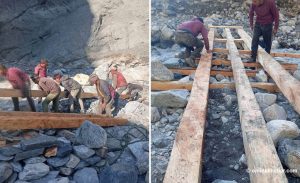
The disaster destroyed or damaged nearly three dozen bridges, cutting off communities in Rasuwa, Nuwakot, Dhading and Chitwan.
The government has since begun temporary measures to restore connectivity. A cable crossing was installed at Battar in Nuwakot to provide an alternative crossing after the loss of a bridge.
The Prithvi Highway was also disrupted after the road sank at Krishnabhir along the Nagdhunga-Muglin section.
Introduced a single-window rescue system
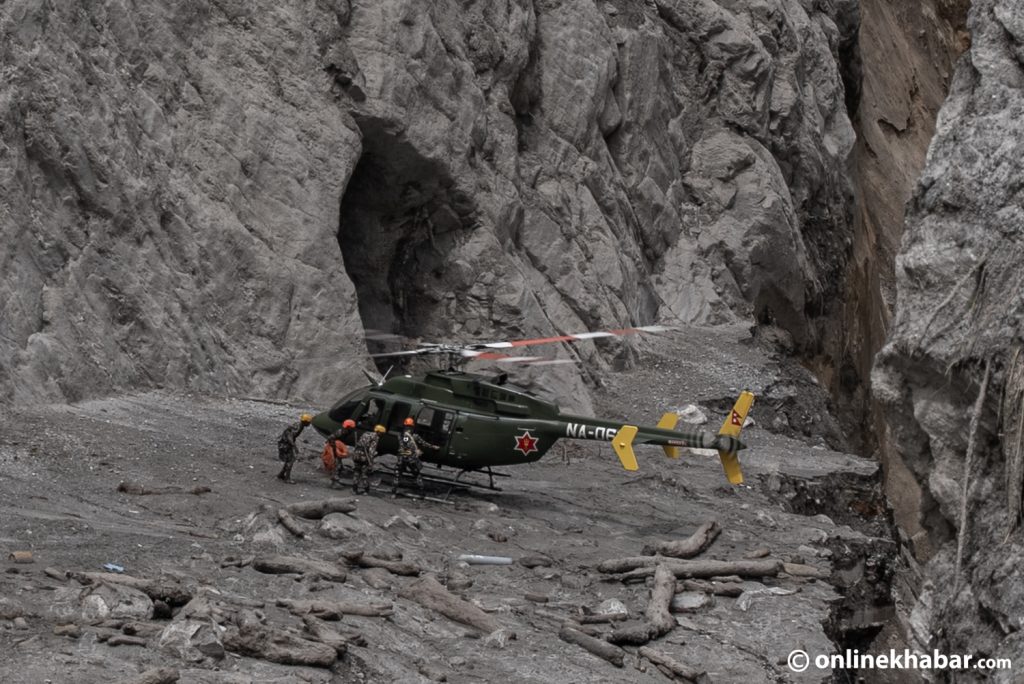
As rescue operations expanded, the Home Ministry said it had introduced a single-window system to coordinate disaster response and avoid duplication among different agencies.
The government has been coordinating the Nepal Army, Nepal Police, Armed Police Force, local governments and foreign rescue teams through the mechanism.
Prime Minister Balen Shah has also held separate briefings with the chiefs of the Nepal Army, Nepal Police and Armed Police Force on the disaster response.
Sought international assistance
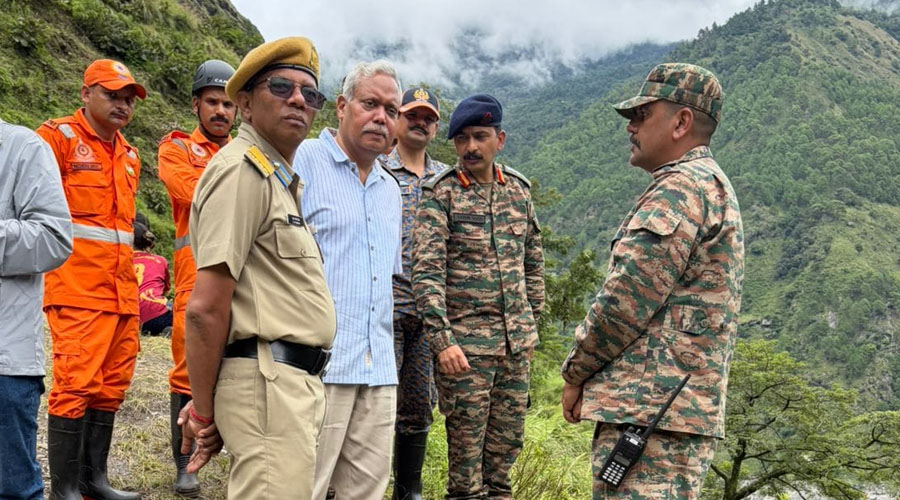
The government has sought and received support from several countries and international organisations.
Indian Prime Minister Narendra Modi spoke to Prime Minister Shah and offered India’s humanitarian assistance.
China and India sent specialised rescue teams, while other countries and international organisations also expressed their willingness to assist Nepal.
UN Secretary-General António Guterres expressed condolences over the loss of life and pledged support.
The government has also been coordinating international assistance for rescue and relief operations.
Raised climate change and loss-and-damage concerns
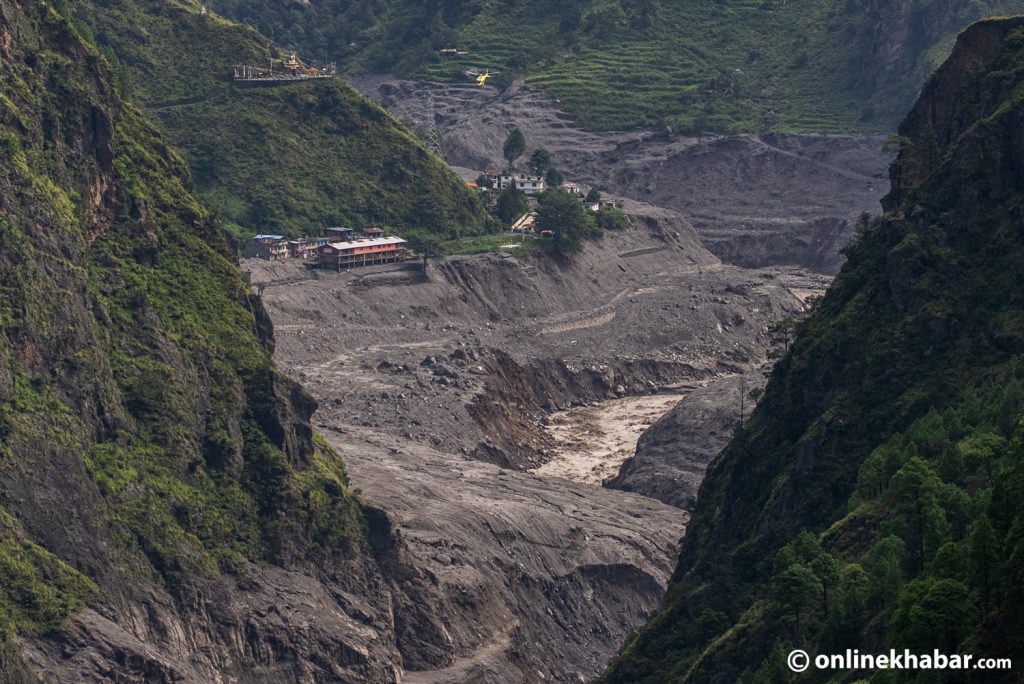
The government has also sought to take the disaster beyond immediate rescue and relief.
Nepal has approached the United Nations’ loss and damage mechanism, arguing that climate change contributed to the disaster and seeking compensation through the international framework.
The move reflects the government’s effort to frame the Rasuwa disaster not only as a national emergency but also as part of the wider climate vulnerability faced by Himalayan countries.
Reported the scale of the disaster to Parliament
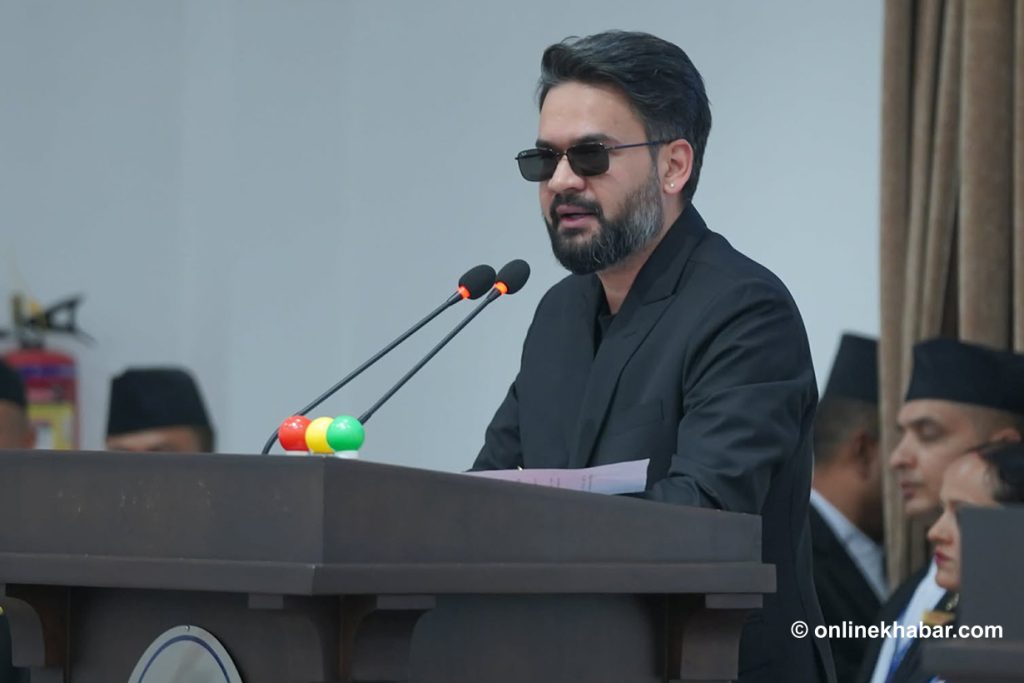
Prime Minister Shah briefed Parliament on the disaster on September 2, describing the tragedy as a national catastrophe rather than a disaster limited to Rasuwa, Nuwakot or Dhading.
Parliament has also raised concerns about the protection of women and children affected by the disaster.
The government has released its first situation report, estimating that 1.6 million people have been affected by the floods.
But what has the government failed to do?
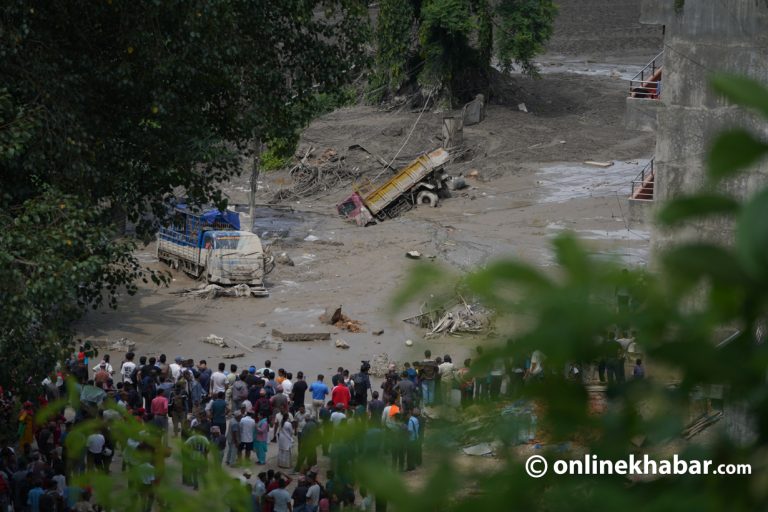
The government’s response has been substantial in terms of the number of personnel and resources mobilised.
Pokharel, the former disaster management authority chief, says the rapid mobilisation of the state machinery and the large-scale deployment of security personnel and helicopters deserve recognition.
But the disaster has also exposed serious weaknesses.
The most immediate concern is the country’s early-warning system.
Geography professor Narendra Raj Khanal says the flood’s source was tens of kilometres upstream from the communities that suffered the greatest damage. Yet there was insufficient warning for people downstream to protect themselves.
Pokharel says Nepal’s existing early-warning system was not capable of dealing with an event of this scale.
“We had no advance information about the risk,” he says.
Local preparedness has also been questioned. Municipalities and rural municipalities lacked adequate warehouses, equipment and trained personnel for disaster response, according to Pokharel.
The shortage of trained volunteers was another problem.
Prabha Bogati, deputy mayor of Bidur Municipality, says local authorities struggled to find people who could reach places inaccessible by road or helicopter.
“There were places where helicopters could not land and roads could not reach, but we couldn’t even find manpower to walk five minutes to those places,” she says.
The government’s tunnel-rescue response has drawn the strongest criticism.
Both Pokharel and Bhusal say Nepal’s limited technical capacity meant it had to depend on foreign specialists, raising questions about why such expertise was not available earlier.
Ten days on
The first 10 days of the Rasuwa disaster show a government that mobilised quickly and at a significant scale once the disaster struck.
More than 21,000 security personnel have been deployed, over 12,000 people have been rescued and thousands treated. Helicopters, hospitals, relief supplies and foreign rescue teams have all been brought into the response.
But the same 10 days have also exposed weaknesses that existed before the flood: inadequate early warning, weak local preparedness, limited specialised rescue capacity and difficulties getting relief and volunteers to the hardest-to-reach communities.
With the immediate rescue operation still continuing, the government’s next test will be whether the lessons from these 10 days lead to changes that can prevent the next disaster from becoming another catastrophe.