Kathmandu, August 30
Road connectivity to Dhadingbesi, the headquarters of Dhading district, has been restored via an alternative route after the floods in Rasuwa swept away the Furke Khola bridge.
Following the destruction of the Furke Khola bridge, an alternative road has been opened via Mastar and Kuringtar, using the bridge over the Trishuli River and the road along its right bank to reach Dhadingbesi.
According to Sanjay Nepal, chief of the Federal Road Supervision Office in Kathmandu, road connectivity with the district headquarters was disrupted after the flood washed away the Furke Khola bridge.
He said an alternative route had subsequently been opened from Mastar through Kuringtar, using the bridge over the Trishuli River and the road along the river’s right bank to connect with Dhadingbesi.
“After the flood swept away the Furke Khola bridge connecting Dhadingbesi, our road connection with the district headquarters was disrupted. We have since been working to establish an alternative route to Dhadingbesi from Mastar via Kuringtar, using the bridge over the Trishuli River and the road on the right bank,” he said.
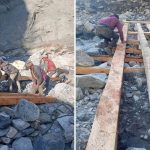
According to Nepal, small vehicles have now started operating to Dhadingbesi. However, work is underway to make the road suitable for larger vehicles by placing gravel on sections damaged by the floods and covered with mud and silt.
“Most of the work has now been completed. Machines were deployed from Friday. Road connectivity has been restored to the extent that small vehicles can now reach Dhadingbesi via this route. Efforts are underway to make the route more accessible,” he added.
He said stones had been arranged at stream crossings and other waterlogged sections to allow vehicles to pass.
Although some sections of the road remain in normal condition, he said vehicle movement remains difficult in areas washed away by the floods.
“We are placing gravel on difficult sections to make the route easier for small vehicles. Where streams cross the road, and culverts may be needed, we are arranging stones so that vehicles can pass safely,” he said. “Some sections require gravel. If a nearby source of gravel is available, we will use it to fill muddy and silt-covered sections and facilitate vehicle movement.”
He said two machines, along with a technical team from the Road Division Office, Nuwakot, have been deployed to put the alternative road into operation.