
Nuwakot, August 26
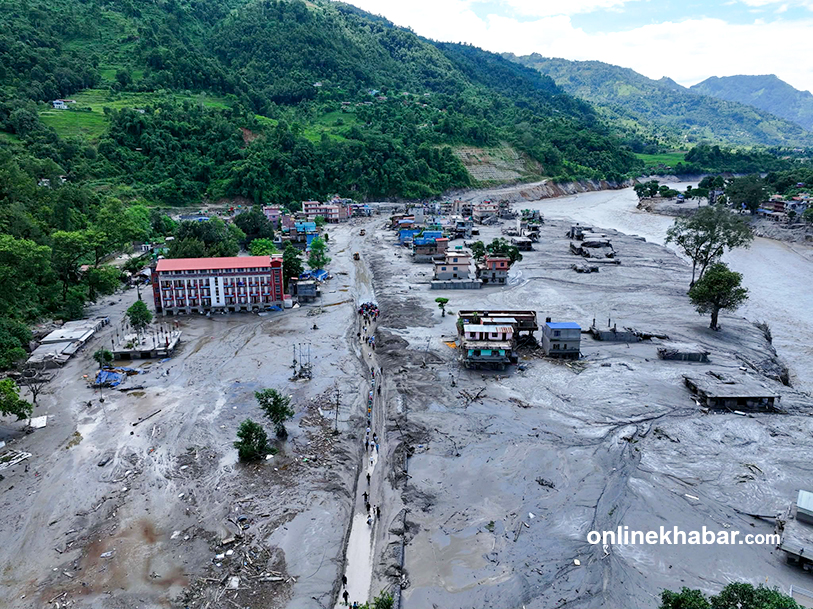
The shops are gone. So are the walls of homes and structures that had stood for decades.
Where Devighat Bazaar in Nuwakot once stood, there are now only rocks, mud and debris left behind by the flood.
The devastating flood of August 26 caused widespread destruction across Nuwakot, with the Trishuli and surrounding rivers swelling and tearing through settlements including Devighat, Dhunge Bazaar and Trishuli Bazaar.
An Onlinekhabar team visiting Devighat found a settlement barely recognisable. For locals, saying their shops were “damaged” does not come close to describing what happened.
“It’s not just that the shop was damaged. There is nothing left there. The house is gone. Everything in the shop is gone,” one shopkeeper said, staring at the rubble.
He had been running a business in Devighat for more than two decades. His wife taught tailoring while he ran an electrical goods shop. Years of work and savings disappeared within minutes.
But he has little time to count his losses. For now, he says, the biggest relief is that he and his family survived.
‘It came all at once’
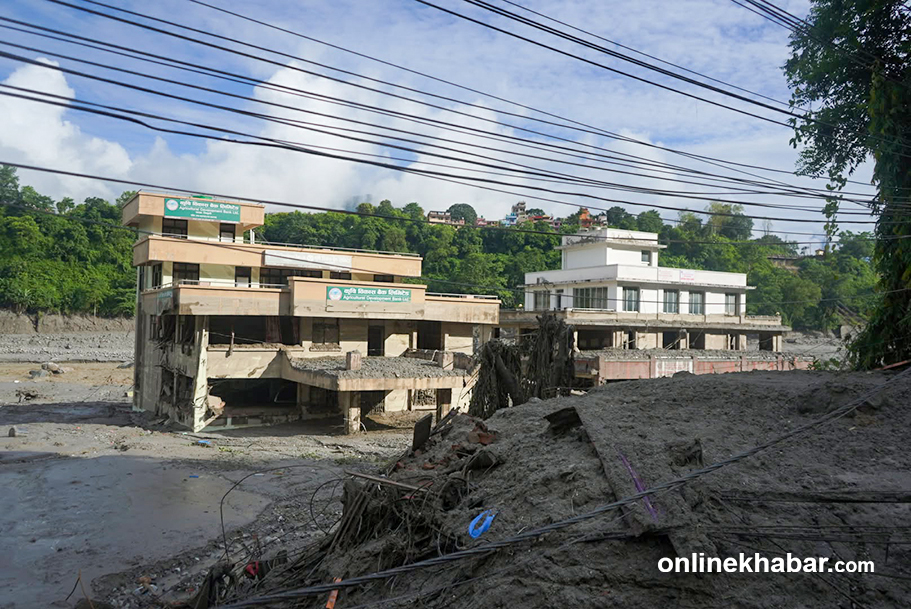
The family was at a temple in Devighat when the flood began. After hearing that the Trishuli River was rising and had even swept away a bridge, they decided not to return home.
They received warnings that residents of Devighat needed to evacuate and immediately headed for higher ground.
“In the past, the river would rise gradually. This time, it came all at once,” the shopkeeper said. “After the Trishuli bridge was swept away, there was no way we could stay here. We left immediately.”
Their decision to flee saved their lives. But not everyone had the same chance.
The flood also inundated an ashram in Devighat, where rescue operations continued from the morning of Bhadra 10 until late at night.
For the shopkeeper, the destruction is more than a natural disaster. It marks the end of a chapter that had lasted more than 20 years.
He had never seen a flood like this before.
“I was told there was a flood like this in our grandparents’ time, in 2019 BS, and that it brought rocks down with it,” he said. “Now even that bridge is gone. The rocks are gone. Nothing is left.”
His voice broke as he spoke about the loss of Jalpa Temple, a site of archaeological and religious importance.
“Even a place with such historical importance, Jalpa Temple, has no trace left. You could say the very existence of this place has been wiped out.”
The flood has therefore taken more than houses and shops. It has damaged the history of a settlement, religious heritage and a way of life built over generations.
Flood reached as high as two-storey homes
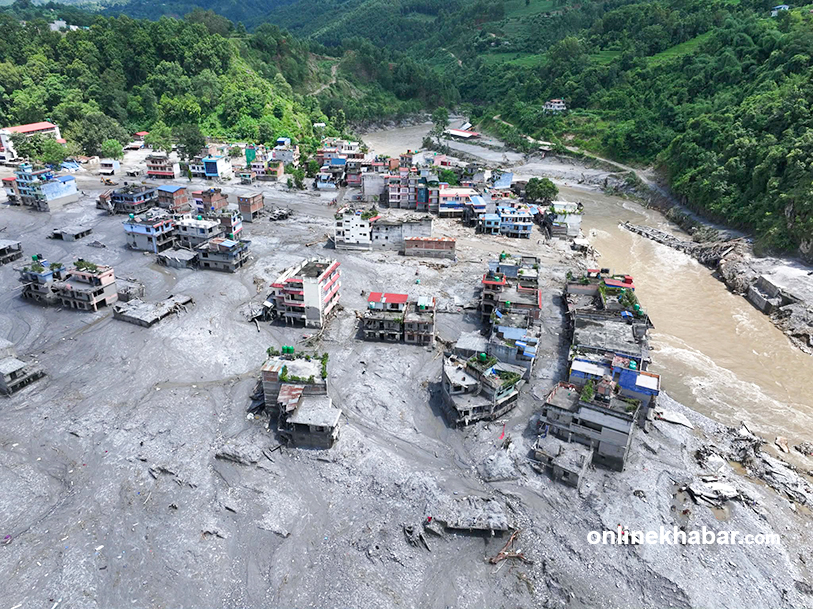
According to Devighat residents, floodwater entered the settlement from the area below the statue of King Prithvi Narayan Shah.
Residents had only a short time to respond before rushing towards higher ground.
The floodwater reached from the area of an old-age home to the gate of a school across the river, locals said.
Many houses below the road were completely swept away. In some areas, signs of flooding can be seen as high as the second floors of buildings. Shop shutters and pillars have been damaged.
The bridges connecting Devighat have also been swept away.
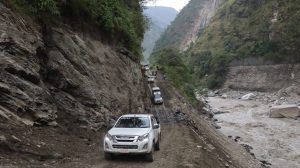
Two bridges crossing the Tadi River were destroyed, while another bridge further downstream was also washed away, leaving Devighat largely cut off by road.
“It is completely disconnected now,” locals said.
Dhunge Bazaar: Where houses stood, there is now a riverbed
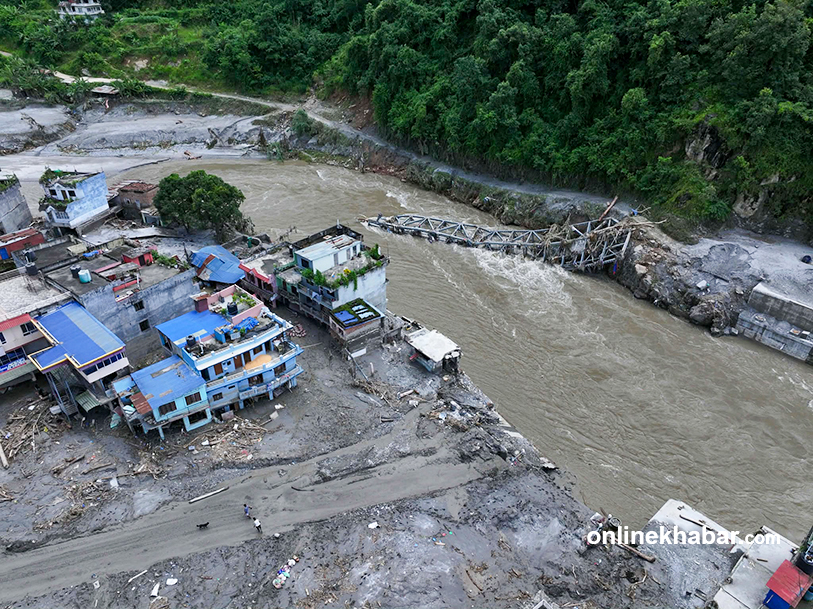
The destruction becomes even more severe further downstream at Dhunge Bazaar.
The nearby Trishuli Bazaar was also hit hard by the flood. Some three- and four-storey buildings have been buried under flood debris and mud, while a large part of the market has been damaged, according to residents.
Local resident Binay Rijal was in Kathmandu when the disaster struck, but remained in contact by phone with people in Trishuli Bazaar.
He said he had received reports that the water level around Betravati was becoming increasingly dangerous before the flood.
“We had seen smaller floods before, so perhaps we were a little careless too,” he said. “But nobody could have imagined this level of destruction.”
According to Rijal, around 80 percent of houses in the Dhunge and Trishuli Bazaar areas have suffered major damage. Some people who were in the market are still out of contact, locals said.
‘The shop is gone. My citizenship is gone too’
Sandeep Thakur, who ran a hair-cutting shop in Trishuli Bazaar, is no longer looking for his shop.
There is no shop left to find.
“My shop is completely gone,” he said. “We managed to run when the flood came. There were documents and some money inside, but we could not take anything. My citizenship certificate was also left there.”
Thakur is originally from Birgunj in Parsa district. He had moved to Nuwakot for work and was running the business while living there with his family.
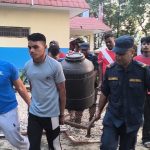
After the flood warning, police, the Army and Armed Police Force used loudspeakers to alert residents.
He managed to get his entire family to safety.
“We warned my wife and children and managed to escape,” he said. “We survived. That is the most important thing.”
His house, shop, documents and money are gone.
But his family is alive.
For now, that is what matters most to him.
‘We don’t know where the three boys are’
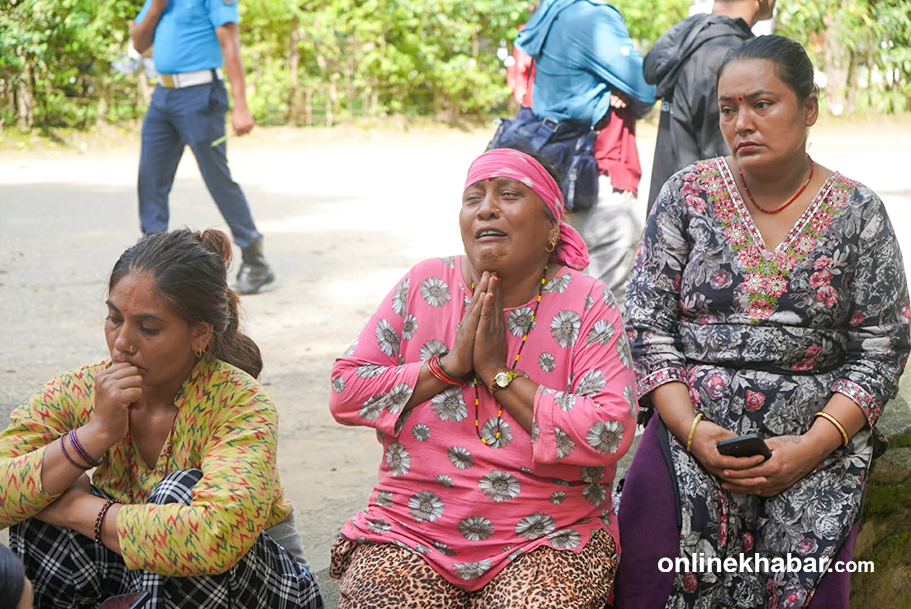
Families displaced by the flood in the Dhunge-Trishuli area are now searching for their relatives.
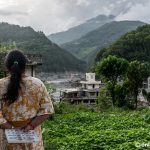
Along the edge of Dhunge Bazaar, people stand staring towards the north. Some look silently at what remains of their homes. Others wait with a faint hope that missing relatives might somehow return.
According to one local resident, three young men who had left early in the morning for work remain out of contact.
“Two boys had gone towards the new bridge. We haven’t been able to find them,” he said. “Another had come towards Trishuli, and we have not heard from him either.”
His plea is simple: find the missing.
“If they are across the river, they need to be brought back from there,” he said.
Although the floodwaters have begun to recede, the anxiety among survivors has not.
Could their relatives still be buried beneath the rubble?
Could they have been swept far downstream?
Those questions continue to haunt the residents.
‘We lost the market, but we saved our lives’
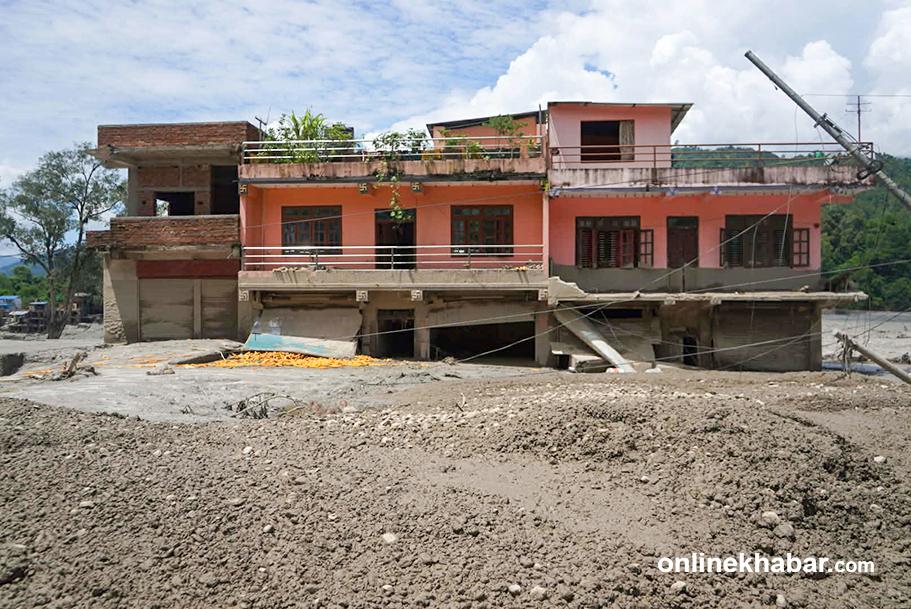
The flood has almost erased the physical landscape of these Nuwakot settlements.
Hydropower projects, bridges, roads, homes, shops and government structures have all been damaged. Along the riverbanks, years of work and investment have been reduced to mud and debris.
Bagmati Province Chief Minister Kiran Thapa Magar, who inspected the flood-hit areas, said more than 40 small and large bridges had been damaged across Nuwakot.
For now, rescue and search operations remain the priority. The government plans to focus on restoring roads, bridges, health services and other infrastructure only after the immediate rescue operation is completed.
Reconstruction may eventually rebuild houses, reconnect bridges and revive the markets.
But how do you rebuild a life that was swept away in minutes?
The Devighat shopkeeper’s two decades of work will not return overnight. Thakur’s citizenship certificate and documents are gone. Jalpa Temple and the old structures that carried the history of the settlement will take years to restore, if they can be restored at all.
For now, residents of Devighat and Dhunge Bazaar are searching through what remains.
Some are looking for pieces of their homes.
Some are looking for shop shutters and documents.
Some are searching for missing relatives.
And some simply stand silently, looking at the places where their homes once stood.
The flood took almost everything.