Kathmandu, February 25
Parikrama Students’ Family, an art and culture–based club at the B.P. Koirala Institute of Health Sciences (BPKIHS), hosted the ninth annual Symposium-Cum-Talk Show in Dharan. Centred on the theme “Exploring New Frontiers of Collaboration: Medicine and Humanities,” the two-day program brought together voices from diverse disciplines to explore how they interact and co-create society.
The symposium, initiated in 2010 by Prof. Dr Narendra Bhatta, has steadily evolved into a multidisciplinary platform encouraging dialogue beyond conventional academic silos. This year’s edition continued that tradition through four panel discussions addressing art and culture, generational change, the future of medical education and the role of various private and public institutions.
The opening panel, “Quiet Architects of a Nation: Institutions Shaping Nepal,” examined the often-unseen role of public and civic institutions in influencing citizens’ daily lives. The panellists included Dr Ghana Shyam Gurung (Country Representative, WWF Nepal), Dr Matina Joshi Vaidya (Director General, DFTQC), and Rahul Muni Bajracharya (Architect and Urban Planner), and the session were moderated by Journalist Bhojraj Shrestha.
Speakers emphasised that while many institutions operate outside the public spotlight, their work is central to building trust, ensuring accountability, and responding effectively to crises. The discussion also highlighted the need for institutional adaptation in the face of rising civic engagement and rapid technological change.
The second session, “Preserving our Past, Promoting our Present and Packaging Culture for the Future,” included Manoj Gajurel (Actor and Comedian), Santosh Shah (Chef and Restaurateur), Jhuma Limbu (Folk Singer and Musician) and Suraj Subedi (Writer and Cultural Critic) as panellists. The session was moderated by Kedar Sharma (Writer and Journalist).
This panel shifted the focus to Nepal’s cultural landscape. Panellists reflected on the delicate balance between preservation and innovation, noting that globalisation and commercialisation present both opportunities and risks. The conversation underscored the importance of ethically representing culture while maintaining authenticity and community ownership in an increasingly digital and market-driven world.
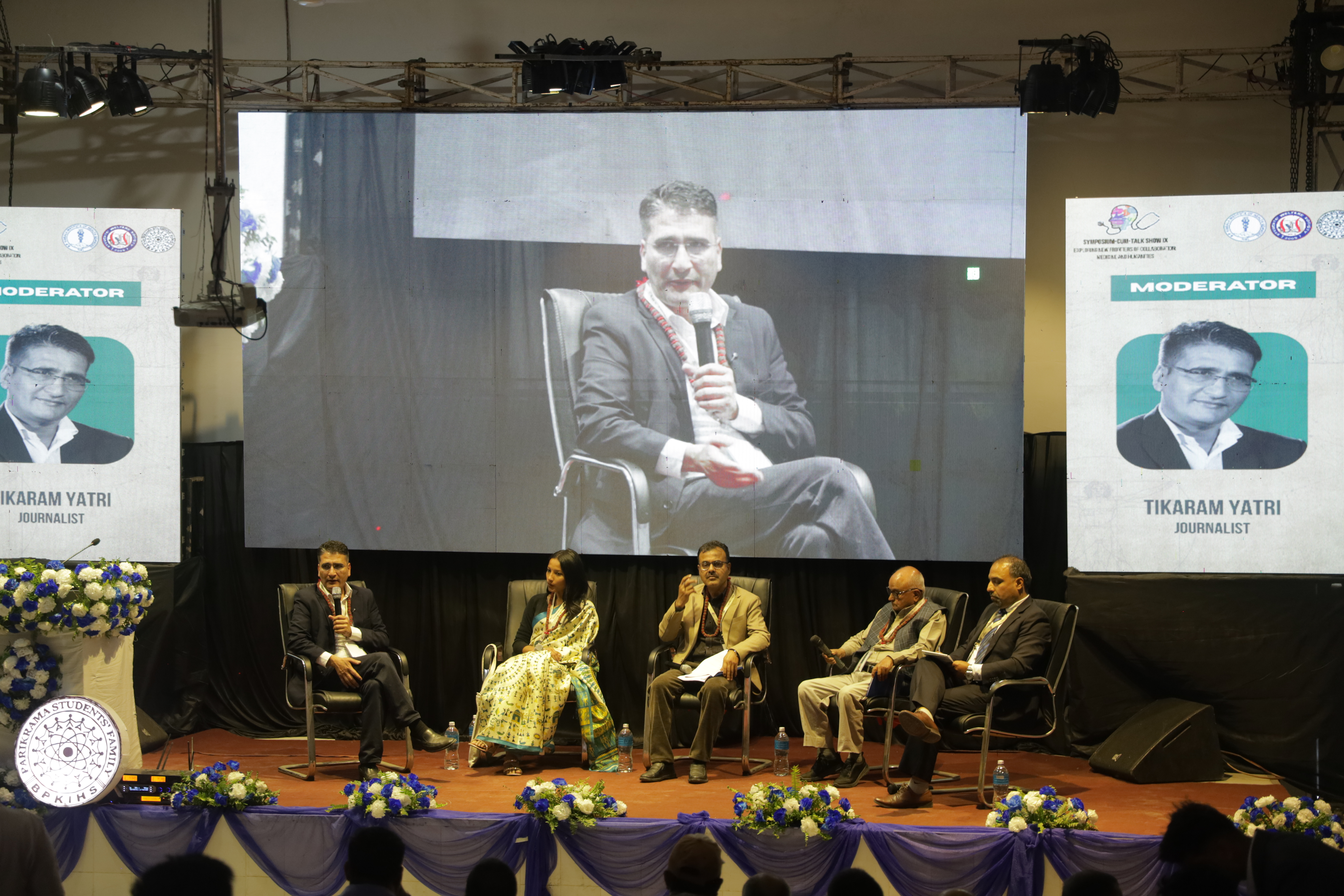
Generational dynamics took centre stage in the third panel, “Gen-Z Revolution: How a Generation’s Breaking Point Triggered a Shift in the Country’s Trajectory.” The panel included Rakshya Bam (Civic Leader), Dr. Pradeep Panthi (Economist), Prof. Dr. Lok Raj Baral (Political Analyst and Writer) and Dilli Bahadur Karki (Senior Advocate) and was moderated by Journalist Tikaram Yatri.
Speakers analysed how Nepal’s younger generation has transformed frustration into organised civic momentum. The discussion explored questions of leadership, state response, and long-term political and economic implications, suggesting that Gen Z’s engagement is likely to leave a lasting imprint on the nation’s democratic and social fabric.
The symposium concluded with a reflective institutional dialogue titled “BPKIHS at Crossroads.”
The panel included Prof. Dr Bikram Prasad Shrestha (Vice-Chancellor, BPKIHS), Prof. Dr Nilambar Jha (Public Health Expert), Prof. Dr Krishna Pokharel (Head of Department, Anesthesiology and Critical Care, BPKIHS) and Akshaya Gautam (Medical Educationist and Administrator) and was moderated by Dr Anish Adhikari (Intern, BPKIHS).
This session examined the founding vision and evolving trajectory of the B.P. Koirala Institute of Health Sciences. Panellists discussed curricular reforms, governance challenges, and the strategic direction required to sustain the institute’s academic and clinical excellence amid changing national and global health landscapes.
Overall, the ninth Symposium-Cum-Talk Show reaffirmed the growing recognition that complex societal challenges cannot be addressed within disciplinary boundaries alone. By creating space for conversations between medicine and the humanities, Parikrama Students’ Family has continued to nurture a culture of critical reflection, interdisciplinary thinking, and civic engagement among Nepal’s emerging professionals.