Kathmandu, November 20
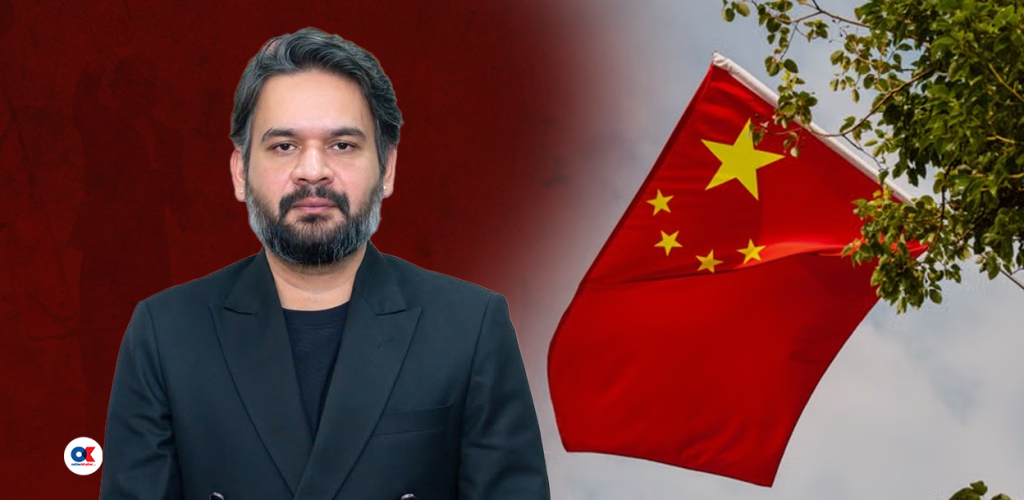
Eight months into the government led by Prime Minister Balendra Shah and the Rastriya Swatantra Party (RSP), Chinese officials have offered an initial assessment of the administration, with high-level sources in China saying the government appears reluctant to even mention the Belt and Road Initiative (BRI).
During discussions with a group of press representatives last week, senior Chinese officials reportedly said the government had focused on certain projects, including the expansion of Kathmandu’s Ring Road, but appeared uninterested in carrying forward agreements reached by previous governments under the BRI framework.
A senior Chinese official said Beijing was continuing to engage with the Balen government and some of its ministers, but discussions on continuing previously agreed projects had yet to gain momentum.
“The current government does not want to utter the word BRI. The Pokhara airport project has also been discredited,” the senior official said. “The feasibility study for the Tokha-Chhahare tunnel is nearly complete, but the bureaucracy is causing considerable delays.”
Asked whether the delays were attributable to the bureaucracy or whether there was a political motive behind them, the official said, “There may also be a political motive, but we cannot say anything definitively about that.”
A delegation of 20 RSP lawmakers is currently visiting China. Prime Minister Shah had summoned the lawmakers to Singha Durbar before their departure and reportedly told them, “The BRI is a controversial issue, so do not make any comments on it for now.”
RSP lawmakers told Onlinekhabar about the discussion held at the Prime Minister’s Office. The Chinese side has not made any specific comment on the matter.
Chinese officials have also expressed interest in information concerning alleged corruption that surfaced during the construction of Pokhara International Airport, although they have not commented on who might be seeking to discredit the project.
China has long hoped for political stability in Nepal, officials said, but now wants to see whether that stability has been translated into economic progress and improved governance.
Chinese officials appear hopeful that Prime Minister Shah, who is currently travelling to New Delhi following his visit to New York, will also visit Beijing. They made a symbolic remark that Shah would be welcome in Beijing but expressed little optimism that such a visit would happen in the near future.
China has also said it would be ready to welcome RSP chairman Rabi Lamichhane to Beijing, although his visit could not take place due to flooding in the Bhotekoshi area. With the RSP delegation currently in China, officials said they hoped senior Nepali leaders would visit in the near future as well.
Chinese officials remain in regular communication with Finance Minister Swarnim Wagle, Foreign Minister Shishir Khanal and other Nepali leaders.
Nepali officials also raised the issue of reopening the Tatopani border crossing with Chinese counterparts on Thursday. China responded that the crossing was situated in terrain similar to Rasuwagadhi, making an immediate reopening potentially difficult.
However, China reportedly said it would be willing to keep the crossing operational, even by clearing snow, if Nepal could maintain access on its side of the border. Chinese Ambassador Zhang Maoming pledged to relay the concerns raised by Nepali ministers to Beijing soon.
A government source quoted Zhang as saying that Nepal should understand China’s concerns about recent developments in the Himalayan region.
“China is being discredited by exaggerating the devastating landslides and floods. We ourselves were victims of the Bhotekoshi floods. I have personally taken photographs showing the damage suffered by both Chinese and Nepali sides. Tourists from many countries and their families have also experienced unimaginable hardship. We should not exaggerate these events for anyone’s benefit or detriment,” the source quoted the ambassador as saying.
Chinese officials have also expressed indirect dissatisfaction with Foreign Minister Khanal’s earlier remarks that Nepal would not carry the baggage of previous governments in diplomacy.
“We believe that history and traditions should be respected, rather than focusing on whether we carry baggage or not,” a senior Chinese official said. “Nevertheless, we have had good conversations with him and other leaders since that statement. We have been trying to understand each other.”
China also took note of Foreign Minister Khanal’s expression of gratitude for Chinese support during a session of COP31. During the recently held COP31 in Antalya, Türkiye, Nepal raised concerns about climate justice, which Chinese officials said they had supported as other powerful countries overlooked Nepal’s concerns.
Chinese officials said they were still assessing the work carried out by the Nepali government over the past eight months.
“Good intentions are also necessary to make the right decisions and implement them properly,” the official said. “The key issue is capability. Good intentions and willingness alone are not enough. Nepal needs to work harder in this regard. If the right plans are made, we will certainly support them.”
The officials also indicated that Nepal should be able to demonstrate that it is capable of making and implementing its own decisions.
China has continued diplomatic engagements to explain decisions made in the context of the 105th anniversary of the founding of the Chinese Communist Party and discussions surrounding the party’s 20th Central Committee.
“The party will continue to strengthen its image as a firm and credible force in long-term governance and leadership,” a Chinese Communist Party statement said. “We want to turn the successes achieved through our century-old party and its policies into win-win outcomes with neighbouring countries and others. These successes will not be against anyone but will be based on shared efforts and cooperation.”
Chinese officials believe President Xi Jinping’s speech, delivered in Shenzhen on Wednesday, also addressed the concerns of developing neighbouring countries, including Nepal.
Xi also addressed the 33rd APEC Economic Leaders’ Meeting, attended by US President Donald Trump and Russian President Vladimir Putin.
China’s role in facilitating a rare meeting involving leaders of the United States and Russia has meanwhile become a subject of discussion and debate.