
Kathmandu, November 19
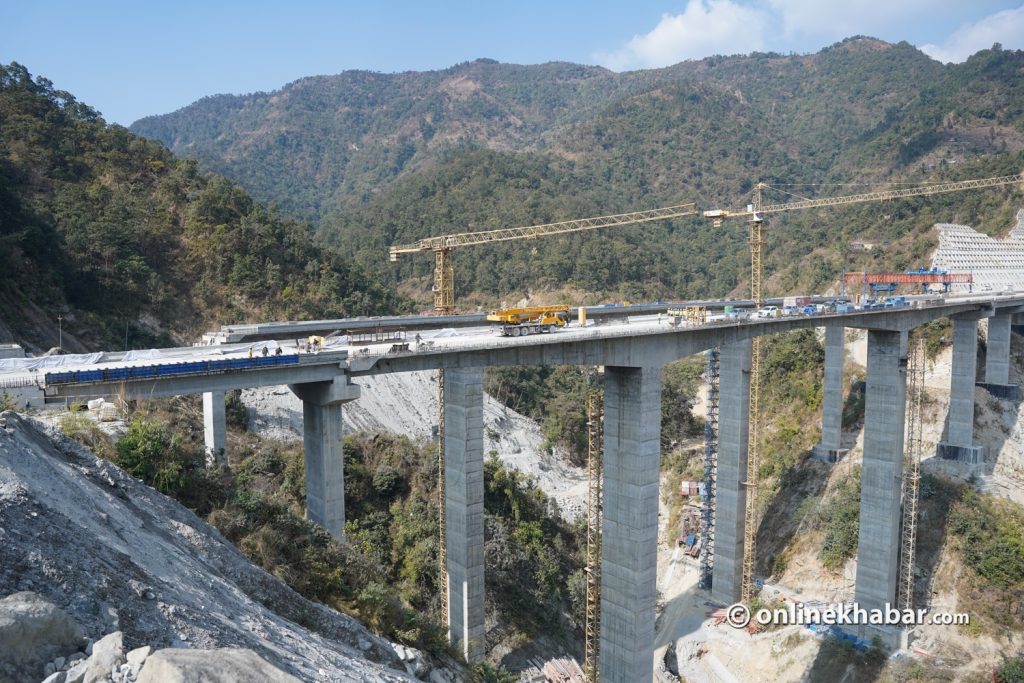
The government has warned the Nepali Army to speed up construction of the Kathmandu-Terai-Madhes Fast Track, while pledging to resolve problems at the project’s starting point in Kathmandu.
The government’s assurances have raised hopes that construction of the long-delayed project could gather pace in the coming months.
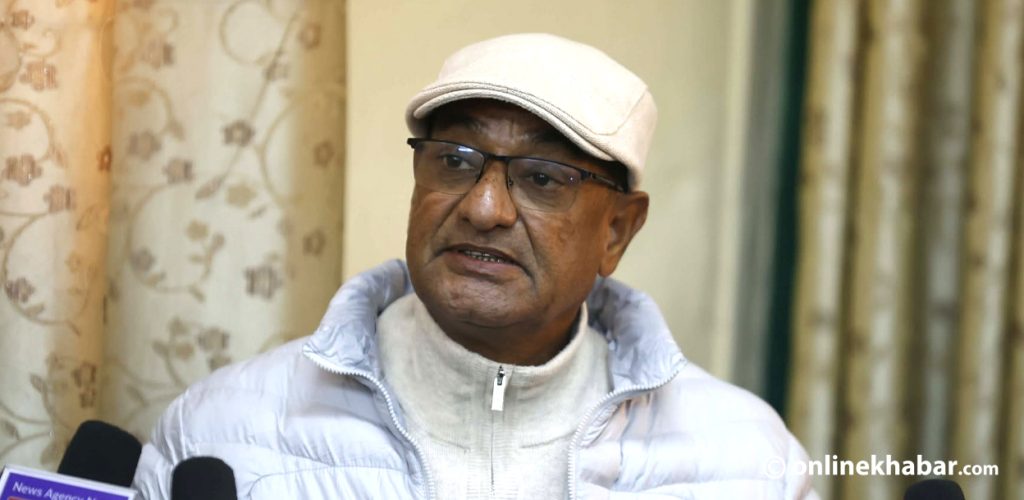
Infrastructure Development Minister Sunil Lamsal made the government’s position clear on Wednesday at a programme marking the breakthrough of the project’s longest tunnel. He warned that contracts with construction companies delaying work or failing to meet their revised schedules would be terminated immediately.
Launched in the fiscal year 2016/17, the fast-track project has achieved only around 50 per cent physical progress. A Cabinet meeting on August 5 extended the deadline to March 2029.
The government faces mounting public pressure to complete the project within the extended deadline. The poor condition of existing highways connecting Kathmandu with other parts of the country, particularly during the monsoon, has further highlighted the need for an alternative route.
Minister Lamsal expressed concern that the poor performance of a few contractors had brought the entire project under criticism. He said the government was no longer willing to extend deadlines or offer additional facilities to contractors at the cost of prolonging the project.
He publicly acknowledged unsatisfactory performance by contractors working on packages 9A, 9B and 8B, among others. Despite repeated warnings, follow-ups, site inspections and official correspondence, the companies had failed to work according to their own commitments, he said.
Lamsal also said the government would resolve problems at the project’s starting point in Kathmandu soon. Once those issues are addressed, contracts that are terminated will be put out for fresh bidding to complete the remaining work.
He reiterated the message on social media on Wednesday, saying, “The government cannot spend more than three years on the Fast Track. Contracts that fail to deliver according to their own revised schedules will be terminated immediately.”
Six tunnel sections completed
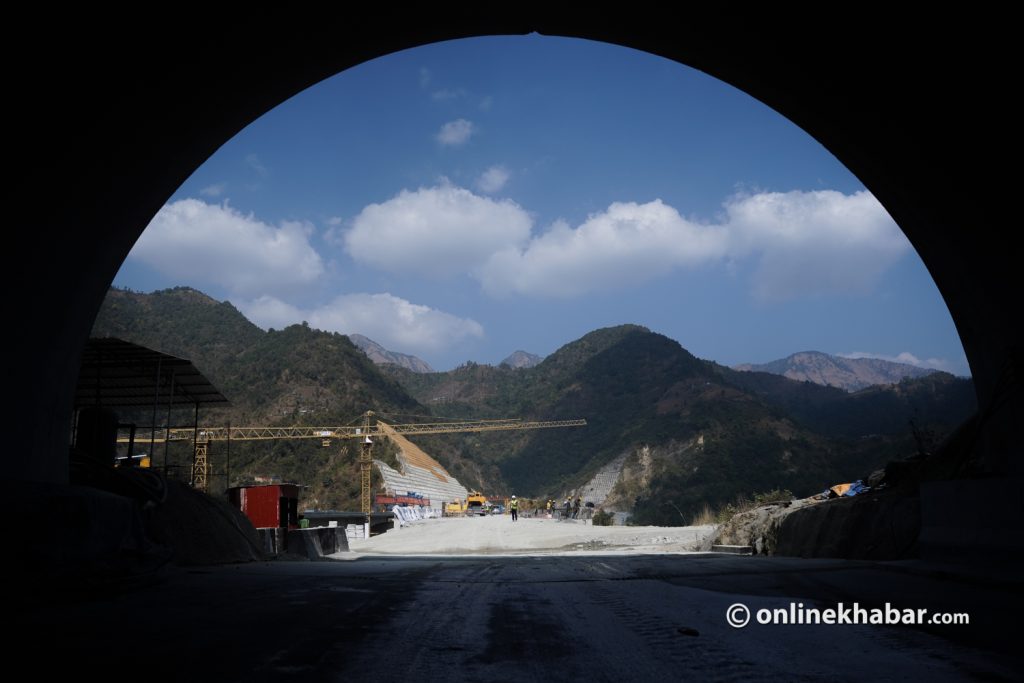
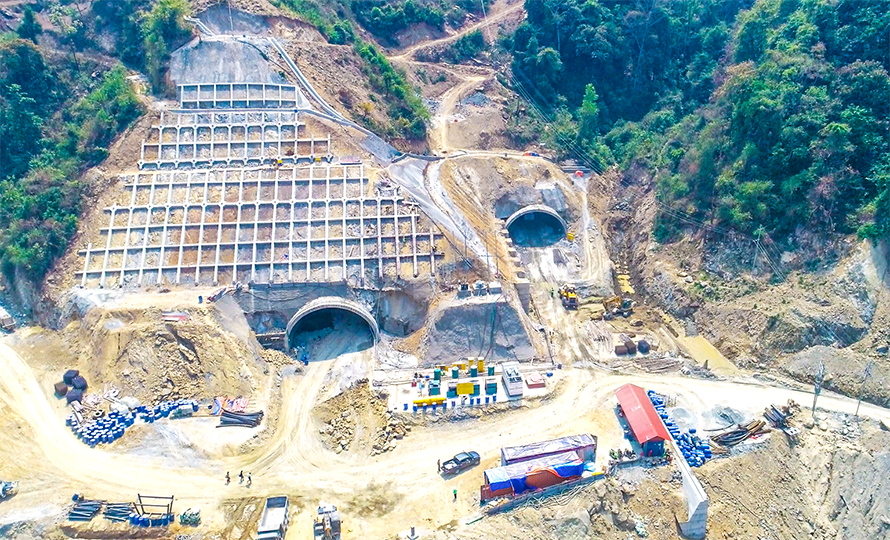
The project is being implemented by the Nepali Army. According to the Army, work on the 3,422-metre-long Mahadevtar tunnel reached its breakthrough on Wednesday.
Of the 14 tunnels being built at seven locations along the fast track, excavation has been completed on six tunnel sections at Dhedre, Lendanda and Mahadevtar. These are among the longest tunnels in the project.
The Army said in a statement that eight tunnel sections at four locations are still under construction.
The project has struggled to progress as expected for years due to a lack of coordination among government agencies, local protests and obstructions along the proposed alignment, and the Covid-19 pandemic, among other factors.
The Nepali Army says it is committed to completing the project within the extended deadline.
The Cabinet assigned the project to the Army on May 4, 2017. Its deadline has since been extended twice, with the latest target set for the end of the current fiscal year.
According to the Army, the project’s revised estimated cost stands at Rs 211.93 billion. By the end of the last fiscal year, it had spent Rs 94.22 billion.
The National Planning Commission had initially estimated the project cost at Rs 116 billion. Delays in implementation, changes to the alignment and modifications to structures from the original plans have contributed to the increase in costs.
A vital alternative for Kathmandu, but delays continue to take a toll
The need for the fast track became more evident after floods in the Trishuli and Bhotekoshi rivers on August 26 damaged the Krishnabhir section of the Prithvi Highway. The road subsided on August 30, and it took 18 days to bring it back into temporary operation.
During that period, Kathmandu Valley faced a severe shortage of cooking gas, while prices of other food items also increased.
Around 40 per cent of Nepal’s economic activity is concentrated in the valley, which is home to approximately 15 per cent of the country’s population. Infrastructure experts have therefore long stressed the need to prioritise the Kathmandu-Terai-Madhes Fast Track.
Some experts have also proposed introducing a dedicated ‘sunset law’ to accelerate implementation of the project.
The fast track will be approximately 70 kilometres long. Once completed, it is expected to reduce the time required for freight vehicles travelling between the Tarai-Madhes and Kathmandu by eight to 10 hours.
The shorter route is expected to reduce the cost of consumer goods, vehicle wear and tear, and fuel consumption, while making long-distance travel considerably faster.
Experts have argued that a special sunset law, with provisions overriding other existing legal hurdles, could help expedite construction. The project is being built to Asian Highway Standard Primary Class A specifications and is expected to provide a shorter connection between Kathmandu and the Tarai-Madhes.
Where is the project stuck?

The Nepali Army has divided the fast-track project into 13 packages. Packages 1, 2, 3, 4, 5, 6, 7, 8A, 8B, 9A, 9B and 10 are at various stages of construction and implementation. The procurement process for package 11, however, has yet to begin.
The main obstacle in package 11 is the unresolved land acquisition issue along the Khokana-Bungamati section. Decisions have also not been finalised regarding the project’s starting point and traffic management.
The Army says it is coordinating with the concerned authorities and landowners to distribute compensation for land acquisition in the affected section. It has also begun designing possible alternatives to resolve the land acquisition difficulties.